


Loading Content..

Jigme Lingpa (1729â1798) stands as one of the most extraordinary and influential figures in the history of Tibetan Buddhism. He was a great terton (treasure revealer), a visionary, a philosopher, and a poet whose teachings have shaped the practice of the Nyingma school for centuries .
His life story is a powerful testament to the idea that profound wisdom can arise not just from scholarly study, but from the depths of meditation and visionary experience. Unlike many great masters of his time, Jigme Lingpa was not recognized as a reincarnate lama (tulku) in his youth and did not receive an extensive formal education . Instead, his realization came directly through intense practice, personal devotion, and a series of miraculous visions that would culminate in his most enduring legacy: the Longchen Nyingthig (The Heart Essence of the Great Expanse) .
Jigme Lingpa was born in the Yarlung Valley of Central Tibet. From a young age, he felt a deep connection to the Dharma, yet he showed little interest in conventional monastic discipline, often spending his time in play rather than study . His true spiritual journey began in earnest when he entered his first major meditation retreat at the age of twenty-eight .
The pivotal moment of his life came in 1757 during a retreat at the Samye Chimpu hermitage. In a powerful vision, he traveled to the Bodhnath Stupa in Nepal. There, a wisdom dakini (a tantric deity) entrusted him with a small wooden casket containing five yellow scrolls and crystal beads. Encouraged by the dakini, he swallowed the scrolls. In that instant, the words and meanings of an entire cycle of teachings awakened fully in his mind . This was the discovery of the Longchen Nyingthig, a "mind treasure" (dgongs gter) concealed centuries earlier by Guru Padmasambhava.
Three years later, while in another retreat at the same location, Jigme Lingpa experienced a series of three profound visions of the great 14th-century master Longchenpa. In these visions, he received the entire transmission of Longchenpa's wisdom, and their minds eventually merged as one. Longchenpa blessed him to reveal his treasures and compose new scriptures, which gave Jigme Lingpa the confidence and authority to write his masterwork, the Treasury of Precious Qualities .
For seven years, he kept these teachings secret until a clairvoyant disciple implored him to share them. Once revealed, the Longchen Nyingthig spread like wildfire across Tibet and became the most widely practiced cycle of Dzogchen (Great Perfection) teachings in the Nyingma tradition .
? Legacy and Spiritual Significance
Owning a statue of Jigme Lingpa is not just acquiring a piece of art; it is inviting the presence of a
Legacy and Spiritual Significance
Owning a statue of Jigme Lingpa is not just acquiring a piece of art; it is inviting the presence of a master whose wisdom continues to illuminate the path for countless practitioners.
Founder of a Living Tradition: Jigme Lingpa is the founder of the Longchen Nyingthig lineage. This profound cycle of teachings is considered the "heart essence" of all Buddhist paths and is still practiced today in monasteries and retreat centers worldwide .
A Unifying Figure: His writings and teachings transcended sectarian lines. He had disciples from all schools of Tibetan Buddhism and is considered a major precursor to the non-sectarian Rimé movement .
An Inspiration for Practitioners: His life story is incredibly inspiring. He showed that with unwavering devotion, dedication to practice, and a pure heart, one can attain the highest realizations, even without traditional scholarly titles or recognition . He is proof that enlightenment is accessible to all.
His main students included some of the most realized masters in Tibetan history, such as the First Dodrubchen Rinpoche (Jigme Trinle Ozer), Patrul Rinpoche, and Jamyang Khyentse Wangpo, who was considered an incarnation of his body, speech, and mind .
Iconography: How to Identify a Jigme Lingpa Statue
When describing your statue, highlighting these specific iconographic features will demonstrate its authenticity and help potential buyers understand the symbolism behind the art.
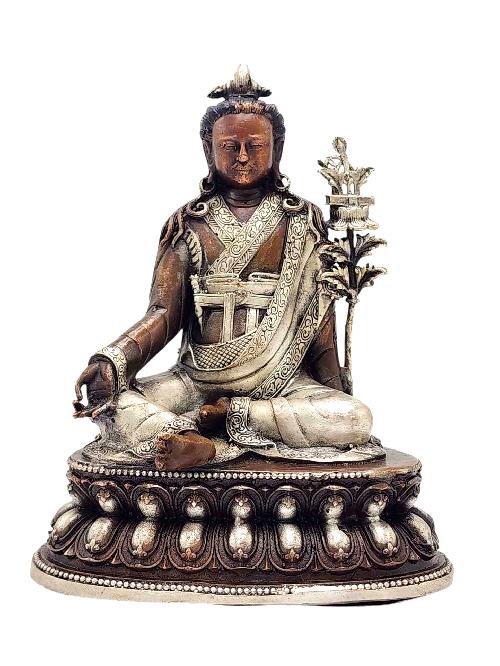
Appearance: Jigme Lingpa is almost always depicted as a layman, not a fully ordained monk. He has black hair tied in a topknot and typically has a youthful face with distinct, often lined features, and long ears . Some depictions show him with a small goatee .
Posture: He is most commonly seated in the vajra posture (lotus position) on a cushion and a lotus base .
Hand Gestures (Mudras): His hands often form the Dharmacakra Mudra, the gesture of "turning the wheel of the Dharma," symbolizing his role as a teacher of profound Buddhist doctrine .
Hand Attributes: In many representations, his right hand holds the stem of a lotus flower that supports a vajra (a ritual scepter), symbolizing his indestructible realization of skillful means and compassion. His left hand holds the stem of a lotus that supports a bell (ghanta) , representing the perfection of wisdom and the sound of emptiness . The union of vajra and bell signifies the attainment of enlightenment, the perfect balance of wisdom and compassion.
Hidden Details: In some sculptural traditions, a small phurba (a ritual dagger) is concealed within his robes, hinting at his tantric mastery and his power to cut through obstacles .
Some Jigmey Lingpa Available for Purchase

11 cm
Jigmey Lingpa, Buddhist Miniature Statue, Full Gold Plated Finish, Hand Painted Face
US$ 150.00
15% off
$ 180.00
$ 180.00

11 cm
Jigmey Lingpa, Buddhist Miniature Statue, Silver And Chocolate Oxidized
US$ 210.00
15% off
$ 250.00
$ 250.00
www.handmadeexpo.com
Descriptions
- 1st Karmapa Lama
- 21 Tara
- 4th Zhabdrung Rinpoche
- 5th Karmapa Lama
- Achala
- Agate
- Akash Bhairav
- Akash Yogini
- Akshobhya Buddha
- Amitabha Buddha
- Amoghasiddhi Buddha
- Amoghpasa Lokeshvara
- Anna Purana
- Aparimita
- Ardhanarishvara
- Atisha
- Bagh Bhairav
- BaghChal
- Bal Kumari
- Banglamukhi
- Barahi
- Barhma
- Bhadrakali
- Bhairav
- bhimsen
- Black Jambhala
- Bodhisattva
- Book Cover
- Brahma
- Buddha
- Buddha Gaya
- Chakrasamvara
- Chandamaharoshana
- Chatral Rimponche
- Chenrezig
- cheppu
- Chhinnamasta
- Chintamani
- Citipati
- Cundi
- Dakini
- Damchen Garwai Nakpo
- Dipankara Buddha
- Doll
- Dorje Drolo
- Dorje Legpa
- Dragon
- Durga
- Eight Manifestation of Guru Padmasambhava
- Eight Stupa
- Ekajata
- Fasting Buddha
- Five Dhyani Manjushri
- Five Jambhala
- Flora Incense
- Four Friends
- Four Heavenly Kings
- Gampopa
- Ganesh
- Garuda
- Gesar
- Green Jambhala
- Green Tara
- Guhyasamaja
- Gyaltsab Je tsongkapa
- Hanuman
- Hari Hari Hari Vahana Lokeshvara
- Hayagriva
- Hevajra
- Indra
- Jambhala: namtose
- Jhumkabati Singing Bowl
- Jigmey Lingpa
- Kalachakra
- Kali
- Kamadhenu
- Karmapa
- Khedrup Je Tsongkapa
- Krishna
- ksitigarbha
- Kumari
- Kurukulla
- Lakhe
- Lakshmi
- laughing Buddha
- Longchenpa
- Machig Labdron
- Maha Manjushri
- Maha Vairochana
- Mahakala Black
- Mahakala Black Cloak
- Mahakala Four Arms
- Mahakala Panjaranatha
- Mahakala Six Arms
- Mahakala Twelve Arms
- Mahakala Two Arms
- Mahasiddha
- Maitreya Buddha
- Manakamana
- Mandarava
- Manjushri
- Marici
- Marpa Lotsawa
- Marutse
- Maya Devi
- Medicine Buddha
- Metal Ring
- Milarepa
- Naga Kanya
- Nagaraja
- Nagarjuna Buddha
- Nairatmya Yogini
- Namasangiti
- Namgyalma
- Nandi
- NAROPA
- Nataraj
- Nechung
- Padmapani Lokeshvara
- Padmasambhava
- Palden Lahmo
- Pancha Buddha
- Parvati
- Pehar
- Prajnaparamita
- Radha
- Rahula
- Rama
- Ratnasambhava Buddha
- Real Yak Wool Blanket
- Red Jambhala
- Red Tara
- Sahasrabhuja Avalokitesvara
- Sai baba
- Samantabhadra
- Santoshi Mata
- Saraswati
- Sariputra and Maudgalyayana
- Shakyamuni Buddha
- Sherab Chamma
- shiva
- Siddhi Lakshmi
- Simhamukha Yogini
- Simhanada Lokeshvara
- sita
- Sitatapatra
- Snow lion
- Stupa
- Thangtong Gyalpo
- Three Kayug Masters
- Tilopa
- Tonpa Shenrab
- Tripura Sundari
- Tsongkhapa
- Vairochana Buddha
- Vajradhara
- Vajrakilaya
- Vajrapani
- Vajrasattva
- Vajravarahi
- Vajrayogini
- Vasudhara
- Virupa
- Vishnu
- Wangchok Terwal Drolma
- White Jambhala
- White Mahakala
- White Tara
- Yamantaka
- Yamaraj
- Yellow Jambhala
- Yeshe Tsogyal
- AGNI
- Akshamala
- ANKUSH
- Ashtamangala
- Bana
- Begging Bowl
- Bell
- Bell and Dorje
- Bhuma
- Bhumba
- Bina
- Buddha Eye
- Buddhas Foot Prints
- Buddhist Crown
- Bumpa
- Butter lamp
- Chakra
- chakra Man
- Chamaru
- Chandra
- Chhatra
- Chutor
- Conch shell
- Damaru
- Dathar stand
- Dhanusa
- Dharmachakra
- Dhwoja
- Dipa
- Dorje
- Double Dorje
- Endless knot
- Gada
- Ganesh Skunda
- Ghau
- Incense Burner
- Kalas
- Kamandalu
- Kangling
- Kapala
- Kartika
- Khada
- khadga
- khartwanga
- Lingam
- Lotus
- Mayurpiccha
- Mongoose
- Mukha
- Offering Flower
- OM - Hindu
- OM Mani Padme Hum
- Om-Tibetan
- Owl
- Pa
- Padmasana
- Panas
- Parasol
- Phurba
- Prayer Beads
- Prayer Flags
- Prayer Wheel
- Purna Kalash
- Pustak
- Rudraksha Prayer Beads
- Sang Bur
- Serkyem offering
- Shield
- Singing Bowl
- Sri Yantra
- Surya
- Swastika
- Temple Lion
- The Bodhi Tree
- Three Jewels
- Tingsha
- Trishul
- Tsebum
- Turtle
- Utpala
- Yab Yum
- Yin and yang
- Abhaya Mudra
- Alidh Asana
- Bhumisparsa Mudra
- Dharmchakra Mudra
- Dhayan Asan
- Dhyana Mudra
- Jnana Mudra
- Kurmasana
- Lalit Asana
- Namaskar Mudra
- Nrityamurti Asana
- Paryanka Asana
- Rajalila Asana
- Samapada Asana
- Sayana Asana
- Seven Chakra
- Shakti
- Singa Asan
- Tarjani Mudra
- Vajrahunkar Mudra
- Varda Mudra
- Vitarka Mudra
- Buddha Life Story
- Hundred Jataka Tales
- Kalachakra Mandala
- Karma Gadri Art
- Mandala
- Mantra Mandala
- Navagraha
- Pani Buddha
- Refuge tree
- Refuge Tree Padmasambhava
- Refuge Tree Vajradhara
- Refuse Tree shakyamuni Buddha
- Samadhi
- Secret Accomplishment Hayagriva
- The Four Harmonious Friends
- The way to Heaven
- Three Goddess of Divine Grace
- Three Great Bodhisattvas
- Three Long Life Deities
- Tibetan Calendar
- Wheel of Life
- Acrylic Painting
- Acrylic Wool Shawl
- Agarwood
- Alcohol Serving Set
- Amber
- Amber resin
- Amethyst
- Animal Statue
- Anis Seed
- Aquamarine
- Attar Perfume
- Baba Mask
- Bansuri
- Batik Painting
- Batik Wall Hanging
- Bead Bracelet
- Bead Keyring
- Bead Necklace
- Bead Pendant
- Bed Sheet
- Binayo
- Black Star Sapphire
- Bodhicitta
- Bone Bracelet
- Bone Earring
- Bone Keyring
- Bone Necklace
- Bone Pendant
- Bracelet
- Brooch
- Buddha and Its Tachings
- Candle Stand
- Cashmere Shawl
- Cashmere St Shawl
- Cat House
- cedar
- Celestial Musician
- Chakrasambhara Mandala
- Chau Gong
- Coaster set
- Coin Purse
- Copper Pendant
- Coral
- Cotton Bag
- Cotton Cap
- Cotton Dress
- Cotton Jacket
- Cotton Kurta
- Cotton Poncho
- Cotton Scarf
- Cotton Shawl
- Cotton Short
- Cotton Skirt
- Cotton T-shirt
- Cotton Top
- Cotton Trouser
- Cow
- Crystal
- Dehradun
- Dhaka Poncho
- Dhaka Shawl
- Dhau Pati
- Dhunge Dhara
- Dhyangro
- Door Curtain
- Dreamcatcher
- Ek Tare
- Elephant Candle Stand
- Embroidery Shawl
- Essential Oil
- Felt
- Felt Beads
- Felt Beads Matt
- Felt Necklace
- Flower Urn
- Foldable Table
- Foot Singing Bowls
- Fridge Magnets
- Full Moon Bowl
- Ghungroo
- Glass Bead Bag
- Glass Bead Bangle
- Glass Bead Bracelet
- Glass Bead Earring
- Glass Bead Necklace
- Glass Bead Ring
- Golden Michelia
- Guitar Bag
- Gulpa
- Haldu
- Handmade Sandals
- Head Bowl
- Hemp Bag
- Hemp Belt
- Hemp bracelet
- Hemp Broches
- Hemp Coin Purse
- Hemp Hat
- Hemp Keyring
- Hemp Mat
- Hemp Pendant
- Hemp Shoe
- Hemp Slipper
- Herbal Incense
- Herbal Soap
- HImalayan Coffee
- Hookah
- Incense Holder
- Infinity Scarf
- Jade
- Jamawar Shawl
- Jambati Singing Bowl
- Jasmine
- Jasper
- Jesus
- Jewelery Box
- Jhyamta
- Juniper
- Kamasutra
- Karuwa
- Khadkulo - Kota
- Khainjadi
- khukuri
- Knee Bowl
- Knife
- Kopre Singing Bowls
- kusum Mandala
- Labradorite
- Ladies Bag
- Lapis
- Large Cymbal
- Larimar
- Lavender
- Leather Backpack Bag
- Leather Bag
- Leather Purse
- Leather Shoulder Bag
- Leather Waist Bag
- Lighter Case
- Lingam Singing Bowl
- Lokta Paper Envelop
- Lokta Paper Flip Note book
- Lokta paper Gift Bag
- Lokta Paper Lampshade
- Lokta paper Notebook
- Lokta Paper Packing Box
- Lokta Paper Photo Album
- Lokta Paper Prints
- Lokta Paper Scroll
- Lokta Wrapping Paper
- Lunch Box
- Madal
- Makal Incense Burner
- Malachite
- Mallet
- Mani Singing Bowl
- Manipuri Singing Bowl
- Mantra Amulet
- Mantra Book
- Mantra Cd
- Medical Thangka
- Metal Bracelet
- Metal Earring
- Metal Necklace
- Metal Pendant
- Metal Wall Hangings
- Moonstone
- Murchunga
- Musician Set
- Musk Perfume
- Naga Singing Bowl
- Namaste
- Name Plate
- Nepali Carpet
- Nepali Gong
- Nepali Tea
- Nettle Shawl
- Nipple gong
- Ocean Drum
- Offering Bowls
- Offering Tea
- Oil Painting
- Oni
- Onyx
- Oud Perfume
- Pashmina Blanket
- Pashmina Cardigan
- Pashmina cardigan Size
- Pashmina Muffler
- Pashmina Poncho
- Pashmina Shawl
- Pashmina Sweater
- Pashmina Sweater Sizes
- Pashupatinath
- Patchouli
- Peter Hess Singing Bowl
- Pine Wood
- Playing Cards
- Plumeria
- Prayer wheel Stand
- Ratna Mandala
- Religious Books
- Remuna Singing Bowl
- Rose Quartz
- Sandalwood
- Sang phulpa Incense Burner
- Sarangi
- SB- Trapezoid Singing Bowl
- Seven Chakra Incense
- Shawl Embroidery
- Silver Belt Buckle
- Silver Bet Buckle
- Silver Bracelet
- Silver Decoration Plate
- Silver Earring
- Silver Necklace
- Silver Pendant
- Silver Ring
- silver statue
- Singing bowl Cushion
- Skull
- Snuff bottle
- spieces
- Spoon
- Star Ruby
- Stone Carving
- Student Mandala
- Stupa and Temple
- Stupa Box
- sugar
- Swayambhunath
- Tabla
- Table Cloth
- Tea - Bamboo Box
- Tea - cochin
- Tea - Mandala Bag
- Tea - Paper Box
- Tea - Silver Foil
- Tea - Wooden Box
- Tea Box
- Tea Pot
- Thadobati Singing Bowl
- Thangka Brocade
- Thangka Brocaxc
- Thangka Lhyape
- Tibet Blanket
- Tibet Shawl
- Tibetan Agarwood
- Tibetan Balerian Sugandhawan
- Tibetan Bdellium
- Tibetan Benzoin resin
- Tibetan Book Holder
- Tibetan Calamus
- Tibetan Cedarwood
- Tibetan Cedarwood
- Tibetan Chamomile
- Tibetan Cinnamon
- Tibetan Citronella
- Tibetan Door Curtain
- Tibetan Door Lock
- Tibetan Drangon's Blood
- Tibetan Flower
- Tibetan Frank/Incense
- Tibetan Green Tea
- Tibetan Herbal Mint
- Tibetan Himalayan Spice
- Tibetan Holy Basil
- Tibetan Leamongrass
- Tibetan Mokchhya
- Tibetan Mugwort
- Tibetan Nagchampa
- Tibetan Oraganic instruction
- Tibetan Organic Descrition
- Tibetan Palo Santo
- Tibetan Red Sandalwood
- Tibetan Rose
- Tibetan Rosemary
- Tibetan Saal Doop
- Tibetan Saffron
- Tibetan Sandle Wood
- Tibetan Spikenard
- Tibetan Spiritual Healing
- Tibetan Stamp
- Tibetan urn
- Tibetan White Lotus
- Tibetan White Sage
- Tiger
- Tiger Eye
- Tiger Matt
- Tissue Holder
- Torma
- Tortoise
- Tourmaline
- Tribal Mask
- Tseringma
- Tuberose
- Tungana
- Turquoise
- Ultabati Singing Bowl
- Wall Hanging
- Water Bottle
- Watercolor Painting
- Wild Flora
- Wind gong
- Wooden Door
- Wooden Tibetan Box
- Wooden Traveling Altar
- Woolen set
- Woolen Animal Cap
- Woolen Baby Jacket
- Woolen Cap
- Woolen Carpet
- Woolen Glove
- Woolen Hand warmer
- Woolen Jacket
- Woolen Leg Warmers
- Woolen Muffler
- Woolen Poncho
- Woolen Shock
- Woolen Socks
- Woolen Sweater
- Yajna Puja Set
- Yak Wool Muffler
- Yak Wool Shawl
- Yarchagumba