


Loading Content..

Ganesha is one of the deities best-known and most widely worshiped in the Hindu pantheon. His image is found throughout India and Nepal. Hindu sects worship him regardless of affiliations. Devotion to Ganesha is widely diffused and extends to Jains, Buddhists, and beyond India.
Although he is known for many other attributes, Ganesha's elephant head makes him particularly easy to identify. Ganesha is widely revered as the Remover of Obstacles and more generally as Lord of Beginnings and Lord of Obstacles, patron of arts and sciences, and the deva of intellect and wisdom. He is honored at the beginning of rituals and ceremonies and invoked as Patron of Letters during writing sessions. Several texts relate mythological anecdotes associated with his birth and exploits and explain his distinct iconography.
Representations of Ganesha show wide variations and distinct patterns changing over time. He may be portrayed standing, dancing, heroically taking action against demons, playing with his family as a boy, sitting down or on an elevated seat, or engaging in a range of contemporary situations.
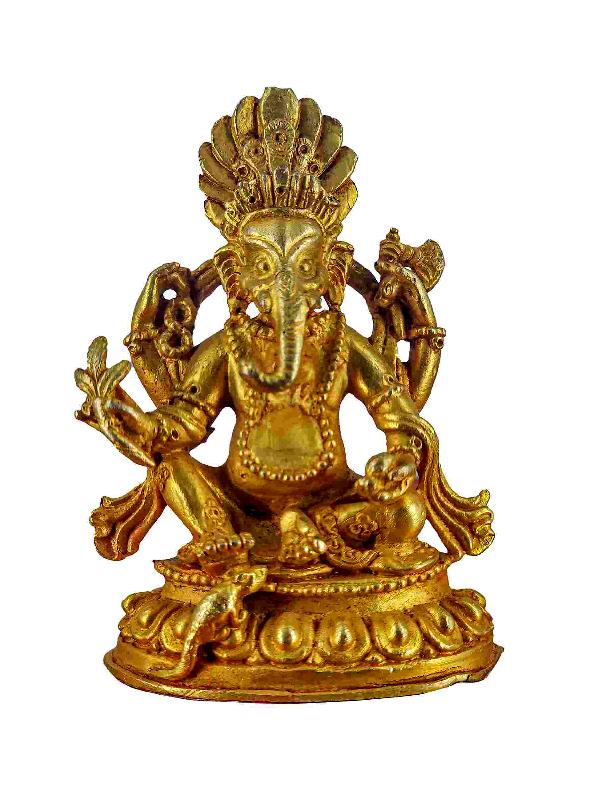
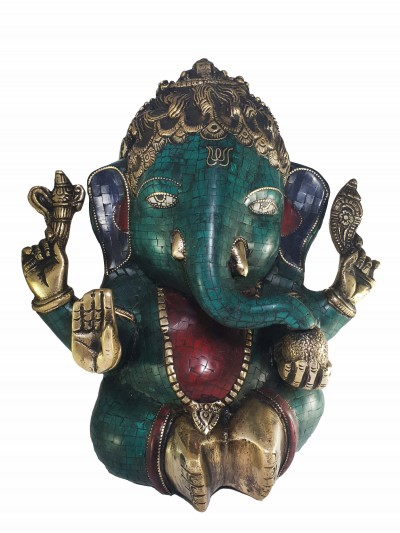
Ganesha has the head of an elephant and a big belly. This statue has four arms, which is common in depictions of Ganesha. He holds his own broken tusk in his lower-right hand and holds a delicacy, which he samples with his trunk, in his lower-left hand. The motif of Ganesha turning his trunk sharply to his left to taste a sweet in his lower-left hand is a particularly archaic feature. A more primitive statue in one of the Ellora Caves with this general form has been dated to the 7th century.[38] Details of the other hands are difficult to make out on the statue shown. In the standard configuration, Ganesha typically holds an axe or a goad in one upper arm and a noose in the other upper arm.
Associations
Obstacles
Ganesha is Vighneshvara or Vighnaraja, the Lord of Obstacles, both of a material and spiritual order. He is popularly worshipped as a remover of obstacles, though traditionally he also places obstacles in the path of those who need to be checked. Paul Courtright says that "his task in the divine scheme of things, his dharma, is to place and remove obstacles. It is his particular territory, the reason for his creation."
Krishan notes that some of Ganesha's names reflect shadings of multiple roles that have evolved over time. Dhavalikar ascribes the quick ascension of Ganesha in the Hindu pantheon, and the emergence of the Ganapatyas, to this shift in emphasis from vighnakart? (obstacle-creator) to vighnahart? (obstacle-averter). However, both functions continue to be vital to his character, as Robert Brown explains, "even after the Pur??ic Ga?e?a is well-defined, in art Ga?e?a remained predominantly important for his dual role as creator and remover of obstacles, thus having both a negative and a positive aspect
Buddhi (Knowledge)
Ganesha is considered to be the Lord of letters and learning. In Sanskrit, the word buddhi is a feminine noun that is variously translated as intelligence, wisdom, or intellect. The concept of buddhi is closely associated with the personality of Ganesha, especially in the Puranic period, when many stories stress his cleverness and love of intelligence. One of Ganesha's names in the Ganesha Purana and the Ganesha Sahasranama is Buddhipriya. This name also appears in a list of 21 names at the end of the Ganesha Sahasranama that Ganesha says are especially important. The word Priya can mean "fond of", and in a marital context it can mean "lover" or "husband", so the name may mean either "Fond of Intelligence" or "Buddhi's Husband"
Frist Chakra
According to Kundalini yoga, Ganesha resides in the first chakra, called Muladhara (m?l?dh?ra). Mula means "original, main " adhara means "base, foundation". The Muladhara chakra is the principle on which the manifestation or outward expansion of primordial Divine Force rests.[95] This association is also attested to in the Ganapati Atharvashirsa. You continually dwell in the sacral plexus at the base of the spine. Thus, Ganesha has a permanent abode in every being at the Muladhara. Ganesha holds, supports and guides all other chakras, thereby "governing the forces that propel the wheel of life"
Family And Consort
Though Ganesha is popularly held to be the son of Shiva and Parvati, the Puranic myths give different versions about his birth. He may have been created by Shiva, or by Parvati, or by Shiva and Parvati, or appeared mysteriously and was discovered by Shiva and Parvati.
The family includes his brother Warlord Kartikeya, who is also called Subramanya, Skanda, Murugan and other names. Regional differences dictate the order of their births. In northern India, Skanda was an important martial deity from about 500 BCE to about 600 CE, when the worship of him declined significantly in northern India. As Skanda fell, Ganesha rose. Several stories tell of sibling rivalry between the brothers and may reflect sectarian tensions.
Ganesha's marital status, the subject of considerable scholarly review, varies widely in mythological stories. One pattern of myths identifies Ganesha as an unmarried Brahmacari. This view is common in southern India and parts of northern India. Another pattern associates him with the concepts of Buddhi (intellect), Siddhi (spiritual power), and Riddhi (prosperity); these qualities are sometimes personified as goddesses, said to be Ganesha's wives. He also may be shown with a single consort or a nameless servant. Another pattern connects Ganesha with the goddess of culture and the arts, Sarasvati or ?arda. He is also associated with the goddess of luck and prosperity, Lakshmi. Another pattern, mainly prevalent in the Bengal region, links Ganesha with the banana tree, Kala Bo.
The Shiva Purana says that Ganesha had two sons: K?ema (prosperity) and L?bha (profit). In northern Indian variants of this story, the songs are often said to be ?ubha (auspiciousness) and L?bha.
10 Ganesh Mantra
Om Gan Ganapataye Namo Namaha, Shree Siddhi Vinayak Namo Namaha I Ashta Vinayak Namo Namaha Ganapati Bappa Moraya ||
This is a mantra from Ganapati Upanishad. One may always use it before beginning a journey, a new course in school, a new career or job, or before entering into any new contract or business so that impediments are removed and your endeavor may be crowned with success.
AUM GAJANANAM BHOOTGANADHISEVITAM KAPITTHYA JAMBOO PHALCHARU BHAKSHANAM UMASUTAM SHOKVINASHKARAKAM NAMAMI VIGHNESHWAR PADPANKAJAM AUM
Elephant-faced, worshipped by the existing beings, of all living beings, tasting the elephant apple (kaith) and jambolana (jamun), the son of Uma, destroyer of grief, I bow to the lotus feet of Ganesha who is Lord of all.
Shree Vakratunda Mahakaya Suryakoti Samaprabha Nirvighnam Kuru Me Deva Sarva-Kaaryeshu Sarvada?
O Lord Ganesha of the curved trunk and massive body, the one whose splendor is equal to millions of Suns, please bless me to that I do not face any obstacles in my endeavors.
Aum Shreem Gam Saubhaagya Ganpataye Varvard Sarvajanm Mein Vashamaanya Namah
By chanting this saubhagya mantra, we are asking for good fortune and blessings for our current and future life-times from Lord Ganesha. We bow in homage to Lord Ganesha who protects us with health and happiness.
Aum Ekadantaya Namah
Ekadanta refers to one tusk of the elephant-faced Lord Ganesha. This means God broke the duality and made you have a complete one-pointed mind. Chanting this Ganesha mantra will help in filling your mind with the feelings of oneness for a single-minded devotion.
Aum Lambodaraya Namah
This mantra means that all the celestial bodies are within an individual. Aum represents the sound of creation and the entire universe is comprised inside it. It is a suitable mantra to be chanted during Ganesh Chaturthi.
Aum Vighna Nashanaya Namah
Lord Ganesha is believed to have the power to remove every hindrance in our life. By chanting this mantra, all impediments and blocked energy in your physical and cosmological bodies are unconfined. This is a suitable mantra for Ganesh Chaturthi.
Aum Ganadhyakshaya Namah
This mantra is very suitable for chanting on Ganesh Chaturthi. Lord Ganesha is the leader of the Gana. It is believed that chanting this mantra by thinking a group of people in your mind will help in a group healing.
Aum Gajakarnikaya Namah
The word Gajakarnikaya refers to the ears of Lord Ganesha which is similar to that of an elephant. By chanting this mantra, you can tune your body with seven chakras and all 72,000 Nadis, to any Loka.
Youtube Mantra Link
Some Ganesh Available for Purchase

6 cm
Buddhist Miniature Statue Of Ganesh, Gold Plated
US$ 17.00
15% off
$ 20.00
$ 20.00

20 cm
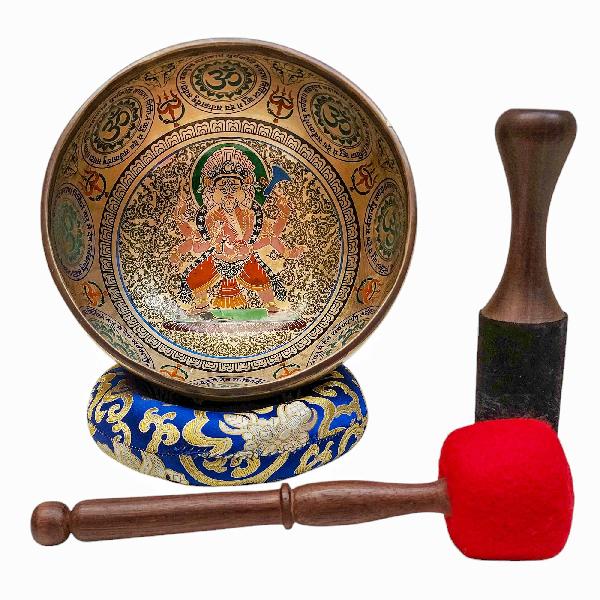
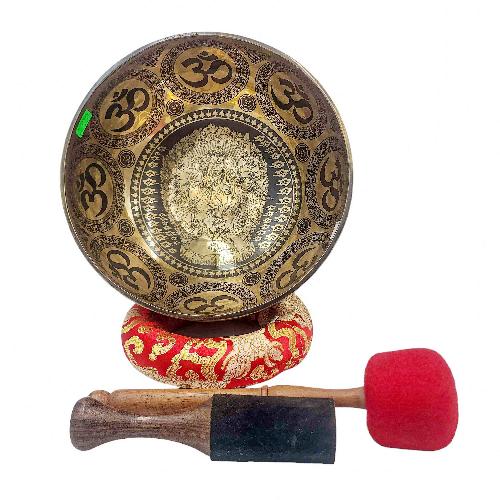
Singing Bowl, Buddhist Hand Beaten, With Ganesh Carved Inside, Select Accessories, Select Accessories
US$ 110.00
45% off
$ 200.00
$ 200.00

32 cm
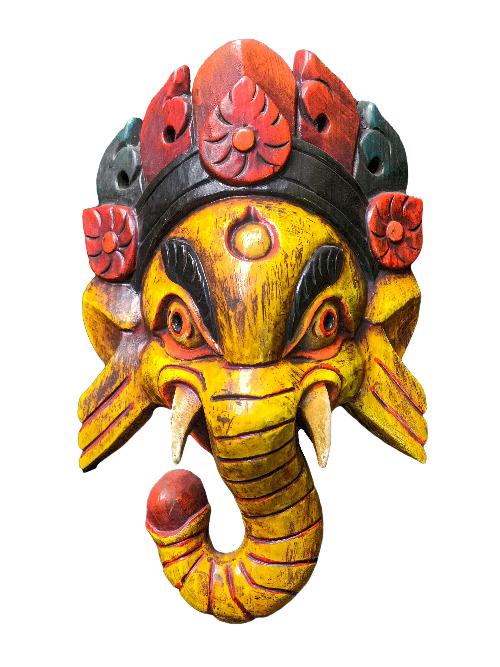
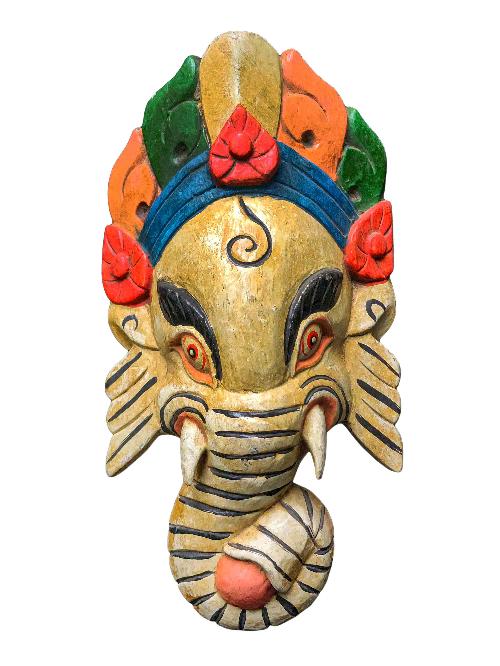
Ganesh Mask, Handmade Wooden Mask, Wall Hanging, Painted, Poplar Wood
US$ 9.35
15% off
$ 11.00
$ 11.00

20 cm
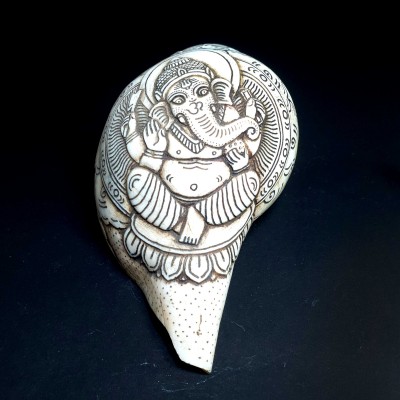
Tibetan Conch Shell With Ganesh Hand Carved
US$ 94.00
15% off
$ 110.00
$ 110.00

25 cm
Singing Bowl, Buddhist Hand Beaten, With OM And Ganesh Carved Inside, Select Accessories
US$ 98.00
45% off
$ 178.00
$ 178.00

49 cm
Ganesh, Handmade Wooden Mask, Wall Hanging, Thangka Color Finishing, Poplar Wood
US$ 40.00
15% off
$ 46.00
$ 46.00

29 cm
Ganesh Mask, Handmade Wooden Mask, Wall Hanging, Painted, Poplar Wood
US$ 9.35
15% off
$ 11.00
$ 11.00

22 cm
Statue Of Ganesh With Real Stone Setting, Better Work
US$ 210.00
15% off
$ 250.00
$ 250.00

30 cm
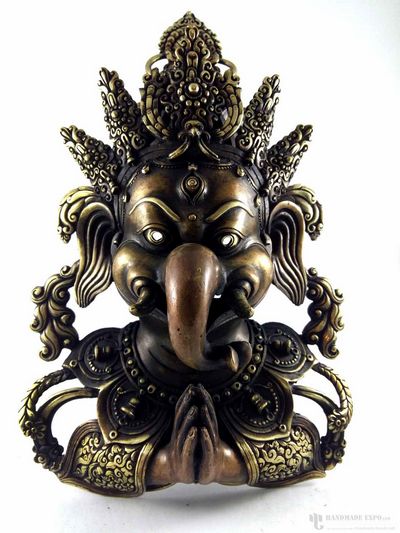
Brass Ganesh In Namaste Gesture
US$ 250.00
15% off
$ 290.00
$ 290.00

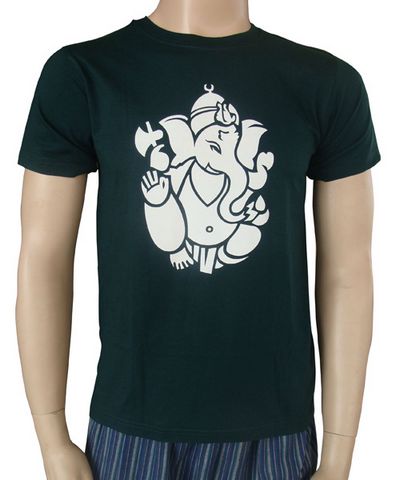
Nepali Cotton Round Neck T-shirt With Ganesh Screen Print
US$ 6.80
15% off
$ 8.00
$ 8.00

9 cm
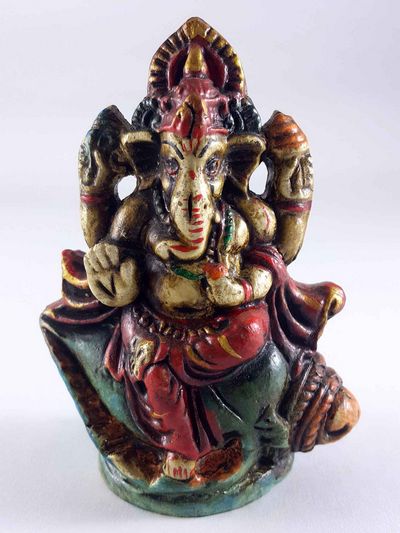
Clay Statue Of Ganesh Made In Nepal, handmade, Painted
US$ 2.55
15% off
$ 3.00
$ 3.00

30 cm
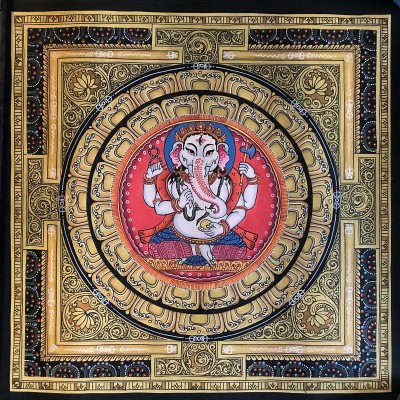
Newari Buddhist Thangka Of Ganesh Mandala
US$ 28.00
15% off
$ 32.00
$ 32.00
www.handmadeexpo.com
Descriptions
- 1st Karmapa Lama
- 21 Tara
- 4th Zhabdrung Rinpoche
- 5th Karmapa Lama
- Achala
- Agate
- Akash Bhairav
- Akash Yogini
- Akshobhya Buddha
- Amitabha Buddha
- Amoghasiddhi Buddha
- Amoghpasa Lokeshvara
- Anna Purana
- Aparimita
- Ardhanarishvara
- Atisha
- Bagh Bhairav
- BaghChal
- Bal Kumari
- Banglamukhi
- Barahi
- Barhma
- Bhadrakali
- Bhairav
- bhimsen
- Black Jambhala
- Bodhisattva
- Book Cover
- Brahma
- Buddha
- Buddha Gaya
- Chakrasamvara
- Chandamaharoshana
- Chatral Rimponche
- Chenrezig
- cheppu
- Chhinnamasta
- Chintamani
- Citipati
- Cundi
- Dakini
- Damchen Garwai Nakpo
- Dipankara Buddha
- Doll
- Dorje Drolo
- Dorje Legpa
- Dragon
- Durga
- Eight Manifestation of Guru Padmasambhava
- Eight Stupa
- Ekajata
- Fasting Buddha
- Five Dhyani Manjushri
- Five Jambhala
- Flora Incense
- Four Friends
- Four Heavenly Kings
- Gampopa
- Ganesh
- Garuda
- Gesar
- Green Jambhala
- Green Tara
- Guhyasamaja
- Gyaltsab Je tsongkapa
- Hanuman
- Hari Hari Hari Vahana Lokeshvara
- Hayagriva
- Hevajra
- Indra
- Jambhala: namtose
- Jhumkabati Singing Bowl
- Jigmey Lingpa
- Kalachakra
- Kali
- Kamadhenu
- Karmapa
- Khedrup Je Tsongkapa
- Krishna
- ksitigarbha
- Kumari
- Kurukulla
- Lakhe
- Lakshmi
- laughing Buddha
- Longchenpa
- Machig Labdron
- Maha Manjushri
- Maha Vairochana
- Mahakala Black
- Mahakala Black Cloak
- Mahakala Four Arms
- Mahakala Panjaranatha
- Mahakala Six Arms
- Mahakala Twelve Arms
- Mahakala Two Arms
- Mahasiddha
- Maitreya Buddha
- Manakamana
- Mandarava
- Manjushri
- Marici
- Marpa Lotsawa
- Marutse
- Maya Devi
- Medicine Buddha
- Metal Ring
- Milarepa
- Naga Kanya
- Nagaraja
- Nagarjuna Buddha
- Nairatmya Yogini
- Namasangiti
- Namgyalma
- Nandi
- NAROPA
- Nataraj
- Nechung
- Padmapani Lokeshvara
- Padmasambhava
- Palden Lahmo
- Pancha Buddha
- Parvati
- Pehar
- Prajnaparamita
- Radha
- Rahula
- Rama
- Ratnasambhava Buddha
- Real Yak Wool Blanket
- Red Jambhala
- Red Tara
- Sahasrabhuja Avalokitesvara
- Sai baba
- Samantabhadra
- Santoshi Mata
- Saraswati
- Sariputra and Maudgalyayana
- Shakyamuni Buddha
- Sherab Chamma
- shiva
- Siddhi Lakshmi
- Simhamukha Yogini
- Simhanada Lokeshvara
- sita
- Sitatapatra
- Snow lion
- Stupa
- Thangtong Gyalpo
- Three Kayug Masters
- Tilopa
- Tonpa Shenrab
- Tripura Sundari
- Tsongkhapa
- Vairochana Buddha
- Vajradhara
- Vajrakilaya
- Vajrapani
- Vajrasattva
- Vajravarahi
- Vajrayogini
- Vasudhara
- Virupa
- Vishnu
- Wangchok Terwal Drolma
- White Jambhala
- White Mahakala
- White Tara
- Yamantaka
- Yamaraj
- Yellow Jambhala
- Yeshe Tsogyal
- AGNI
- Akshamala
- ANKUSH
- Ashtamangala
- Bana
- Begging Bowl
- Bell
- Bell and Dorje
- Bhuma
- Bhumba
- Bina
- Buddha Eye
- Buddhas Foot Prints
- Buddhist Crown
- Bumpa
- Butter lamp
- Chakra
- chakra Man
- Chamaru
- Chandra
- Chhatra
- Chutor
- Conch shell
- Damaru
- Dathar stand
- Dhanusa
- Dharmachakra
- Dhwoja
- Dipa
- Dorje
- Double Dorje
- Endless knot
- Gada
- Ganesh Skunda
- Ghau
- Incense Burner
- Kalas
- Kamandalu
- Kangling
- Kapala
- Kartika
- Khada
- khadga
- khartwanga
- Lingam
- Lotus
- Mayurpiccha
- Mongoose
- Mukha
- Offering Flower
- OM - Hindu
- OM Mani Padme Hum
- Om-Tibetan
- Owl
- Pa
- Padmasana
- Panas
- Parasol
- Phurba
- Prayer Beads
- Prayer Flags
- Prayer Wheel
- Purna Kalash
- Pustak
- Rudraksha Prayer Beads
- Sang Bur
- Serkyem offering
- Shield
- Singing Bowl
- Sri Yantra
- Surya
- Swastika
- Temple Lion
- The Bodhi Tree
- Three Jewels
- Tingsha
- Trishul
- Tsebum
- Turtle
- Utpala
- Yab Yum
- Yin and yang
- Abhaya Mudra
- Alidh Asana
- Bhumisparsa Mudra
- Dharmchakra Mudra
- Dhayan Asan
- Dhyana Mudra
- Jnana Mudra
- Kurmasana
- Lalit Asana
- Namaskar Mudra
- Nrityamurti Asana
- Paryanka Asana
- Rajalila Asana
- Samapada Asana
- Sayana Asana
- Seven Chakra
- Shakti
- Singa Asan
- Tarjani Mudra
- Vajrahunkar Mudra
- Varda Mudra
- Vitarka Mudra
- Buddha Life Story
- Hundred Jataka Tales
- Kalachakra Mandala
- Karma Gadri Art
- Mandala
- Mantra Mandala
- Navagraha
- Pani Buddha
- Refuge tree
- Refuge Tree Padmasambhava
- Refuge Tree Vajradhara
- Refuse Tree shakyamuni Buddha
- Samadhi
- Secret Accomplishment Hayagriva
- The Four Harmonious Friends
- The way to Heaven
- Three Goddess of Divine Grace
- Three Great Bodhisattvas
- Three Long Life Deities
- Tibetan Calendar
- Wheel of Life
- Acrylic Painting
- Acrylic Wool Shawl
- Agarwood
- Alcohol Serving Set
- Amber
- Amber resin
- Amethyst
- Animal Statue
- Anis Seed
- Aquamarine
- Attar Perfume
- Baba Mask
- Bansuri
- Batik Painting
- Batik Wall Hanging
- Bead Bracelet
- Bead Keyring
- Bead Necklace
- Bead Pendant
- Bed Sheet
- Binayo
- Black Star Sapphire
- Bodhicitta
- Bone Bracelet
- Bone Earring
- Bone Keyring
- Bone Necklace
- Bone Pendant
- Bracelet
- Brooch
- Buddha and Its Tachings
- Candle Stand
- Cashmere Shawl
- Cashmere St Shawl
- Cat House
- cedar
- Celestial Musician
- Chakrasambhara Mandala
- Chau Gong
- Coaster set
- Coin Purse
- Copper Pendant
- Coral
- Cotton Bag
- Cotton Cap
- Cotton Dress
- Cotton Jacket
- Cotton Kurta
- Cotton Poncho
- Cotton Scarf
- Cotton Shawl
- Cotton Short
- Cotton Skirt
- Cotton T-shirt
- Cotton Top
- Cotton Trouser
- Cow
- Crystal
- Dehradun
- Dhaka Poncho
- Dhaka Shawl
- Dhau Pati
- Dhunge Dhara
- Dhyangro
- Door Curtain
- Dreamcatcher
- Ek Tare
- Elephant Candle Stand
- Embroidery Shawl
- Essential Oil
- Felt
- Felt Beads
- Felt Beads Matt
- Felt Necklace
- Flower Urn
- Foldable Table
- Foot Singing Bowls
- Fridge Magnets
- Full Moon Bowl
- Ghungroo
- Glass Bead Bag
- Glass Bead Bangle
- Glass Bead Bracelet
- Glass Bead Earring
- Glass Bead Necklace
- Glass Bead Ring
- Golden Michelia
- Guitar Bag
- Gulpa
- Haldu
- Handmade Sandals
- Head Bowl
- Hemp Bag
- Hemp Belt
- Hemp bracelet
- Hemp Broches
- Hemp Coin Purse
- Hemp Hat
- Hemp Keyring
- Hemp Mat
- Hemp Pendant
- Hemp Shoe
- Hemp Slipper
- Herbal Incense
- Herbal Soap
- HImalayan Coffee
- Hookah
- Incense Holder
- Infinity Scarf
- Jade
- Jamawar Shawl
- Jambati Singing Bowl
- Jasmine
- Jasper
- Jesus
- Jewelery Box
- Jhyamta
- Juniper
- Kamasutra
- Karuwa
- Khadkulo - Kota
- Khainjadi
- khukuri
- Knee Bowl
- Knife
- Kopre Singing Bowls
- kusum Mandala
- Labradorite
- Ladies Bag
- Lapis
- Large Cymbal
- Larimar
- Lavender
- Leather Backpack Bag
- Leather Bag
- Leather Purse
- Leather Shoulder Bag
- Leather Waist Bag
- Lighter Case
- Lingam Singing Bowl
- Lokta Paper Envelop
- Lokta Paper Flip Note book
- Lokta paper Gift Bag
- Lokta Paper Lampshade
- Lokta paper Notebook
- Lokta Paper Packing Box
- Lokta Paper Photo Album
- Lokta Paper Prints
- Lokta Paper Scroll
- Lokta Wrapping Paper
- Lunch Box
- Madal
- Makal Incense Burner
- Malachite
- Mallet
- Mani Singing Bowl
- Manipuri Singing Bowl
- Mantra Amulet
- Mantra Book
- Mantra Cd
- Medical Thangka
- Metal Bracelet
- Metal Earring
- Metal Necklace
- Metal Pendant
- Metal Wall Hangings
- Moonstone
- Murchunga
- Musician Set
- Musk Perfume
- Naga Singing Bowl
- Namaste
- Name Plate
- Nepali Carpet
- Nepali Gong
- Nepali Tea
- Nettle Shawl
- Nipple gong
- Ocean Drum
- Offering Bowls
- Offering Tea
- Oil Painting
- Oni
- Onyx
- Oud Perfume
- Pashmina Blanket
- Pashmina Cardigan
- Pashmina cardigan Size
- Pashmina Muffler
- Pashmina Poncho
- Pashmina Shawl
- Pashmina Sweater
- Pashmina Sweater Sizes
- Pashupatinath
- Patchouli
- Peter Hess Singing Bowl
- Pine Wood
- Playing Cards
- Plumeria
- Prayer wheel Stand
- Ratna Mandala
- Religious Books
- Remuna Singing Bowl
- Rose Quartz
- Sandalwood
- Sang phulpa Incense Burner
- Sarangi
- SB- Trapezoid Singing Bowl
- Seven Chakra Incense
- Shawl Embroidery
- Silver Belt Buckle
- Silver Bet Buckle
- Silver Bracelet
- Silver Decoration Plate
- Silver Earring
- Silver Necklace
- Silver Pendant
- Silver Ring
- silver statue
- Singing bowl Cushion
- Skull
- Snuff bottle
- spieces
- Spoon
- Star Ruby
- Stone Carving
- Student Mandala
- Stupa and Temple
- Stupa Box
- sugar
- Swayambhunath
- Tabla
- Table Cloth
- Tea - Bamboo Box
- Tea - cochin
- Tea - Mandala Bag
- Tea - Paper Box
- Tea - Silver Foil
- Tea - Wooden Box
- Tea Box
- Tea Pot
- Thadobati Singing Bowl
- Thangka Brocade
- Thangka Brocaxc
- Thangka Lhyape
- Tibet Blanket
- Tibet Shawl
- Tibetan Agarwood
- Tibetan Balerian Sugandhawan
- Tibetan Bdellium
- Tibetan Benzoin resin
- Tibetan Book Holder
- Tibetan Calamus
- Tibetan Cedarwood
- Tibetan Cedarwood
- Tibetan Chamomile
- Tibetan Cinnamon
- Tibetan Citronella
- Tibetan Door Curtain
- Tibetan Door Lock
- Tibetan Drangon's Blood
- Tibetan Flower
- Tibetan Frank/Incense
- Tibetan Green Tea
- Tibetan Herbal Mint
- Tibetan Himalayan Spice
- Tibetan Holy Basil
- Tibetan Leamongrass
- Tibetan Mokchhya
- Tibetan Mugwort
- Tibetan Nagchampa
- Tibetan Oraganic instruction
- Tibetan Organic Descrition
- Tibetan Palo Santo
- Tibetan Red Sandalwood
- Tibetan Rose
- Tibetan Rosemary
- Tibetan Saal Doop
- Tibetan Saffron
- Tibetan Sandle Wood
- Tibetan Spikenard
- Tibetan Spiritual Healing
- Tibetan Stamp
- Tibetan urn
- Tibetan White Lotus
- Tibetan White Sage
- Tiger
- Tiger Eye
- Tiger Matt
- Tissue Holder
- Torma
- Tortoise
- Tourmaline
- Tribal Mask
- Tseringma
- Tuberose
- Tungana
- Turquoise
- Ultabati Singing Bowl
- Wall Hanging
- Water Bottle
- Watercolor Painting
- Wild Flora
- Wind gong
- Wooden Door
- Wooden Tibetan Box
- Wooden Traveling Altar
- Woolen set
- Woolen Animal Cap
- Woolen Baby Jacket
- Woolen Cap
- Woolen Carpet
- Woolen Glove
- Woolen Hand warmer
- Woolen Jacket
- Woolen Leg Warmers
- Woolen Muffler
- Woolen Poncho
- Woolen Shock
- Woolen Socks
- Woolen Sweater
- Yajna Puja Set
- Yak Wool Muffler
- Yak Wool Shawl
- Yarchagumba