

Loading Content..
Please wait...
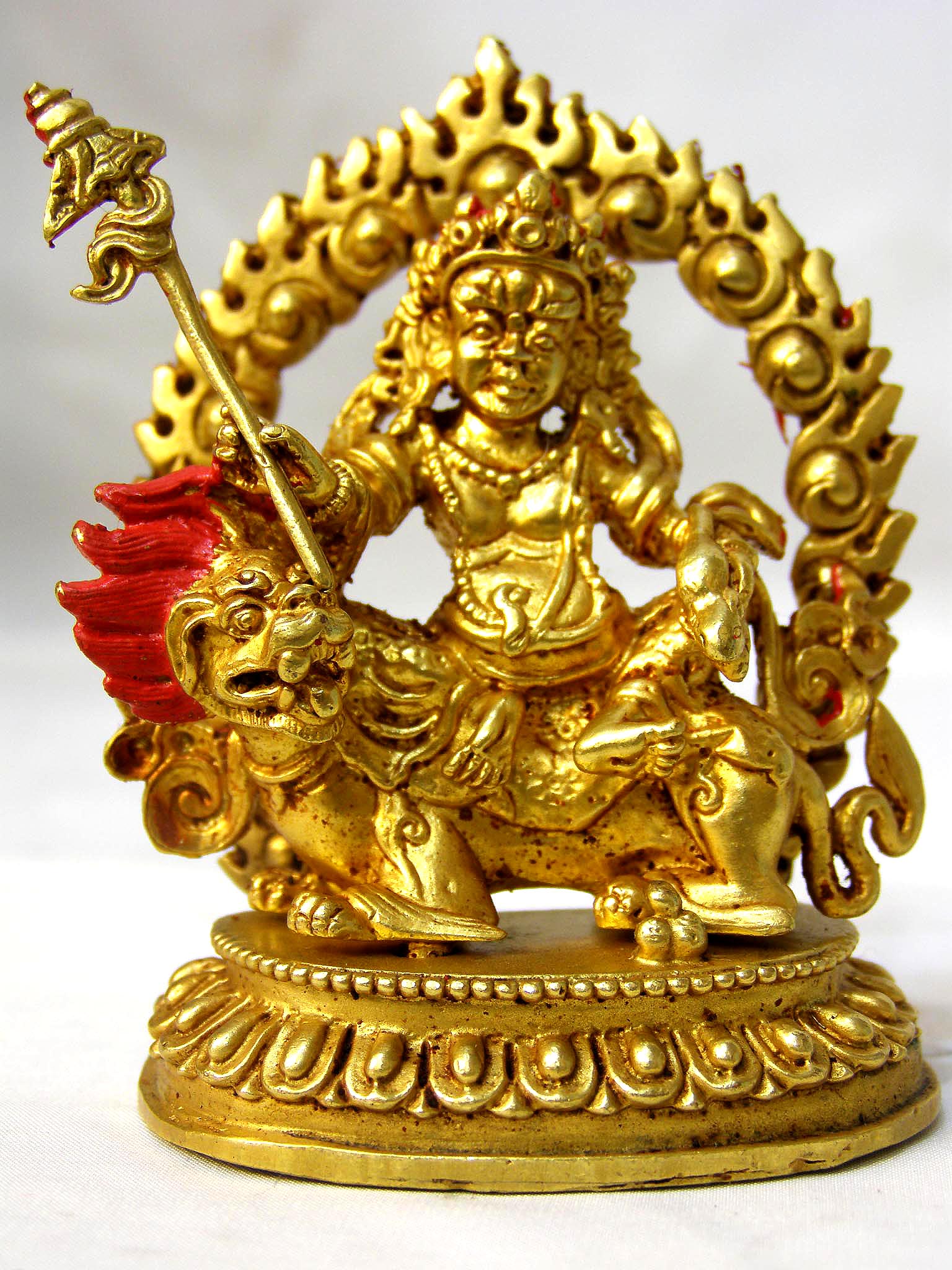
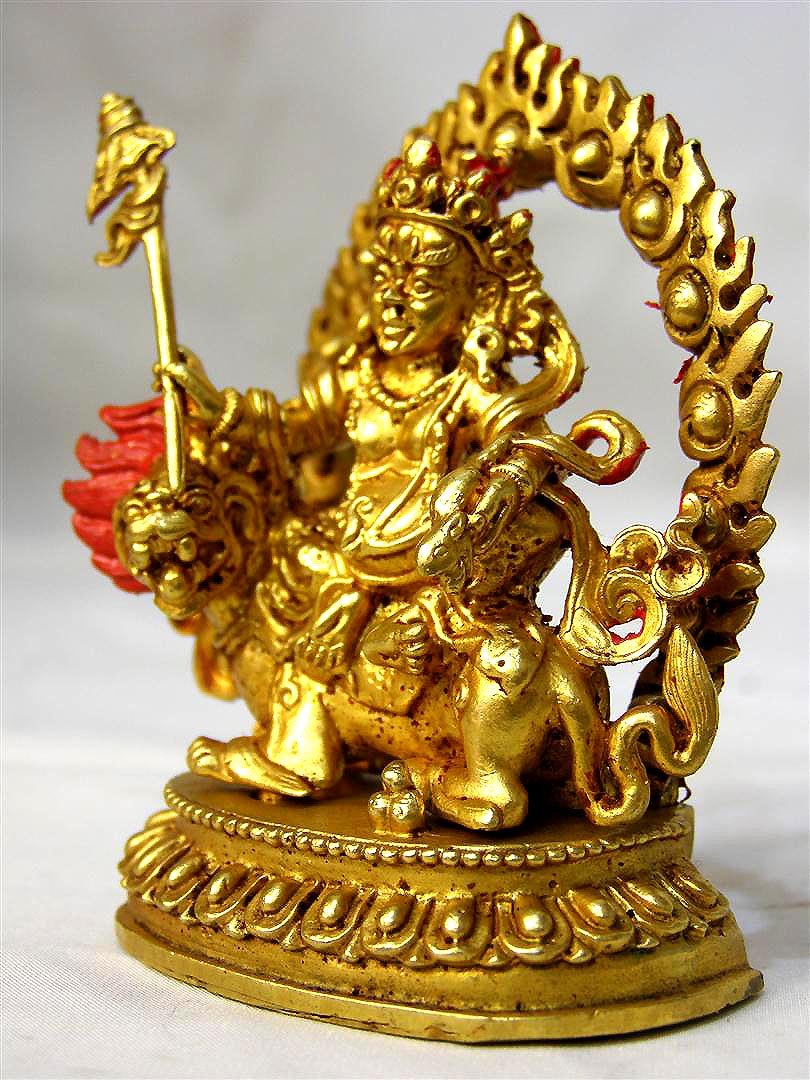

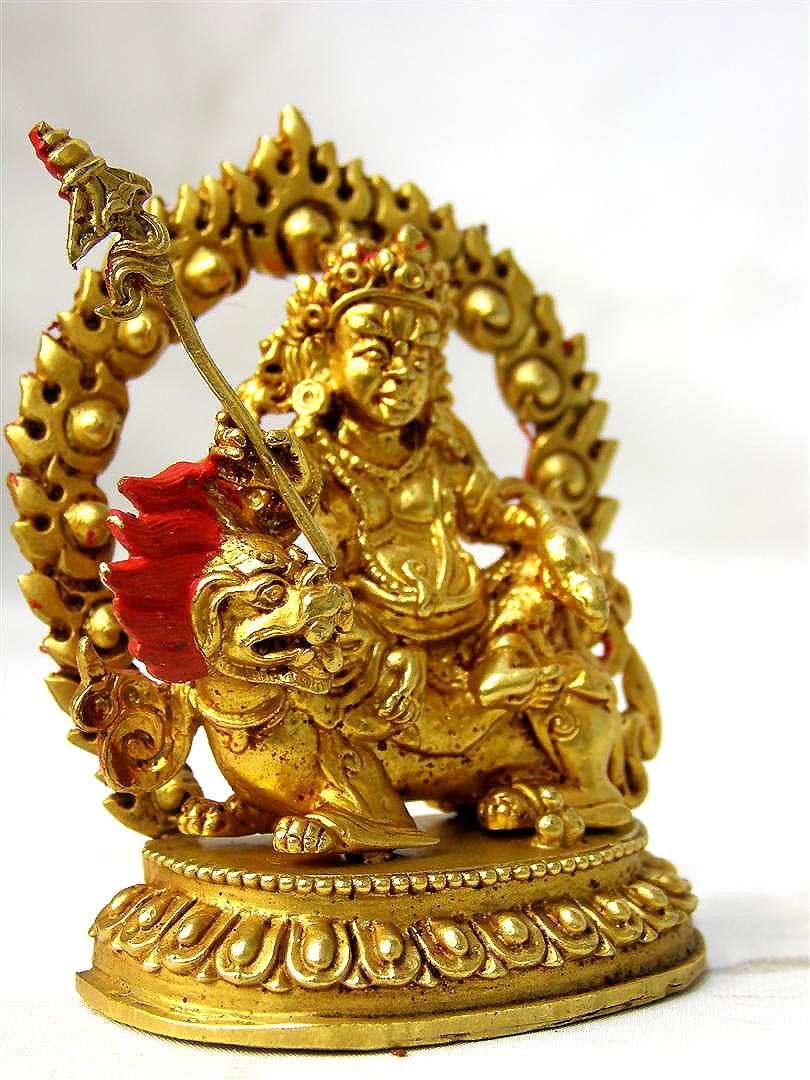
Namtose Vaisravana Jambhala Statue, Full Gold Plated , God of Wealth and Prosperity
Namtose
Duowen Tian
Tamonten
|
|
Product Specification |
|
| Code | HME4761 |
| Size |
Height 7cm (3") Width 5cm (2") Depth 4cm (2") |
Weight | 250 gm - 0.55 lbs |
| Material | Copper |
| Availability | Available |
Order configuration (Optional)
Filling & Blessing
HIDE Select Option
Click Here to View All Option and Prices

Select

Select

Select

Select
Statue Finishing
HIDE Select Option
Click Here to View All Option and Prices

Select

Select

Select

Select

Select

Select

Select

Select

Select

Select

Select

Select

Select

Select

Select

Select

Select

Select

Select

Select

Select

Select

Select

Select

Select

Select

Select

Select

Select

Select

Select

Select

Select

Select

Select

Select

Select

Select

Select

Select
| Quantity | PCS |
US$ 38.00
$ 50.00 -25% off
Shipping Cost
|
| Price Adjustment [ Discount Ends in : 35 days ] |
||
Shipping Calculation
weight of 1 Pcs of the product is 0.5 kg and will cost USD $ 31.00
-
Item location: kathmandu, Nepal
Worldwide shipping - Dispatch
-
We normally dispatch the product in 2-5 business days. Else Buyer will be infromed personally about the dispatch Date.
- Payment
- Paypal | Credit - Debit Card | Bank Transfer | See More
- Return
- 7 days money back, buyer pays return shipping
Variations of Same Product
Welcome to Handmade Handicraft
At Handmade Handicraft, we prioritize simplicity, reflected in our user-friendly website design. We have streamlined the process so everything you need is just a click away.
While our website does not support online shopping, we've incorporated a convenient shopping cart system to assist you in sending us your inquiries. Please note, we do not process payments on our site. All transactions will be handled via email, respecting the inquiries you submit.
Should you encounter any issues while submitting your inquiries, please contact us via mobile app, email, or follow the procedure outlined below. We've provided documentation to guide you through the selection process.
selecting Procedure
In every product you will find Order Now and Quick Inquiry buttons, they are the two process of sending us your enquiry.
If you have any questions or need assistance, please don't hesitate to reach out to us. We are here to help you with your inquiries and ensure a smooth experience.
Copper full gold plated statue by electrolysis system
Jambhala: namtose
Vaisravana or Vessavana, also known as Namtose in Tibetan, is one of the Four Heavenly Kings and holds significant importance in Buddhism. He is often depicted as a warrior-king and is associated with warfare. Vaisravana is known by various names in different cultures and languages, such as Kubera and Jambhala in Sanskrit, Kuvera in Pali, and Namtose in Tibetan. Read More
Iconography:
Vaisravana is typically portrayed with a yellow face and can be seen carrying an umbrella or parasol as a symbol of his sovereignty. He is sometimes depicted with a mongoose, which is shown ejecting jewels from its mouth, representing generosity. His mount is a snow lion.
History:
Vaisravana's character is based on the Hindu deity Kubera, but he has his own distinct functions and associated myths. He is considered the guardian of the northern direction and resides in the northern quadrant of Sumeru. Vaisravana is the leader of all the yaksas who dwell on the slopes of Sumeru.
Temples and Monasteries:
In Tibet, Vaisravana is considered a lokapala or dharmapala in the retinue of Ratnasambhava. He is often depicted on temple murals outside the main door. In Thailand, there is a prominent statue of Vaisravana at Wat Chulamanee temple in Samut Songkhram Province.
Benefit of Practicing:
The practice of Vaisravana is believed to bring benefits such as wealth and prosperity. He is considered a god of wealth and abundance. Devotees seek his blessings to attain material well-being and cultivate a mindset of generosity and detachment from greed.
How to Practice:
The specific practices and rituals associated with Vaisravana may vary across different Buddhist traditions. Generally, devotees can engage in prayers, offerings, and meditation to establish a connection with Vaisravana and seek his blessings.
Mantras:
The mantras associated with Vaisravana vary depending on the specific tradition or lineage. Some common mantras include "Om Vasudhare Svaha" and "Om Jambhala Jalendraye Svaha." These mantras can be chanted as part of the practice to invoke Vaisravana's blessings and protection.
Vaisravana is typically portrayed with a yellow face and can be seen carrying an umbrella or parasol as a symbol of his sovereignty. He is sometimes depicted with a mongoose, which is shown ejecting jewels from its mouth, representing generosity. His mount is a snow lion.
History:
Vaisravana's character is based on the Hindu deity Kubera, but he has his own distinct functions and associated myths. He is considered the guardian of the northern direction and resides in the northern quadrant of Sumeru. Vaisravana is the leader of all the yaksas who dwell on the slopes of Sumeru.
Temples and Monasteries:
In Tibet, Vaisravana is considered a lokapala or dharmapala in the retinue of Ratnasambhava. He is often depicted on temple murals outside the main door. In Thailand, there is a prominent statue of Vaisravana at Wat Chulamanee temple in Samut Songkhram Province.
Benefit of Practicing:
The practice of Vaisravana is believed to bring benefits such as wealth and prosperity. He is considered a god of wealth and abundance. Devotees seek his blessings to attain material well-being and cultivate a mindset of generosity and detachment from greed.
How to Practice:
The specific practices and rituals associated with Vaisravana may vary across different Buddhist traditions. Generally, devotees can engage in prayers, offerings, and meditation to establish a connection with Vaisravana and seek his blessings.
Mantras:
The mantras associated with Vaisravana vary depending on the specific tradition or lineage. Some common mantras include "Om Vasudhare Svaha" and "Om Jambhala Jalendraye Svaha." These mantras can be chanted as part of the practice to invoke Vaisravana's blessings and protection.
The character of Vai?rava?a is founded upon the Hindu deity Kubera, but although the Buddhist and Hindu deities share some characteristics and epithets, each of them has different functions and associated myths. Although brought into East Asia as a Buddhist deity, Vai?rava?a has become a character in folk religion and has acquired an identity that is partially independent of the Buddhist tradition (cf. the similar treatment of Guanyin and Yama).
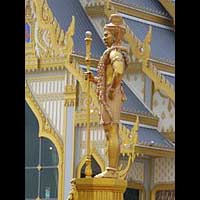 Statue of Vai?rava?a as the guardian at the royal crematorium of King Bhumibol Adulyadej of Thailand, 2017. | 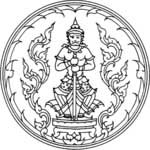 Vai?rava?a as the Seal of Udon Thani Province, Thailand | 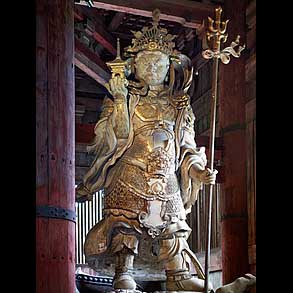 Tamonten statue at T?dai-ji, Nara | 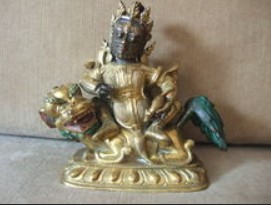 Partly gilded Tibetan bronze statue of Vaisravana (Jambhala) sitting on a snow lion and holding a mongoose in his left hand. 18th century |
Vai?rava?a is the guardian of the northern direction, and his home is in the northern quadrant of the topmost tier of the lower half of Sumeru. He is the leader of all the yak?as who dwell on the Sumeru's slopes.
He is often portrayed with a yellow face. He carries an umbrella or parasol (chakra) as a symbol of his sovereignty. He is also sometimes displayed with a mongoose, often shown ejecting jewels from its mouth. The mongoose is the enemy of the snake, a symbol of greed or hatred; the ejection of jewels represents generosity.
Full Gold Plated with Antique patina
This Jambhala: namtose has finished in a full gold Plated antique patina. The Antique finishing imparts a sense of age and character to the Jambhala: namtose, enhancing its overall appeal. In the Antique finishing process, after the Gold plating is applied, a carefully applied layer of varnish is added. This varnish not only contributes to the antique look but also serves as a protective barrier, ensuring the longevity of the gold plating. It helps to safeguard the gold layer but also prevents tarnishing for an extended period. Read More
Related Products

100 cm
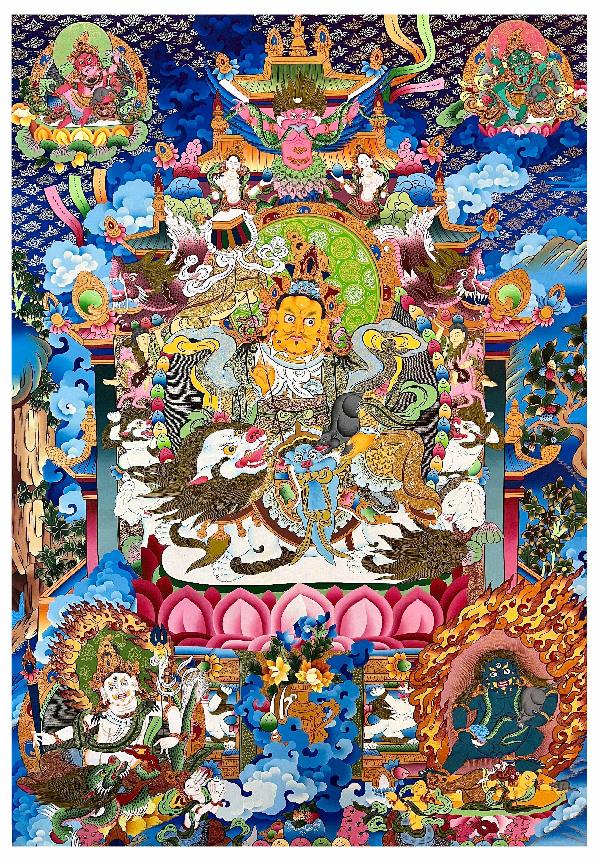
Jambhala: Namtose Thangka, Tibetan Buddhist Art, Hand Painted, Real Gold
US$ 560.00
25% off
$ 740.00
$ 740.00

77 cm
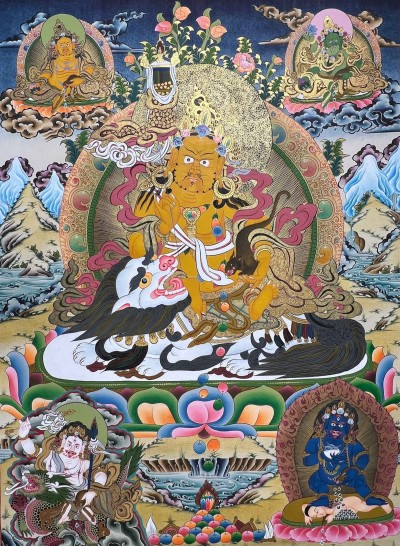
Buddhist Handmade Thangka Of Jambhala: Namtose, Hand Painted
US$ 500.00
25% off
$ 660.00
$ 660.00

70 cm
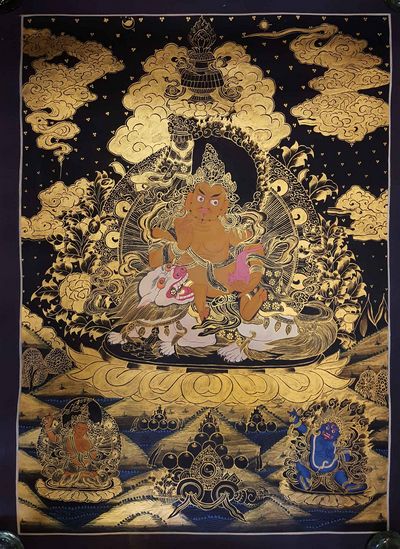
Lion Namtose Vaisravana Jambhala Thangka Painting, Smoked Antique Finishing
US$ 53.00
25% off
$ 70.00
$ 70.00

50 cm
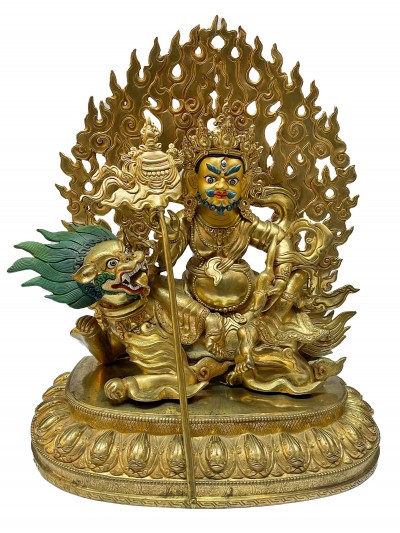
Nepali Statue Of Namtose Vaisravana Jambhala, Copper Gold Plated
US$ 7,350.00
25% off
$ 9,800.00
$ 9,800.00