

Loading Content..
Date Added : 2026-04-03 06:42:58 (2)Views

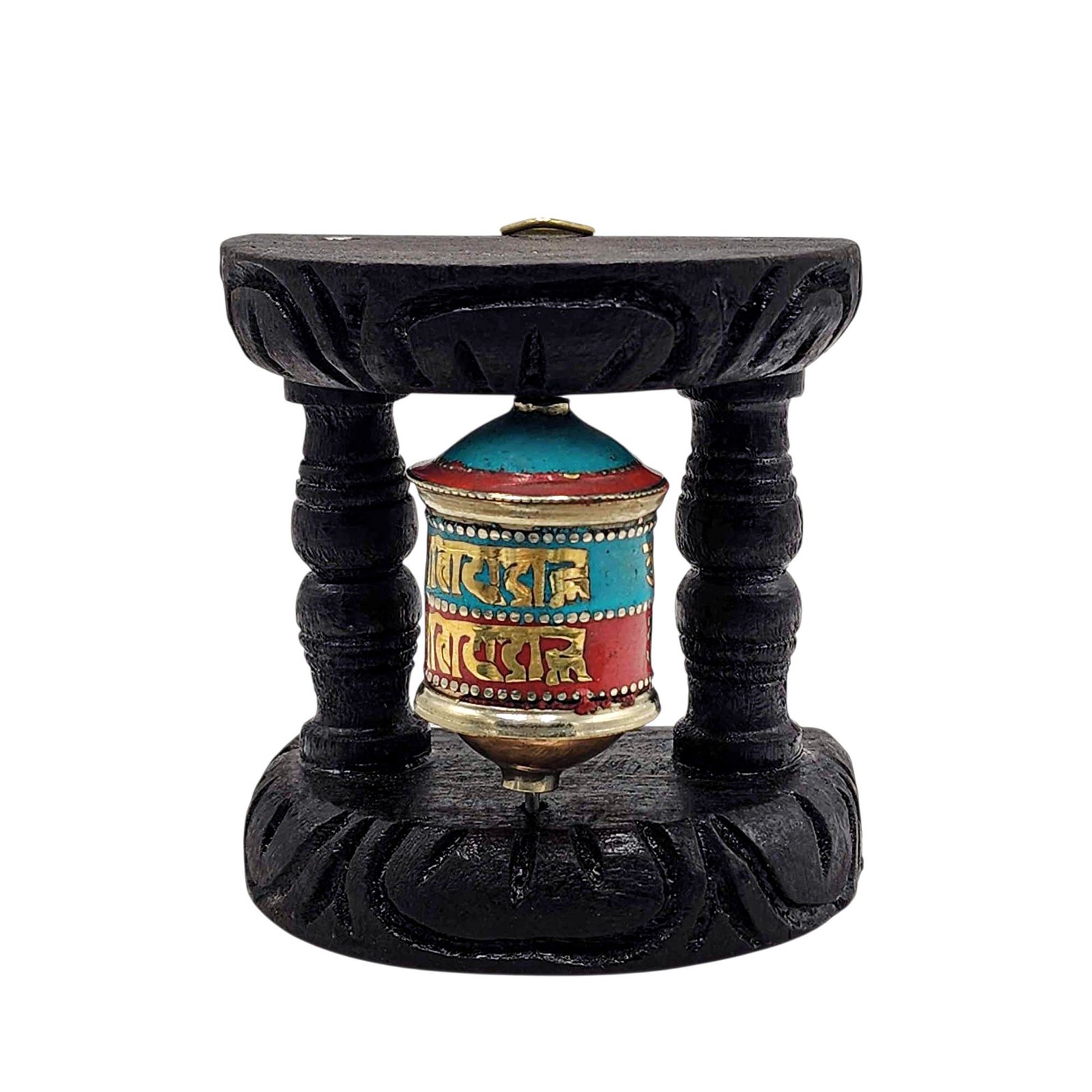
Handmade Buddhist Wall Prayer Wheel with Mantra Inside, Stone Setting, OMPH, Wall Mountable , A wheel containing mantras, used to accumulate merit and spread blessings
Mani Wheel
Falun
Furin
|
|
Product Specification |
|
| Code | HME37220 |
| Size |
Height 10cm (4") Width 9cm (4") Depth 6cm (2") |
Weight | 100 gm - 0.22 lbs |
| Material | Wood and Brass |
| Availability | Available |
| Quantity | PCS |
US$ 9.38
$ 12.50 -25% off
Shipping Cost
|
| Price Adjustment [ Discount Ends in : 30 days ] |
||
Shipping Calculation
weight of 1 Pcs of the product is 0.5 kg and will cost USD $ 31.00
-
Item location: kathmandu, Nepal
Worldwide shipping - Dispatch
-
We normally dispatch the product in 2-5 business days. Else Buyer will be infromed personally about the dispatch Date.
- Payment
- Paypal | Credit - Debit Card | Bank Transfer | See More
- Return
- 7 days money back, buyer pays return shipping
Welcome to Handmade Handicraft
At Handmade Handicraft, we prioritize simplicity, reflected in our user-friendly website design. We have streamlined the process so everything you need is just a click away.
While our website does not support online shopping, we've incorporated a convenient shopping cart system to assist you in sending us your inquiries. Please note, we do not process payments on our site. All transactions will be handled via email, respecting the inquiries you submit.
Should you encounter any issues while submitting your inquiries, please contact us via mobile app, email, or follow the procedure outlined below. We've provided documentation to guide you through the selection process.
selecting Procedure
In every product you will find Order Now and Quick Inquiry buttons, they are the two process of sending us your enquiry.
If you have any questions or need assistance, please don't hesitate to reach out to us. We are here to help you with your inquiries and ensure a smooth experience.
Prayer Wheel
A prayer wheel is a cylindrical wheel on a spindle made from metal, wood, stone, leather, or coarse cotton. Traditionally, the mantra Om Mani Padme Hum is written in the Newari language of Nepal, on the outside of the wheel. Also sometimes depicted are Dakinis, Protectors, and very often the 8 auspicious symbols Ashtamangala. At the core of the cylinder is a "Life Tree" often made of wood or metal with certain mantras written on or wrapped around it. Many thousands (or in the case of larger prayer wheels, millions) of mantras are then wrapped around this life tree. The Mantra Om Mani Padme Hum is most commonly used, but other mantras may be used as well. According to the Tibetan Buddhist tradition based on the lineage texts regarding prayer wheels, spinning such a wheel will have much the same meritorious effect as orally reciting the prayers. Read More
Origin
The earliest recorded prayer wheels were written of by a Chinese pilgrim around 400 C.E. in Ladakh.prayer wheel is a physical manifestation of the phrase "turning the wheel of Dharma," which describes the way in which the Buddha taught. Prayer Wheels originated from The School of Shakyamuni sutra, which states that, those who set up the place for worship, use the knowledge to propagate the dharma to common people, should there be any man or woman who are illiterate and unable to read the sutra, they should then set up the prayer wheel to facilitate those illiterate to chant the sutra, and the effect is the same as reading the sutra
According to the Tibetan tradition, the prayer wheel lineage traces back to the famous Indian master, Arya Nagarjuna. Tibetan texts also say that the practice was taught by the Indian Buddhist masters Tilopa and Naropa as well as the Tibetan masters Marpa and Milarepa.
Practice
According to the lineage texts on prayer wheels, prayer wheels are used to accumulate wisdom and merit (good karma) and to purify negativities (bad karma). In Buddhism, Buddhas and Bodhisattvas have created a variety of skillful means (upaya) to help bring practitioners ever closer to realizing enlightenment. The idea of spinning mantras relates to numerous Tantric practices whereby the Tantric practitioner visualizes mantras revolving around the nadis and especially around the meridian chakras such as the heart and crown. Therefore, prayer wheels are a visual aid for developing one's capacity for these types of Tantric visualizations. The spiritual method for those practicing with a prayer wheel is very specific (with slight variations according to different Buddhist sects). The practitioner most often spins the wheel clockwise, as the direction in which the mantras are written is that of the movement of the sun across the sky. On rare occasions, advanced Tantric practitioners such as Senge Dongma, the Lion-Faced Dakini, spin prayer wheels counterclockwise to manifest a more wrathful protective energy. As the practitioner turns the wheel, it is best to focus the mind and repeat the Om Mani Padme Hum mantra. Not only does this increase the merit earned by the wheel's use, but it is a mind-stabilization technique that trains the mind while the body is in motion. Intoning the mani mantra with mindfulness and the "Bodhicitta" motivation dramatically enhances the effects of the prayer wheel. However, it is said that even turning it while distracted has benefits and merits, and it is stated in the lineage text that even insects that cross a prayer wheel's shadow will get some benefit. Each revolution is as meritorious as reading the inscription aloud as many times as it is written on the scroll, and this means that the more Om Mani Padme Hum mantras that are inside a prayer wheel, the more powerful it is. It is best to turn the wheel with a gentle rhythm and not too fast or frantically. While turning smoothly, one keeps in mind the motivation and spirit of compassion and bodhichitta (the noble mind that aspires to full enlightenment for the benefit of all beings). The benefits attributed to the practice of turning the wheel are vast. Not only does it help wisdom, compassion and bodhichitta arise in the practitioner, it also enhances siddhis (spiritual powers such as clairvoyance, precognition, reading others thoughts, etc.). The practitioner can repeat the mantra as many times as possible during the turning of the wheel, stabilizing a calm, meditative mind. At the end of a practice session, there is a Tibetan Buddhist tradition of dedicating any accumulated merits that one may have gathered during practice to the benefit of all sentient beings. Then Om Ah Hum 3 times. This is customary with Tibetans upon completing any Buddhist practice, including the practice of the prayer wheel.
Thubten Zopa Rinpoche has commented that installing a prayer wheel has the capacity to completely transform a place, which becomes "...peaceful, pleasant, and conducive to the mind." Simply touching a prayer wheel is said to bring great purification to negative karmas and obscurations.
Finishing: Stone Setting
The Prayer Wheel is adorned with an exquisite array of semi-precious stones, including turquoise, coral, and lapis lazuli. These stones are carefully selected and meticulously placed on the Prayer Wheel's surface, adding a touch of opulence and enhancing its overall beauty. Each stone is thoughtfully positioned using a high-quality adhesive, ensuring secure and long-lasting attachment. The vibrant colors and unique patterns of the stones create a captivating contrast against the backdrop of the Prayer Wheel, elevating its visual appeal and making it truly eye-catching. Read More
OM Mani Padme Hum
: What is Om Mani Padme Hum"Om Mani Padme Hum" is a sacred mantra in Tibetan Buddhism that holds deep spiritual significance. It is associated with Avalokiteshvara, the bodhisattva of compassion. The mantra is a powerful invocation and is believed to encompass the essence of compassion, wisdom, and enlightenment. Read More
Related Products
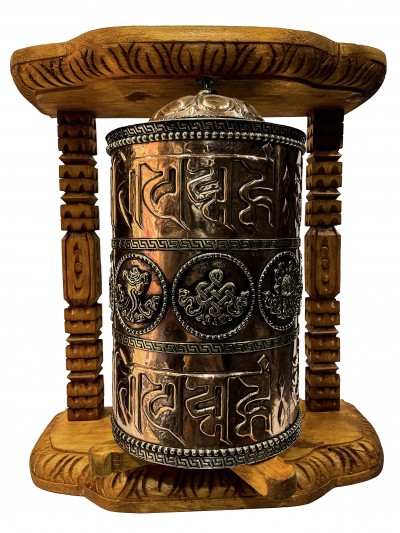
40 cm
Wall Prayer Wheel Big Size With Mantra Inside, Ashtamangala With Carved Mantra, Wall Mountable
US$ 110.00
$ 150.00 - 25% off
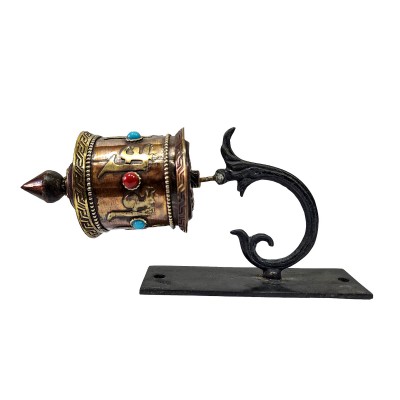
18 cm
Wall Hanging Prayer Wheel With Mantra Inside, With Carved Mantra, Stone Setting, Wall Mountable, Wall Mountable
US$ 12.00
$ 15.00 - 25% off
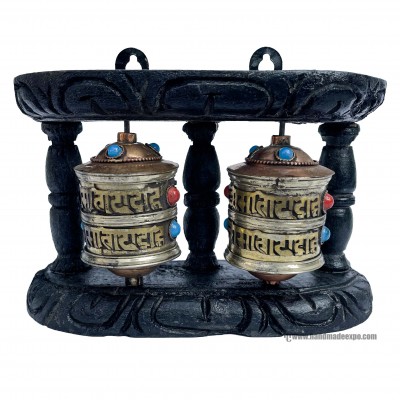
16 cm
Double Brass Prayer Wheel On Wooden Frame, With Mantra Inside, Wall Mountable
US$ 9.75
$ 13.00 - 25% off
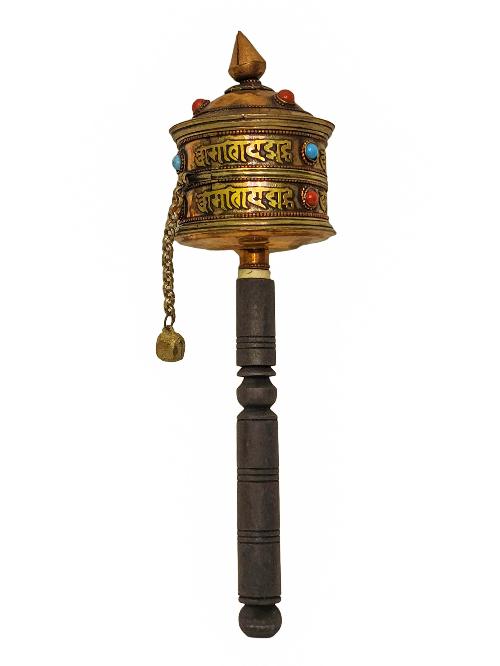
26 cm
Hand Held Prayer Wheel, Buddhist Handmade Prayer Wheel With Mantra Carved
US$ 7.50
$ 10.00 - 25% off