


Loading Content..
Please wait...
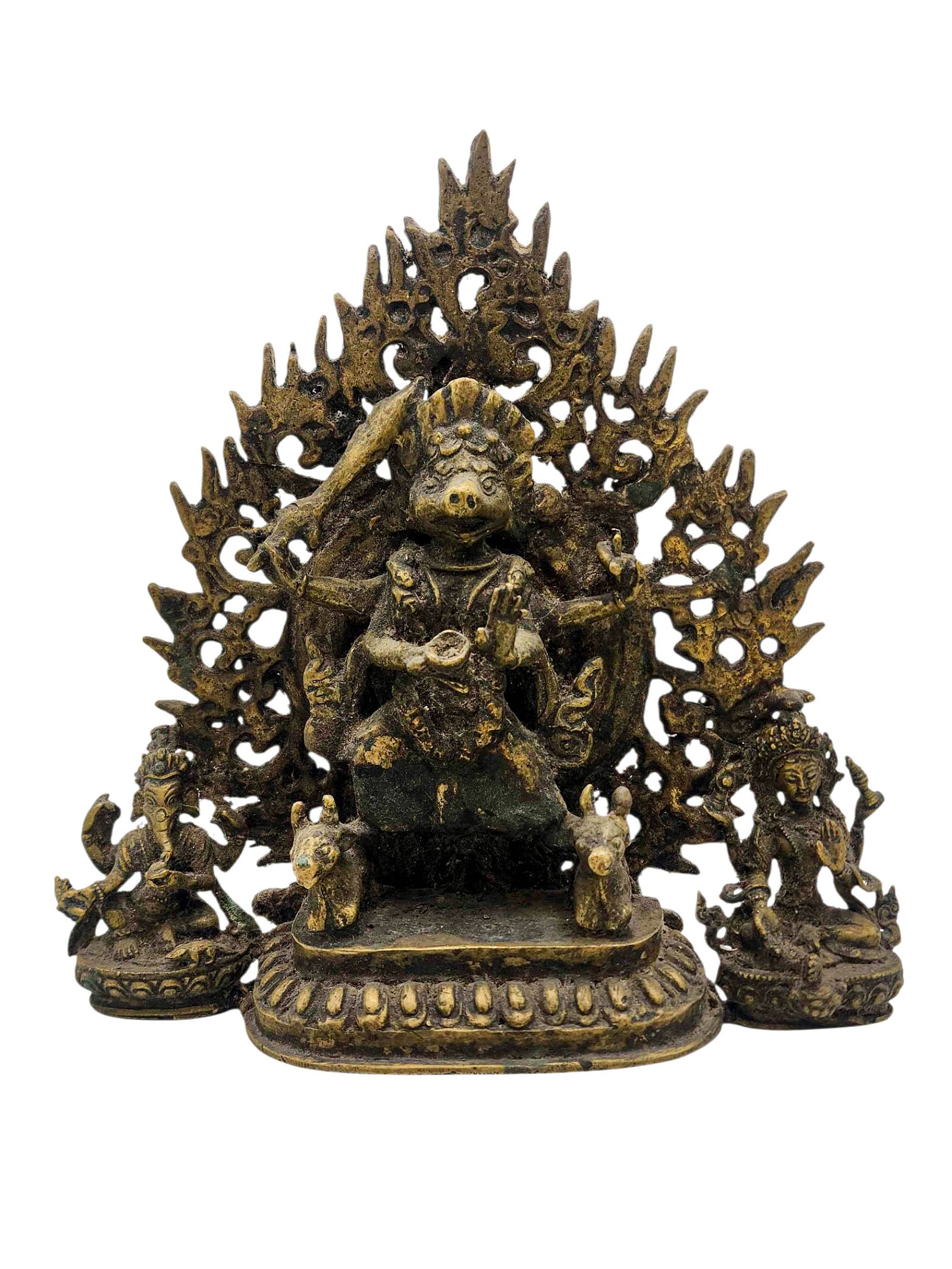

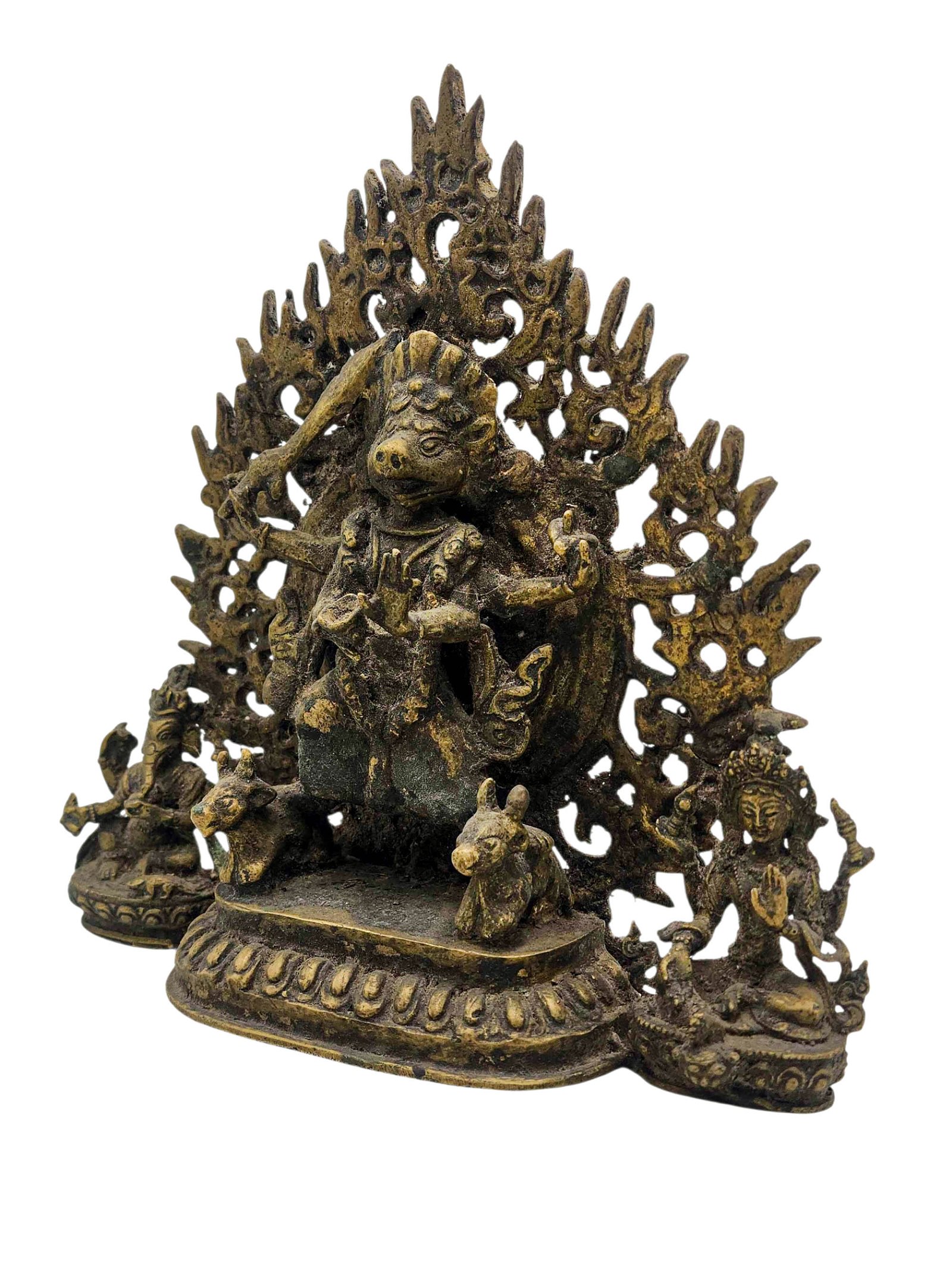
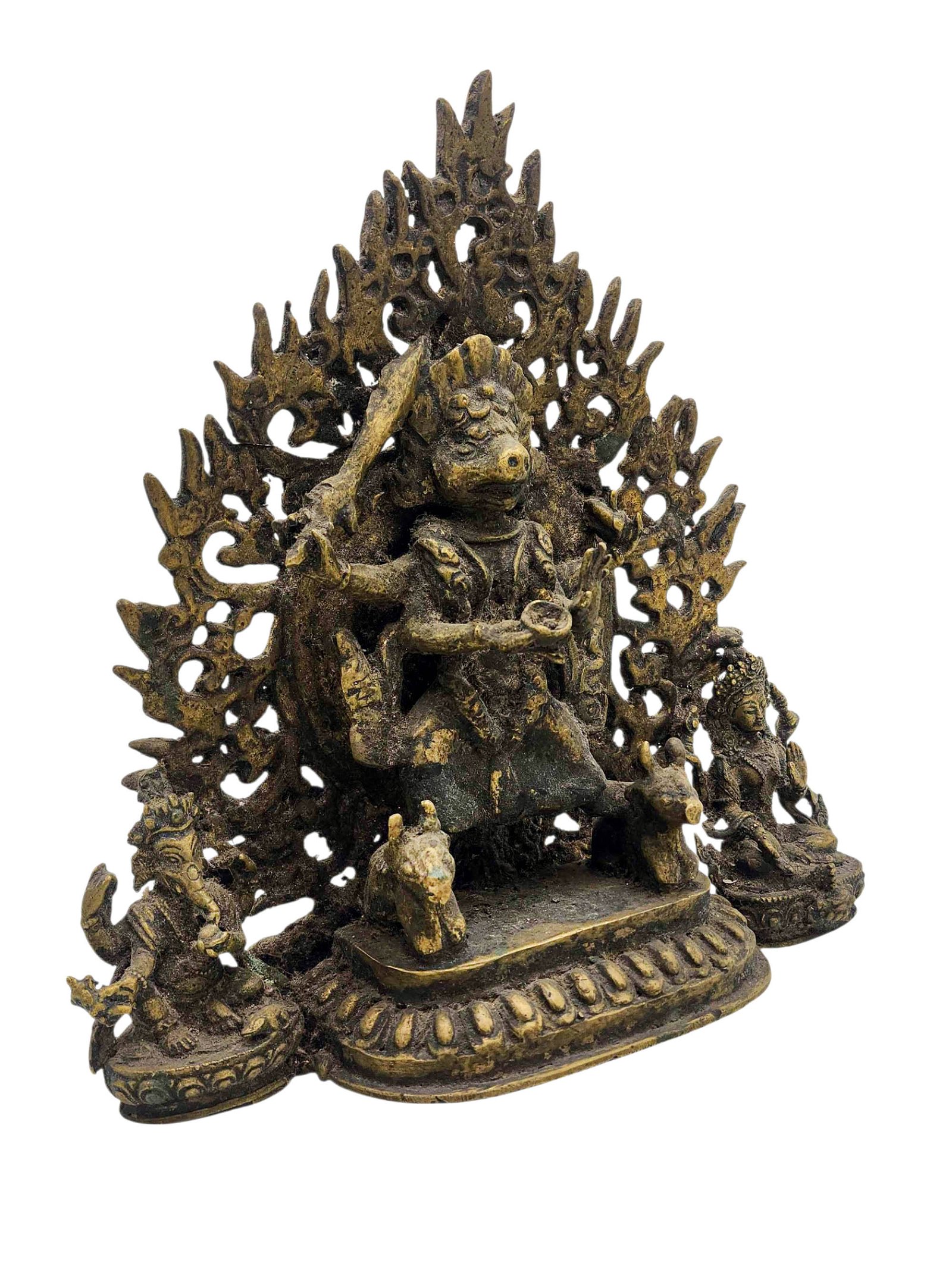
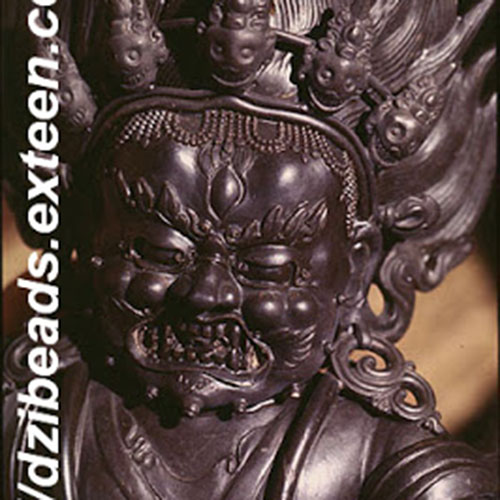
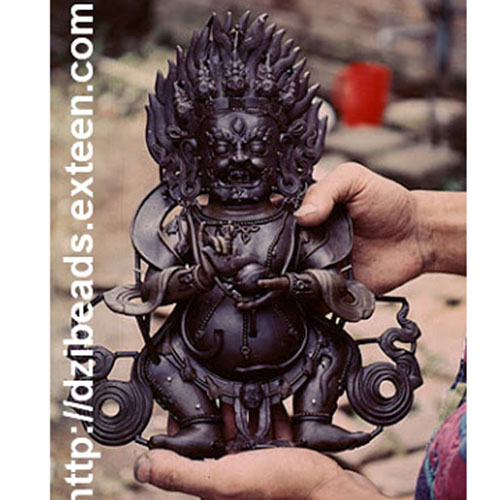
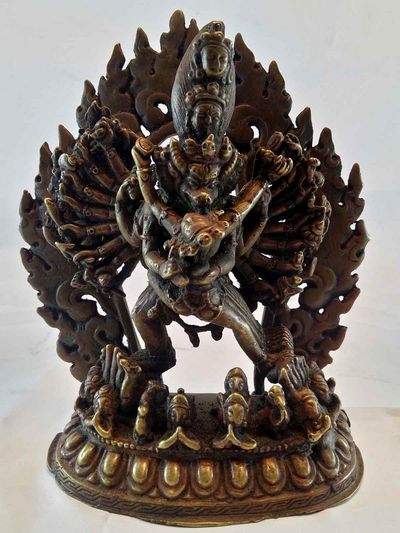
Yamantaka with Ganesh and Lakshmi, Handcrafted Buddhist Statue, Antique Finish , wrathful destroyer of ignorance
Shinje She
Dawiede Mingwang
Daiitoku Myoo
|
|
Product Specification |
|
| Code | HME37031 |
| Size |
Height 23cm (9") Width 23cm (9") Depth 9cm (4") |
Weight | 1.95 kg - 4.3 lbs |
| Material | Copper |
| Availability | Available |
Order configuration (Optional)
Filling & Blessing
HIDE Select Option
Click Here to View All Option and Prices

Select

Select

Select

Select
Statue Finishing
HIDE Select Option
Click Here to View All Option and Prices

Select

Select

Select

Select

Select

Select

Select

Select

Select

Select

Select

Select

Select

Select

Select

Select

Select

Select

Select

Select

Select

Select

Select

Select

Select

Select

Select

Select

Select

Select

Select

Select

Select

Select

Select

Select

Select

Select

Select

Select
| Quantity | PCS |
US$ 280.00
$ 330.00 -15% off
Shipping Cost
|
| Price Adjustment Status: Active |
||
Shipping Calculation
weight of 1 Pcs of the product is 2 kg and will cost USD $ 47.00
-
Item location: kathmandu, Nepal
Worldwide shipping - Dispatch
-
We normally dispatch the product in 2-5 business days. Else Buyer will be infromed personally about the dispatch Date.
- Payment
- Paypal | Credit - Debit Card | Bank Transfer | See More
- Return
- 7 days money back, buyer pays return shipping
Welcome to Handmade Handicraft
At Handmade Handicraft, we prioritize simplicity, reflected in our user-friendly website design. We have streamlined the process so everything you need is just a click away.
While our website does not support online shopping, we've incorporated a convenient shopping cart system to assist you in sending us your inquiries. Please note, we do not process payments on our site. All transactions will be handled via email, respecting the inquiries you submit.
Should you encounter any issues while submitting your inquiries, please contact us via mobile app, email, or follow the procedure outlined below. We've provided documentation to guide you through the selection process.
selecting Procedure
In every product you will find Order Now and Quick Inquiry buttons, they are the two process of sending us your enquiry.
If you have any questions or need assistance, please don't hesitate to reach out to us. We are here to help you with your inquiries and ensure a smooth experience.
Yamantaka
Yama represents the end of one cycle & beginning of another. The deity Yama is wrathful to try to encourage you not to return to a previous cycle or habit. He is there to help you break the cyclical nature of existence [Skt. Samsara so that you can access the higher realm of human consciousness. He is fed up with the attachment of mankind to the Five negative afflictions [Skt. Kleashas] if pushed he has the authority to send you at your physical death to a place of ice & fire. Read More
Iconography
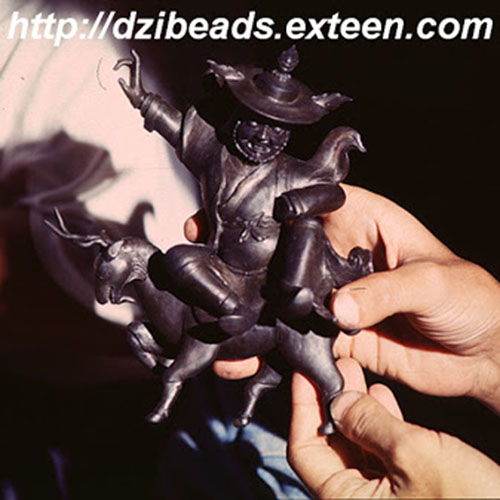
The five skulls on Yama's diadem represent the Five Negative Affliction Or poisonous Buddhsit_Art_Yamaobstacles [Skt. Kleshas] to spiritual development which are greed, hatred, delusion, jealousy & pride & the transmutation of the five afflictions into the five wisdoms. His special power to change the five troubles is indicated by the tongues of crimson flame that arise from the cranium of each skull. He is painted with a bull's head, and he straddles a blue boar which crushes a human form. In his left hand in the threatening hand position [Skt. Tarjani Mudra] Yama brandishes a skull club [Skt. Kapala Danda] also carried by Kali [Shiva] & Bhairav that symbolises "smashing the veil of ignorance" and the ultimate emptiness of all phenomena which we need to realise the highest Buddhist ideal of Great Bliss [Skt. Mahasukha], pure consciousness and love. The energy is so powerful that it is sealed with a half vajra at the top. The white silk ribbons represents his ability adapt his energy to destroy ignorance in all its forms. In his right hand he holds a rope noose [Skt. Pasha] . One end has a hook and the other a ring which representing the catching & binding of the ego, the possibility of strangulation.
His sister Yami holds a skullcap [Skt. Kapala] held at his heart in his right hand hold red rejuvenating blood of Great Bliss called Raktavarna[skt.] representing 'wisdom'. The white breast ornament represents the wheel of life [Skt. Jivan Chakra] Jivan is a Sanskrit word meaning soul. Chakra means wheel. The wheel of Life is often called the Bhavacakra. Bhava means container or receptacle in the sense of body or form. The degree of wrath & and tantric power a deity has is often measured by the quantity of flame in the aureole of flame surrounding body. Yama is surrounded by a Fire Wheel [Tib. Me-Khor] which represents his ability to annihilate anything or anyone that crosses his path, but especially the obscuration to pure conscious enlightenment of which ignorance is considered the chief poison. The fire wheel radiate as pure psychic energy whose potency is alluded to in Yama's erect penis. Nothing can withstand Yama's fire wheel. In the foreground there are the Three Skull Offerings which represent the items necessary for rebirth. The left & right skulls are traditionally mounted on three smaller skulls. The left blue blood represents semen & the right red blood fertile uterine blood with the central skull contains the offering of the five senses representing the consciousness. The five senses are 1. the heart representing touch, 2. the eyes - sight, 3. tongue - taste, 4. nose - smell & 5. ears - sound. The attached hair indicates its freshness. The offering of the five senses is key to Yama's purpose; the offering is about rebirth the beginning of something new life.
Commentary
Yama is an ancient Vedic deity. His name comes from the root Ya meaning 'twin' in the sense of to restrain or bound. In Tibet Yama is usually Dam Can Chos rGyal, 'The Pledge Bound Dharma-King'. The later alludes to his conversion to Buddhism by Manjusri, the Bodhisattva of Wisdom in his wrathful manifestation as Yamantaka 'the Destroyer of Yama". There are three common forms of Yama that occur in Tibetan Buddhism which are called respectively the External, Internal, and Secrete Yama. This painting depicts the External or Outer form of Yama who is a Dharma protector invoked to protect devotees from mundane difficulties such as physical illness and hunger. He is the colour blue and is shown in the characteristic fierce standing pose of a protective deity with a pot belly and erect penis. He has the head of a fierce bull with sharply pointed horns and protruding blood shot eyeballs. The bull is an ancient symbol in Indic religions that is associated with Yama and death, but also can symbolize procreation. This ambivalent symbolism is understood in the Buddhist context as the overcoming of death to create eternal life. Yama is personified as a bull as a metaphor of the uncontrolled mind that one must learn to control to overcome death. In his role as lord of hell, Yama should not be confused with Western religious notions of the Devil as the embodiment of evil but as a deity given a task within the greater Buddhist cause of the salvation of all living beings. In Buddhist symbolic terms the overcoming of death by terminating the cycle of rebirth is the ultimate goal and it is Yama who serves as a transformer in that process by embodying impermanence.
Lakshmi
: Brief IntroductionLakshmi is the Hindu goddess of wealth, prosperity (both material and spiritual), light, wisdom, fortune, fertility, generosity and courage; and the embodiment of beauty, grace and charm. Representations of Lakshmi are also found in Jain monuments. Also called Mahalakshmi, she is said to bring good luck, and is believed to protect her devotees from all kinds of misery and money-related sorrows.
Lakshmi in Sanskrit is derived from its elemental form lakS, meaning "to perceive or observe". This is synonymous with lakṣya, meaning "aim" or "objective". The Hindu sacred texts, the Vedas call Mahalakshmi as Lakshyayidhi Lakshmihi which means she is the one who has the object and aim of uplifting mankind. Read More
Ganesh
: Brief IntroductionGanesha is one of the deities best-known and most widely worshiped in the Hindu pantheon. His image is found throughout India and Nepal. Hindu sects worship him regardless of affiliations. Devotion to Ganesha is widely diffused and extends to Jains, Buddhists, and beyond India.
Although he is known for many other attributes, Ganesha's elephant head makes him particularly easy to identify. Ganesha is widely revered as the Remover of Obstacles and more generally as Lord of Beginnings and Lord of Obstacles, patron of arts and sciences, and the deva of intellect and wisdom. He is honored at the beginning of rituals and ceremonies and invoked as Patron of Letters during writing sessions. Several texts relate mythological anecdotes associated with his birth and exploits and explain his distinct iconography. Read More
Antique Finishing
This is an antique patina-finished Yamantaka. This is not an antique statue. It is just an antique patina finish. This Yamantaka is a testament to the artisan's mastery of the art of aging. Its antique patina has been meticulously crafted to give the appearance of an aged statue, showcasing the artist's unique techniques and skills. Through undisclosed processes and careful aging treatments, the Yamantaka undergoes a transformation that captures the essence of time and history. Read More
Lost-Wax System
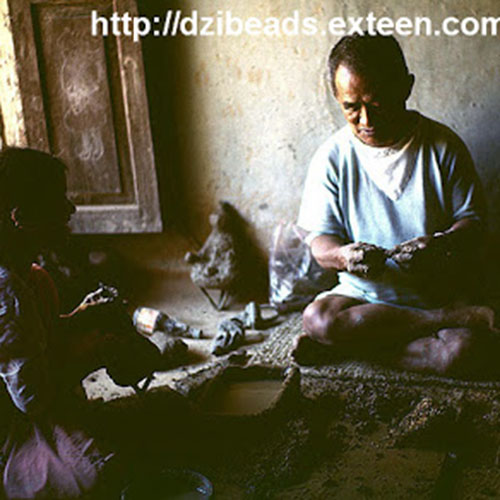
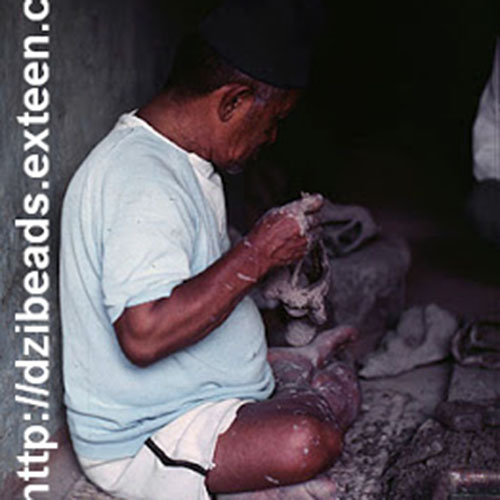
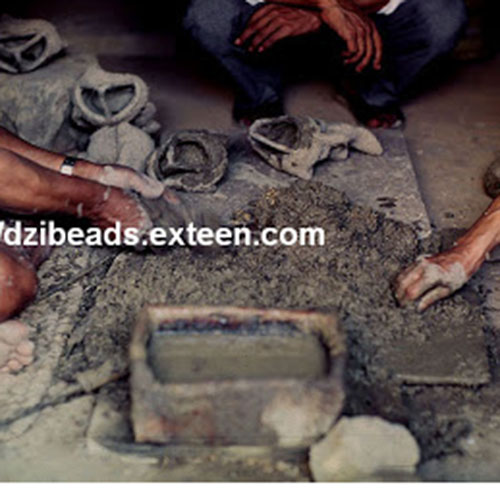
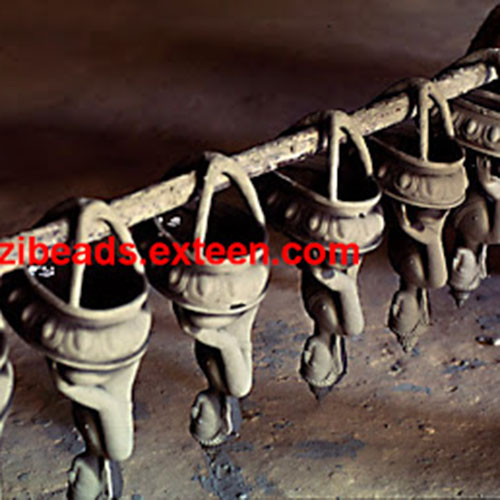
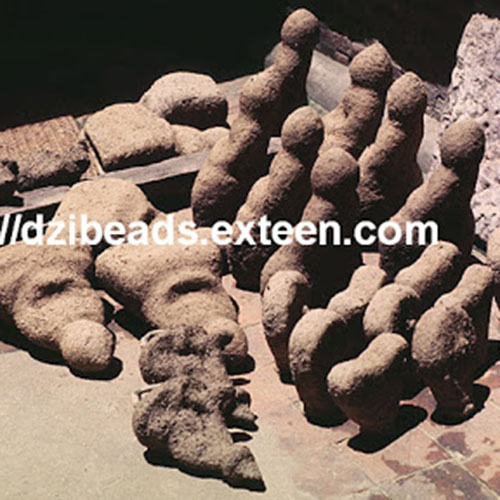
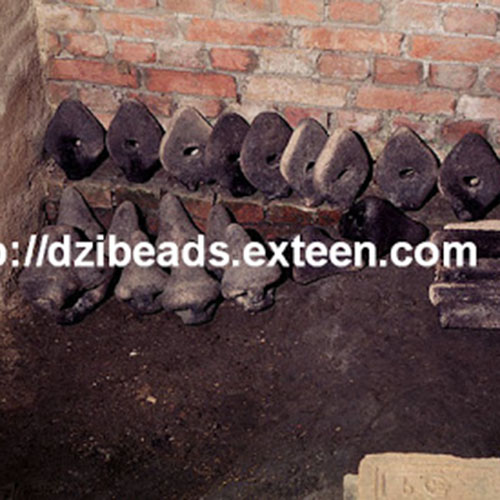
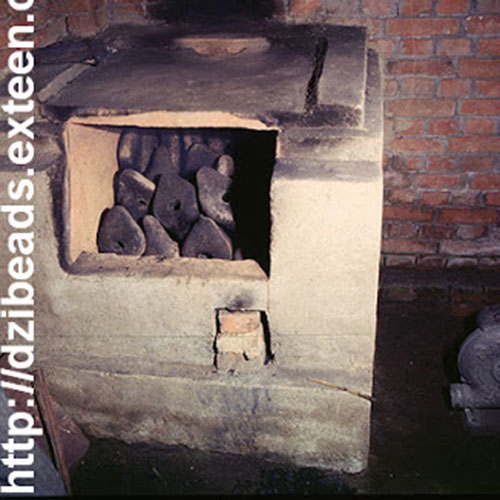
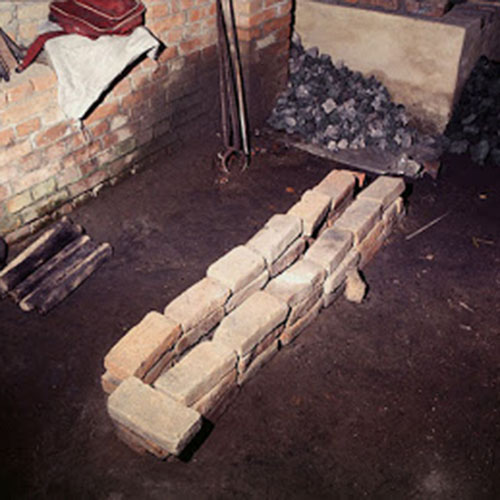
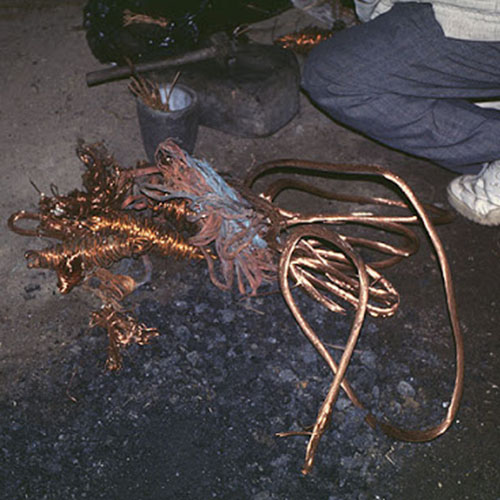
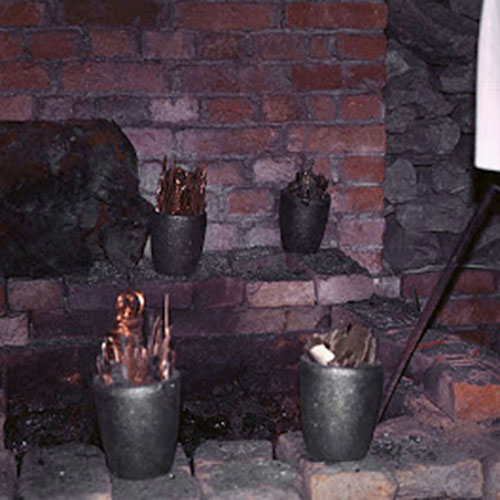
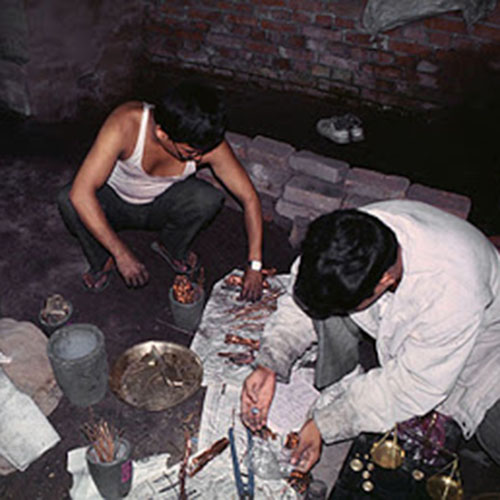
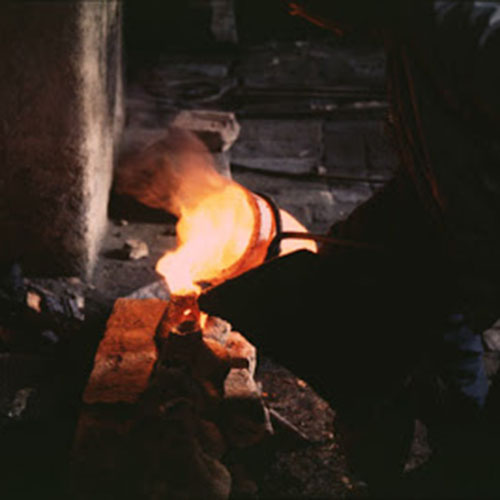
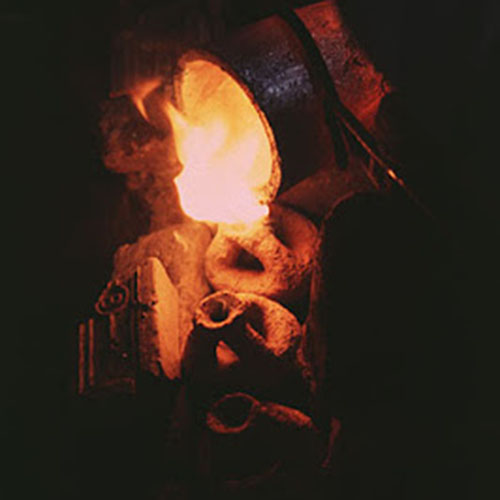
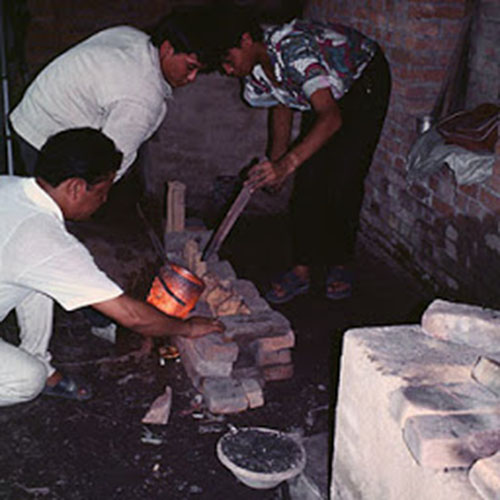
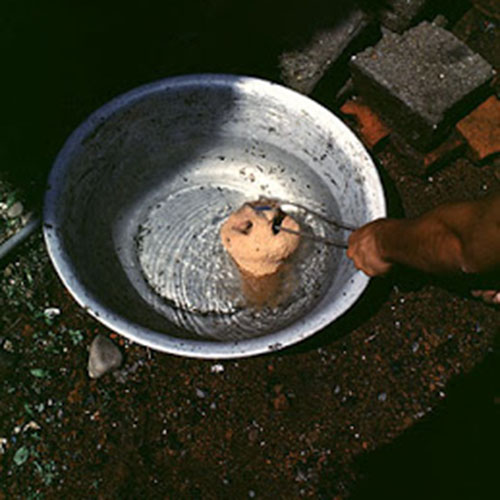
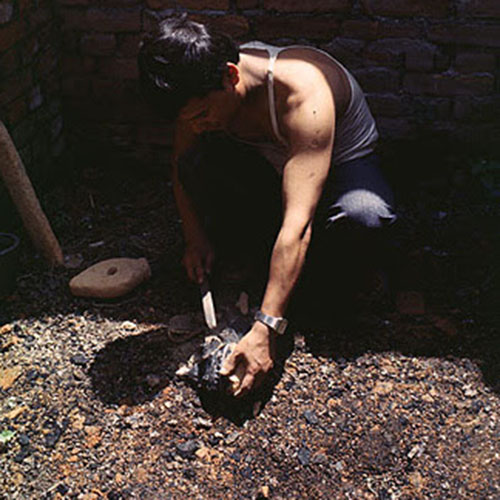
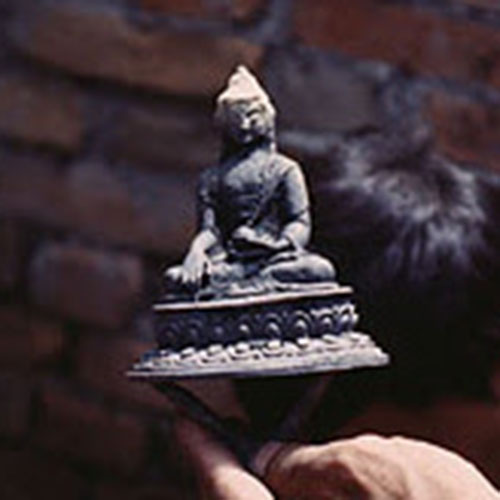
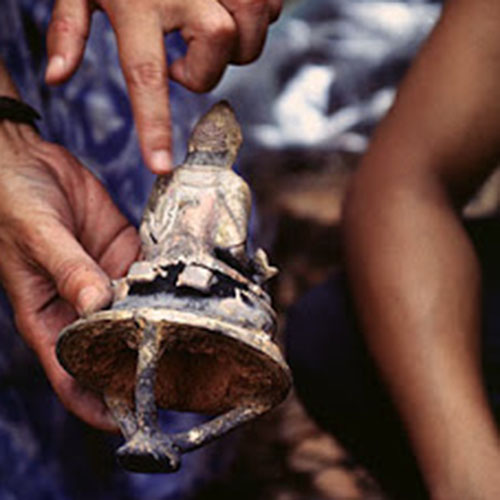
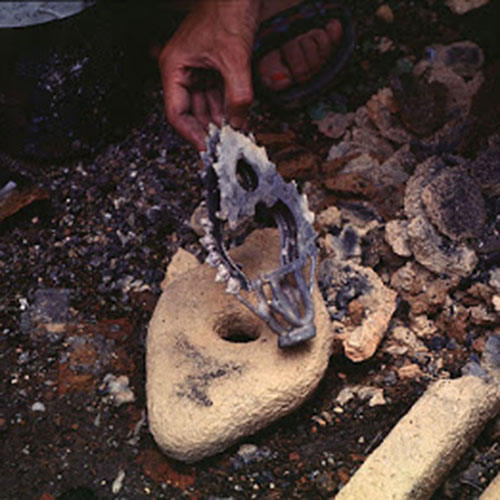
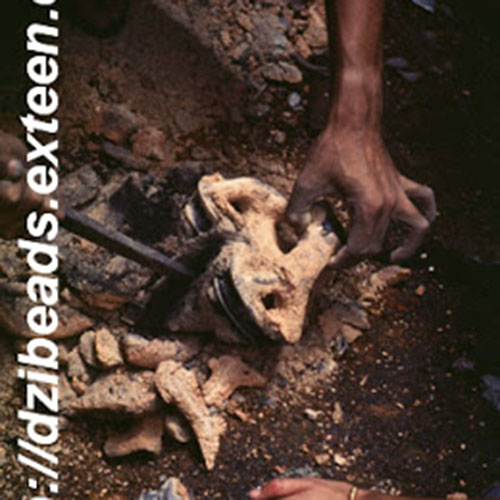
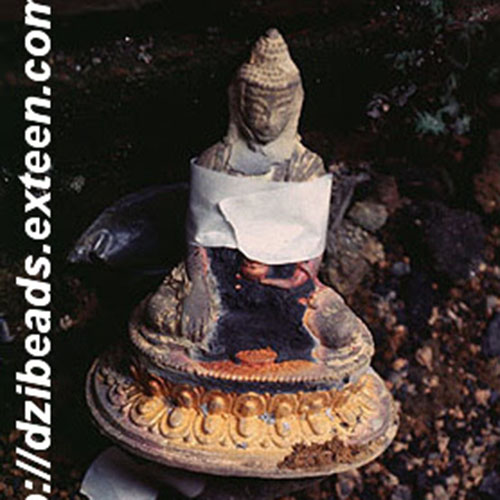
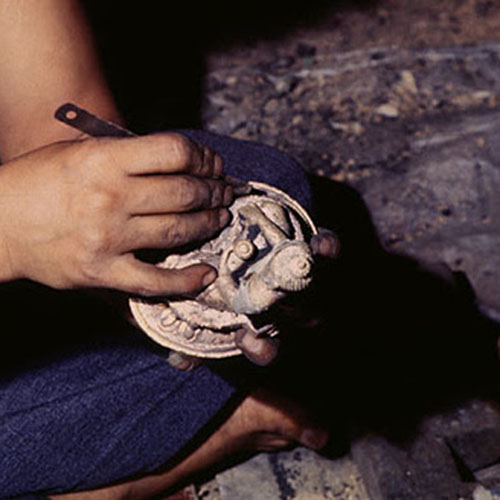
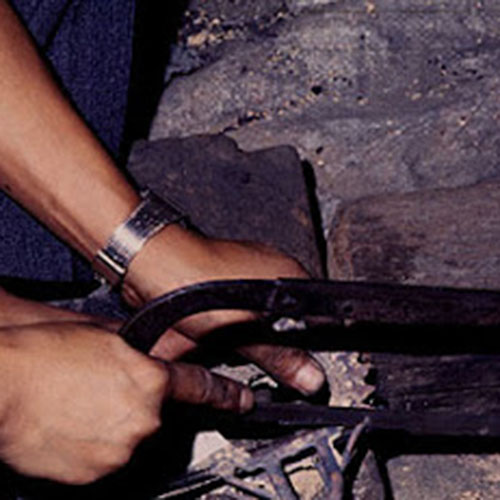
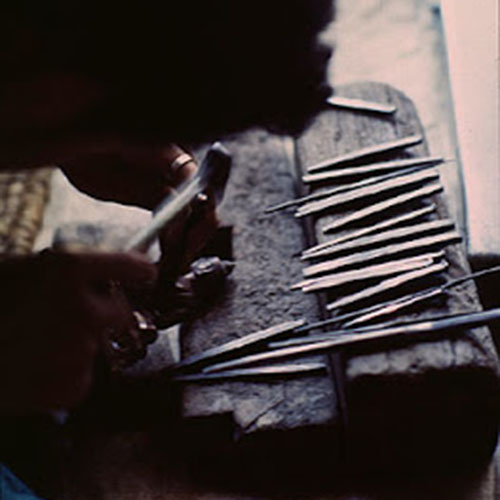
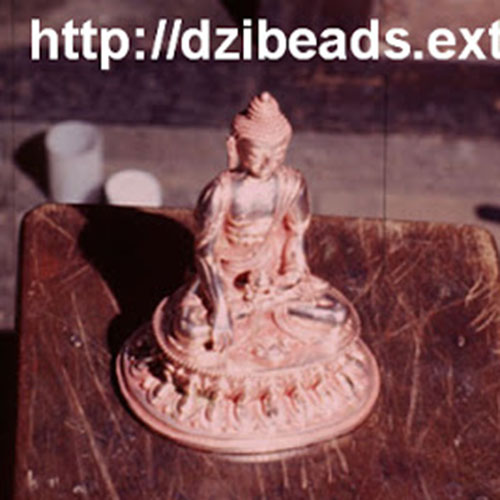
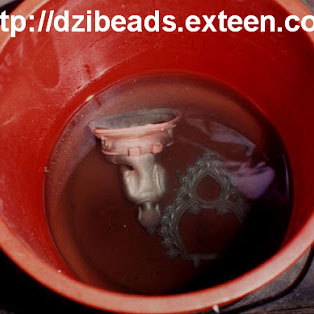
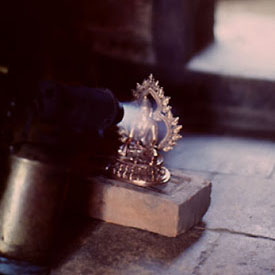
This Yamantaka is made by the process of the Lost-Wax system. The lost-wax process, also known as investment casting, is a time-honored technique used to create metal sculptures. It involves several steps that have been practiced for thousands of years. Skilled artisans begin by sculpting a detailed wax model, capturing every intricate detail of the desired sculpture. The wax model is then coated with a ceramic shell, formed by multiple layers of ceramic material. Once the shell has cured, the wax is melted and drained out, leaving behind a cavity. Molten metal is poured into the cavity, creating a precise replica of the original wax model. After the metal has cooled and solidified, the ceramic shell is carefully removed, revealing the final metal sculpture. Read More
Related Products

15 cm
Yamantaka Vajrabhairava- Heruka Statue With Bronze Antique Finishing
US$ 110.00
15% off
$ 130.00
$ 130.00

20 cm
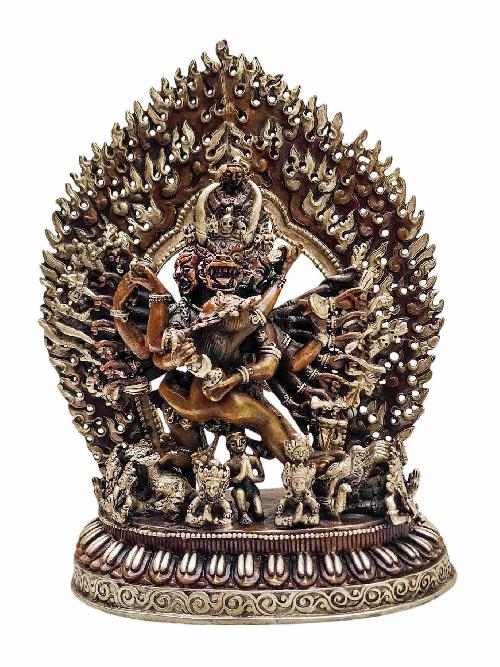
Yamantaka Shakti, Buddhist Handmade Statue And Silver And Chocolate Oxidized, Megasambhara, Vajrabhairava Heruka
US$ 480.00
Our pick

52 cm
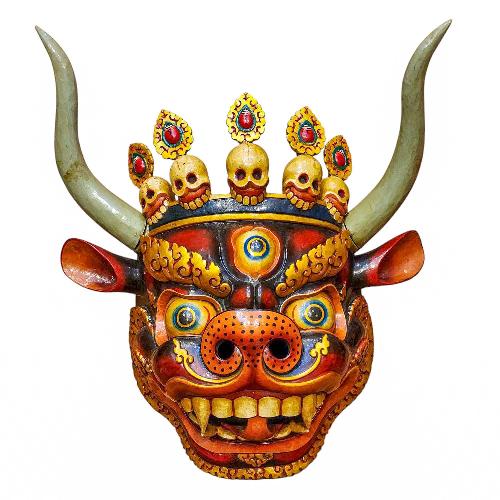
Yamantaka, Handmade Wooden Mask, Wall Hanging, Painted, Poplar Wood
US$ 200.00
15% off
$ 240.00
$ 240.00

25 cm
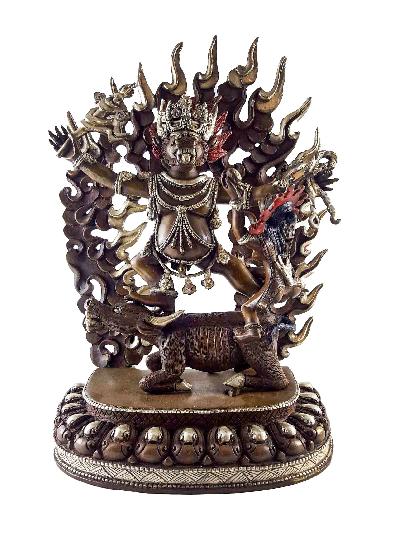
Yamantaka - Heruka Statue - Copper Silver Plated Oxidized
US$ 320.00
15% off
$ 380.00
$ 380.00