









Loading Content..
Please wait...
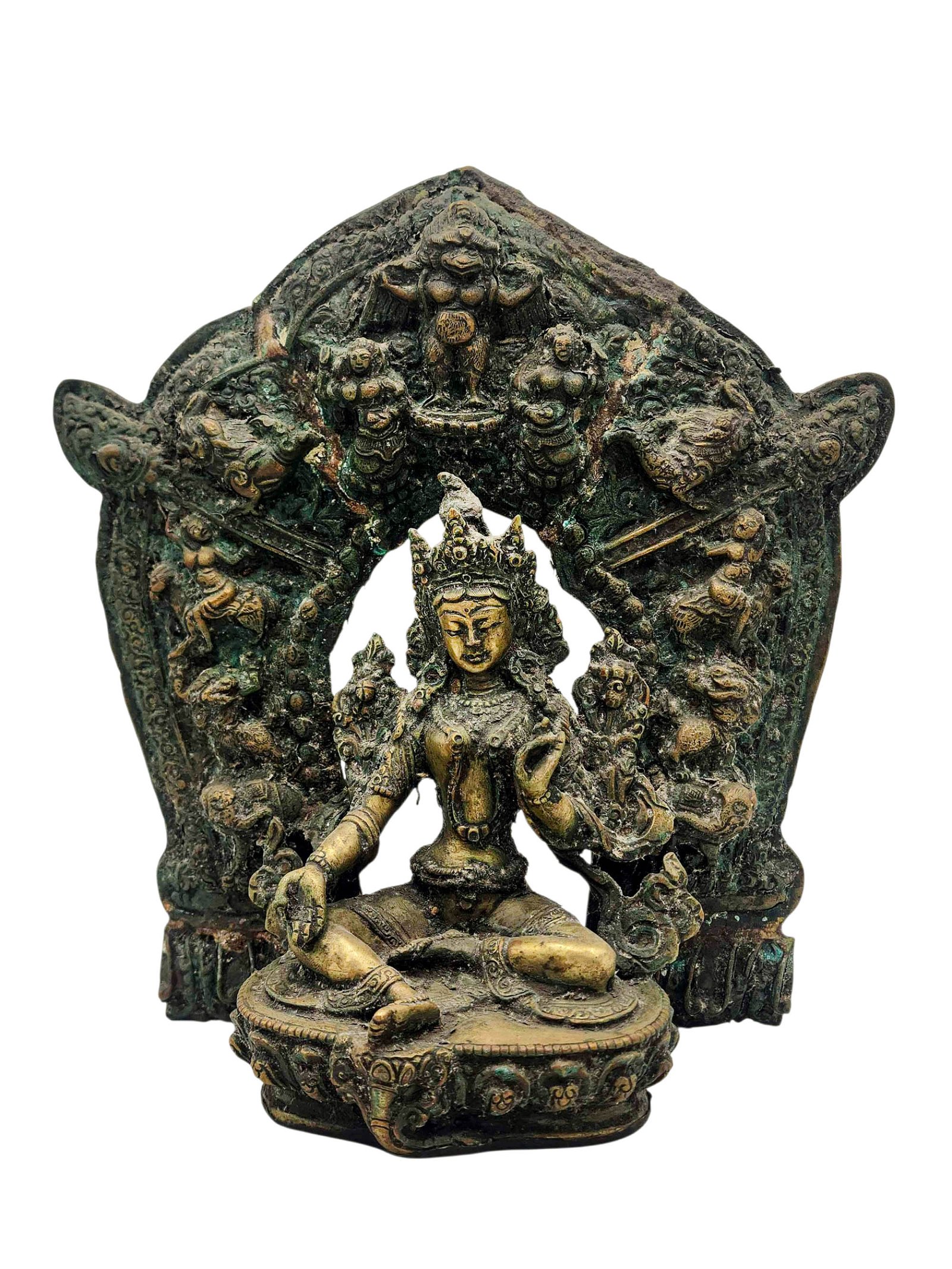
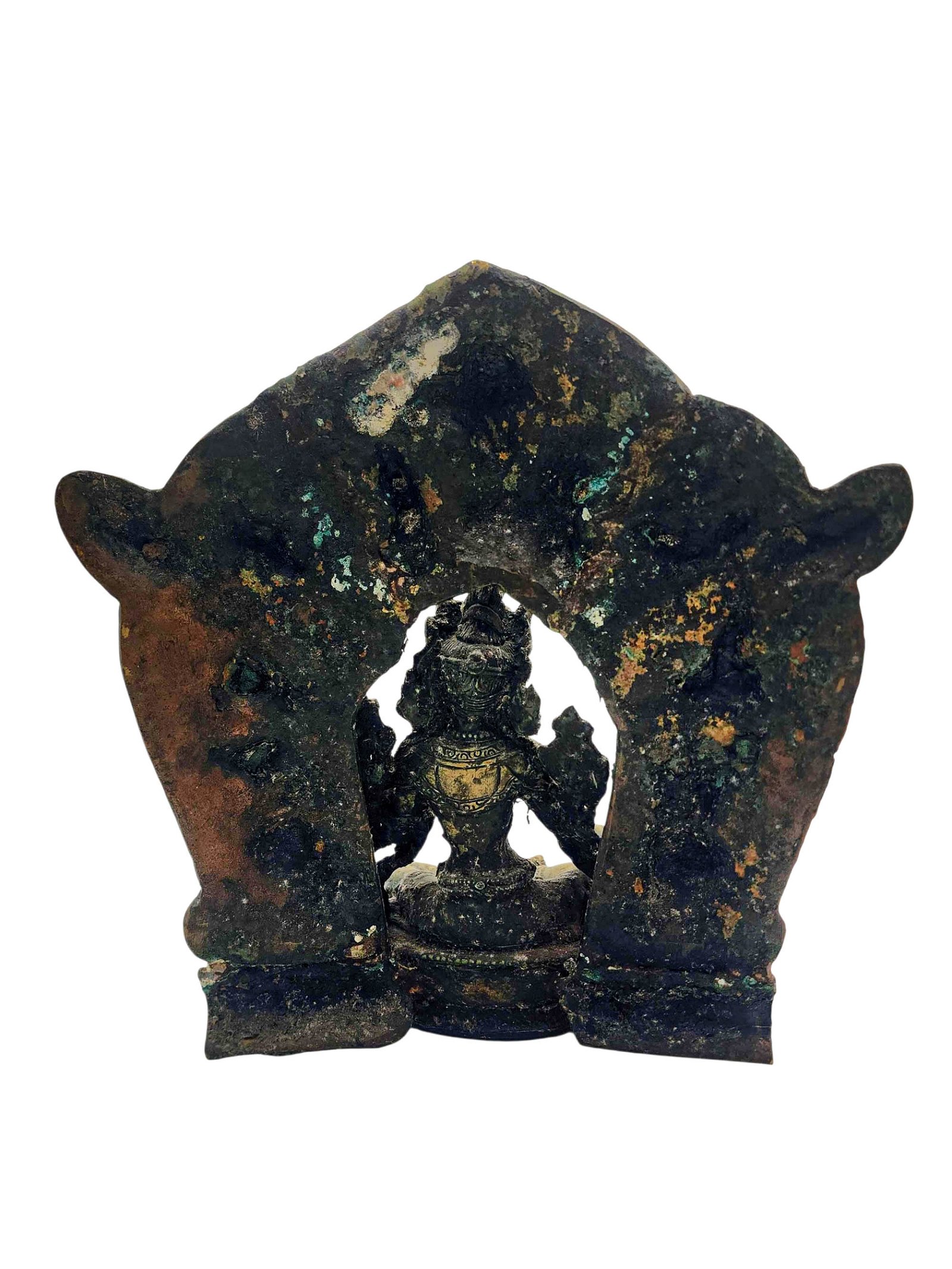
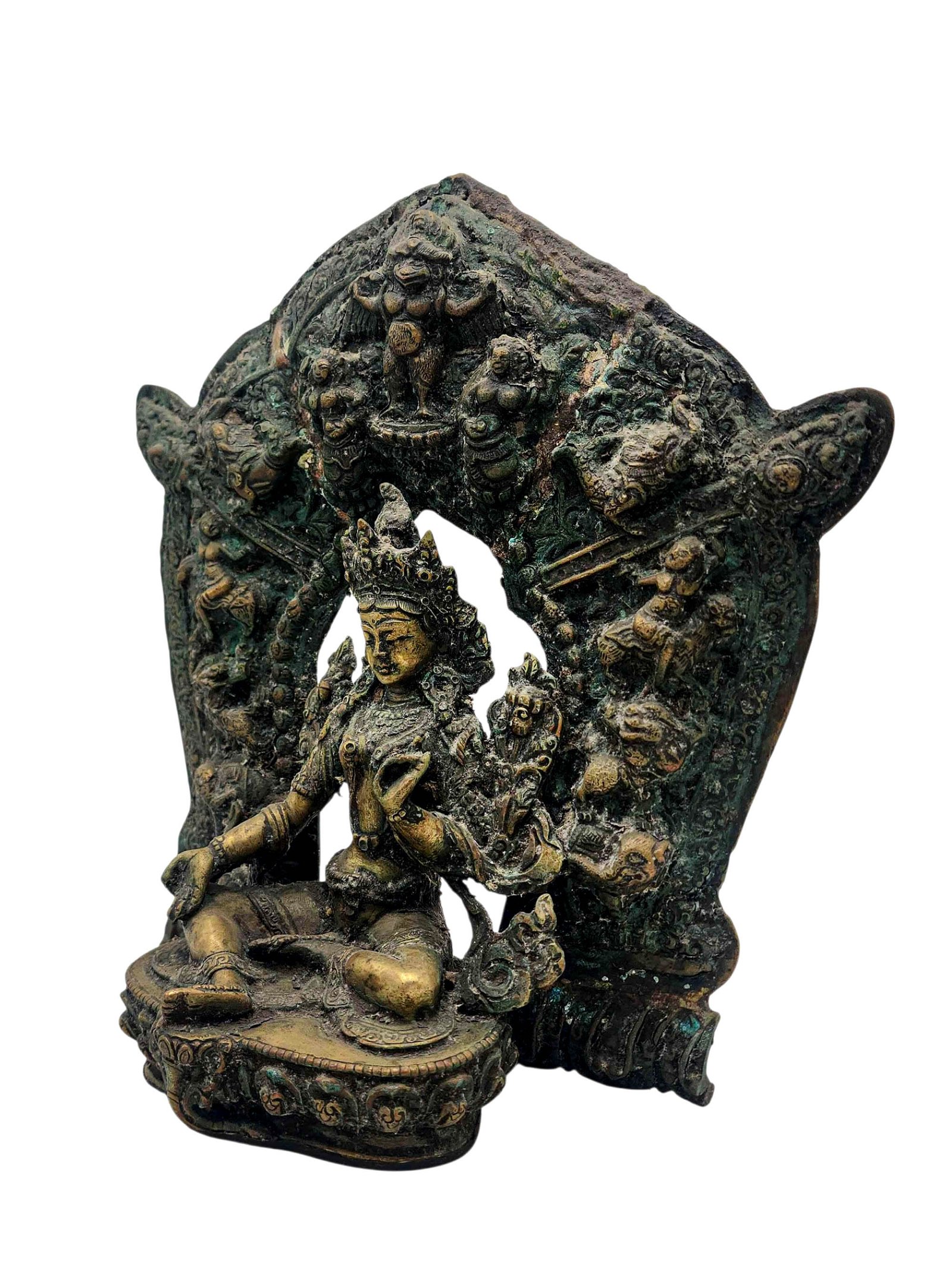
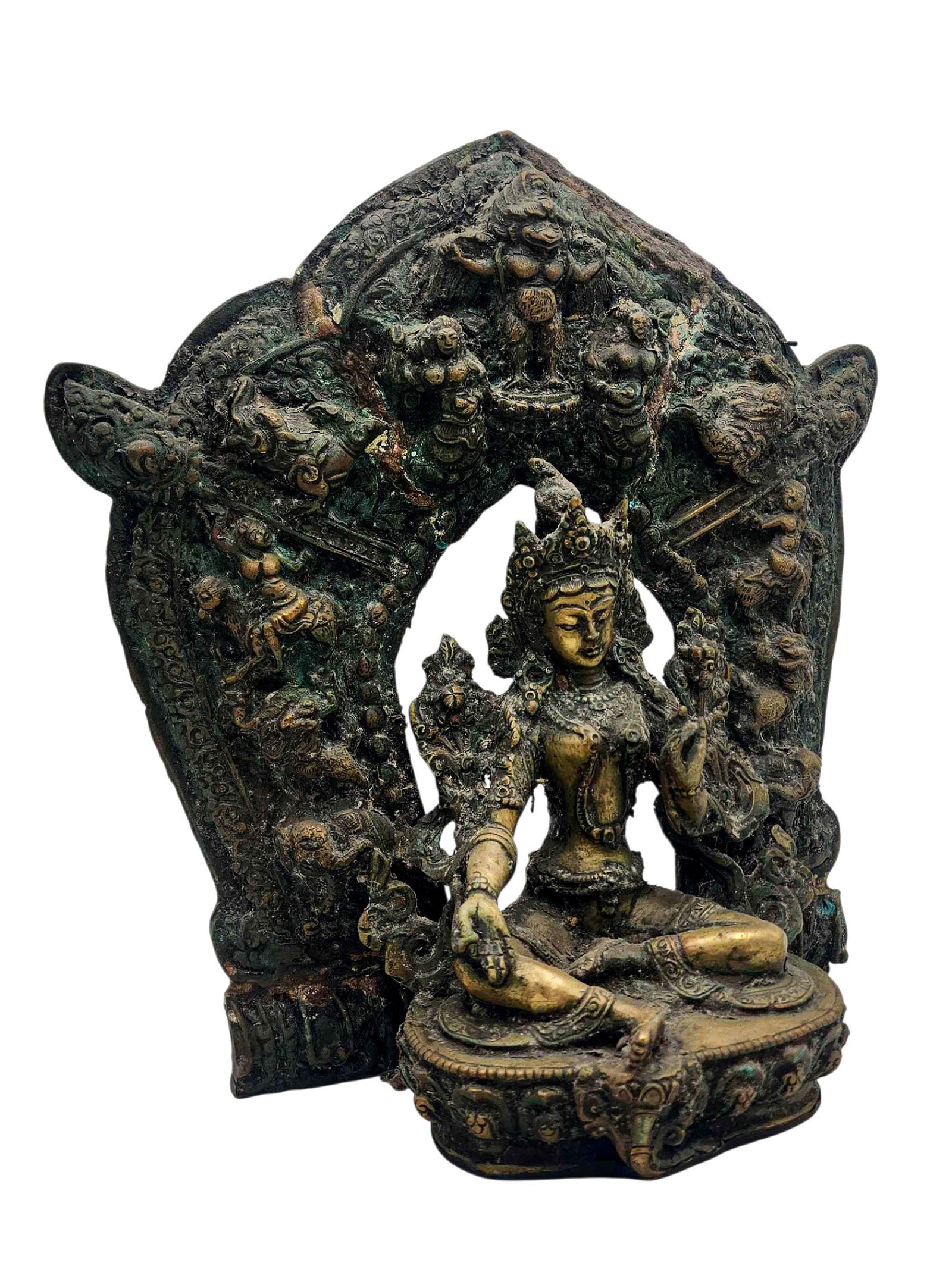
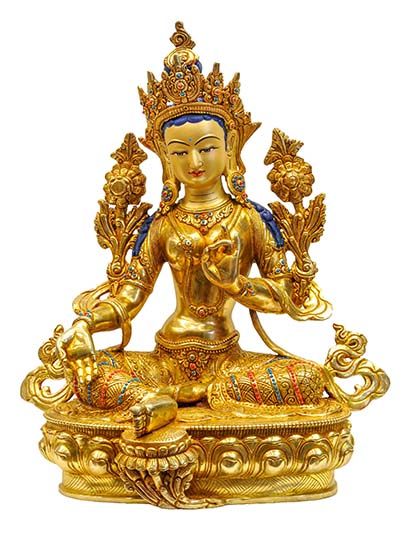
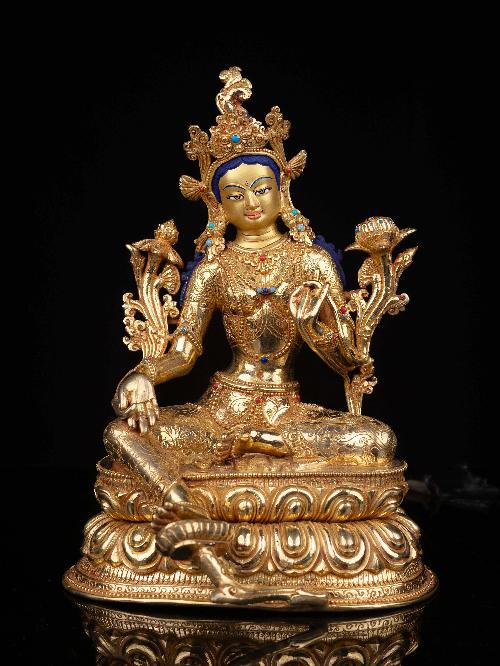
Green Tara with Deities In Background, Handcrafted Buddhist Statue, Antique Finish , Goddess of Compassion, Protection, and Swift Action
Dolma
Lvduomu
Midori Tara
|
|
Product Specification |
|
| Code | HME37028 |
| Size |
Height 23cm (9") Width 23cm (9") Depth 9cm (4") |
Weight | 2.02 kg - 4.45 lbs |
| Material | Copper |
| Availability | Available |
Order configuration (Optional)
Filling & Blessing
HIDE Select Option
Click Here to View All Option and Prices

Select

Select

Select

Select
Statue Finishing
HIDE Select Option
Click Here to View All Option and Prices

Select

Select

Select

Select

Select

Select

Select

Select

Select

Select

Select

Select

Select

Select

Select

Select

Select

Select

Select

Select

Select

Select

Select

Select

Select

Select

Select

Select

Select

Select

Select

Select

Select

Select

Select

Select

Select

Select

Select

Select
| Quantity | PCS |
US$ 280.00
$ 330.00 -15% off
Shipping Cost
|
| Price Adjustment Status: Active |
||
Shipping Calculation
weight of 1 Pcs of the product is 2.5 kg and will cost USD $ 53.00
-
Item location: kathmandu, Nepal
Worldwide shipping - Dispatch
-
We normally dispatch the product in 2-5 business days. Else Buyer will be infromed personally about the dispatch Date.
- Payment
- Paypal | Credit - Debit Card | Bank Transfer | See More
- Return
- 7 days money back, buyer pays return shipping
Welcome to Handmade Handicraft
At Handmade Handicraft, we prioritize simplicity, reflected in our user-friendly website design. We have streamlined the process so everything you need is just a click away.
While our website does not support online shopping, we've incorporated a convenient shopping cart system to assist you in sending us your inquiries. Please note, we do not process payments on our site. All transactions will be handled via email, respecting the inquiries you submit.
Should you encounter any issues while submitting your inquiries, please contact us via mobile app, email, or follow the procedure outlined below. We've provided documentation to guide you through the selection process.
selecting Procedure
In every product you will find Order Now and Quick Inquiry buttons, they are the two process of sending us your enquiry.
If you have any questions or need assistance, please don't hesitate to reach out to us. We are here to help you with your inquiries and ensure a smooth experience.
Green Tara
Samaya Tara, popularly known as Green Tara. She is represented in a royal ease posture with her left leg bent her left leg overstepping the main lotus and resting on a blue lotus ready to get up and offer assistance to those in need. She is portrayed with maroon Buddhist robes and jewelry. The earrings represent patience, understanding, and renunciation. The diadem with five jewels represents the transmutation of the five delusions into the Five Buddha Wisdoms. She is shown with a benevolent countenance seated upon a white moon disk which is associated with special restorative nectar associated with the naval chakra center. In Buddhists, the moon symbolizes the wisdom aspect which when coupled with compassion leads to Sakyamuni Buddha's enlightenment. Her right hand is gracefully lowered in Varada mudra, the boon-granting gesture. Read More
Iconography
Green Tara's special lotus is the blue lotus or 'night lotus' which she bears in both hands. The word utpala means to 'burst open'. Her left-hand holds a stem with an open blooming flower and an unopened bud. The bent lower part of the stem represents the root. The open blossom represents the present and also the present Buddha; the bud represents the future and also Buddhas yet to be born. The future here also refers to a safe journey's end and future well-being. Her right-hand wisdom hand is in the gesture of giving refuge. The third finger touches the thumb to create a circle representing the union of wisdom and compassion, and the three extended fingers symbolize the Three Jewels of Buddhism a. The Buddha State b. The Body of Teachings. The Principles of the Universe The same hand holds the stem of a blue lotus representing her willingness to assist. The closed blossom in her right hand represents the past and also the Buddhas of the past. Green Tara is shown in a place of paradise called Khadiravani where she Tara dwells. Khadiravani is described as a great mountain kingdom with many trees, flowers, and animals (not shown). 3 rainbow tails emanate from her outer aureole. The crescent moon and sun symbolize the union of male and female ubiquitous in Tantric art.
<br/><br/>
The seventy-two golden lines represent psychic energy channels emanating from her body and her central psychic channel running up her spinal column. Each one signifies a thousand as there are traditionally seventy-two thousand channels. The gold lines alternate between wiggly and straight to represent the two main psychic channels running up the central channel that entwine to create the interlocking 'snaking' caduceus to which the energy channels are connected. The trees in the foreground are the Ashoka Tree. The word Ashoka means 'without sorrow' and is the tree linked to the Vedic God of love and sexual union Kamadeva. Apparently, the tree blossoms when a virtuous lady touches it.
Commentary
The word Tara means the one who saves. The word Tara is derived from the root tri meaning to cross and in context is taken to mean the one who helps people to cross the Ocean of Existence and Suffering. Green Tara is also called 'dark' Tara or more directly Shyama Tara. Green Tara is associated with the Amoghasiddhi who is also green and the north-facing Meditation who is head of the action family. Her willingness to help others is shown by her body posture with one foot ready so that she can rise to offer assistance. Like WhiteTara, she was born of the tears of compassion of the Bodhisattva Avalokiteshvara, resulting from the extreme state of sadness he experienced when observing the continuing ceaseless suffering which he sought to end.
Antique Finishing
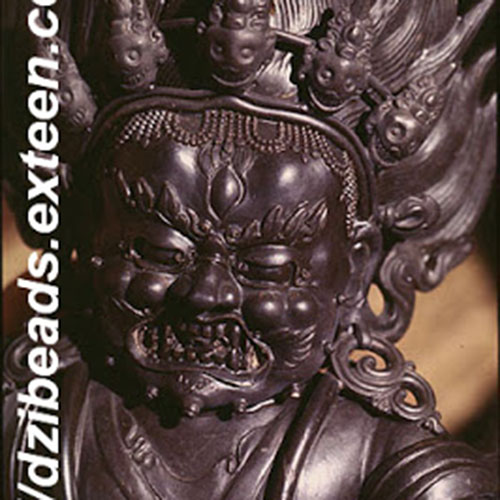
This is an antique patina-finished Green Tara. This is not an antique statue. It is just an antique patina finish. This Green Tara is a testament to the artisan's mastery of the art of aging. Its antique patina has been meticulously crafted to give the appearance of an aged statue, showcasing the artist's unique techniques and skills. Through undisclosed processes and careful aging treatments, the Green Tara undergoes a transformation that captures the essence of time and history. Read More
Lost-Wax System
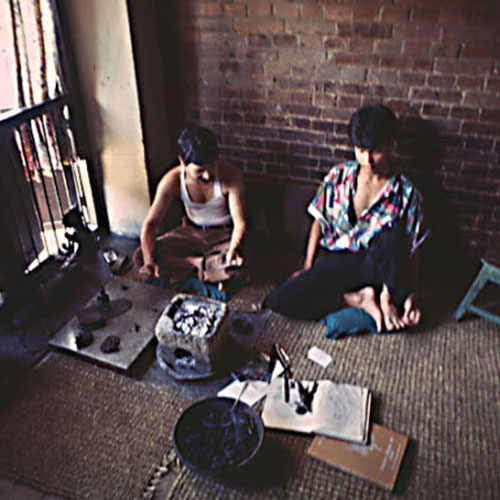
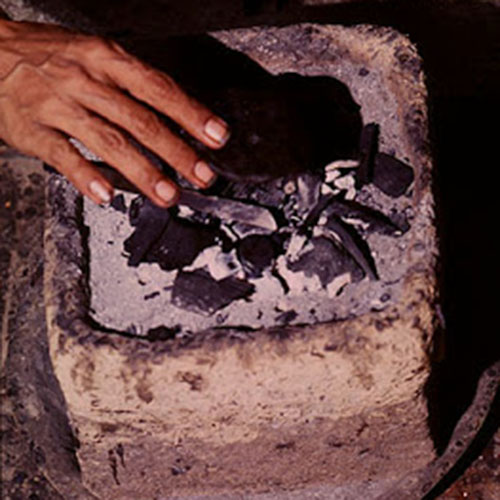
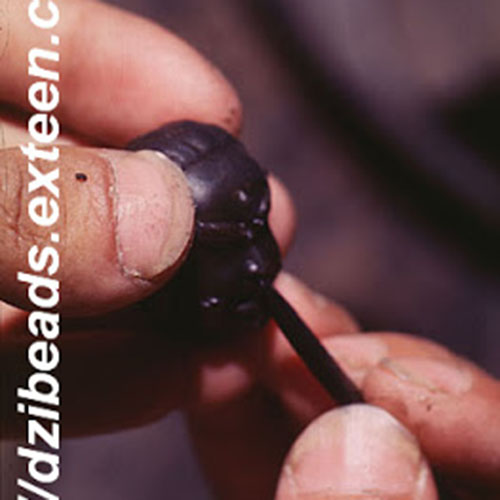
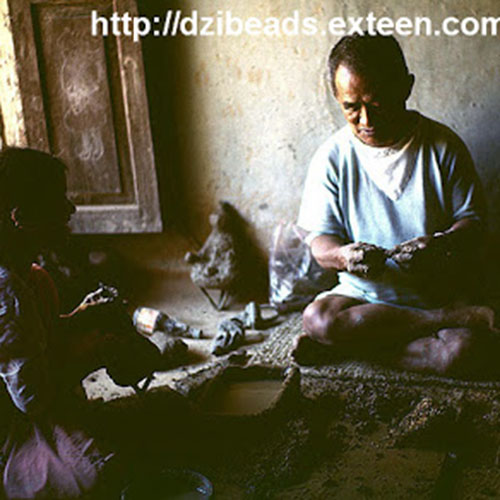
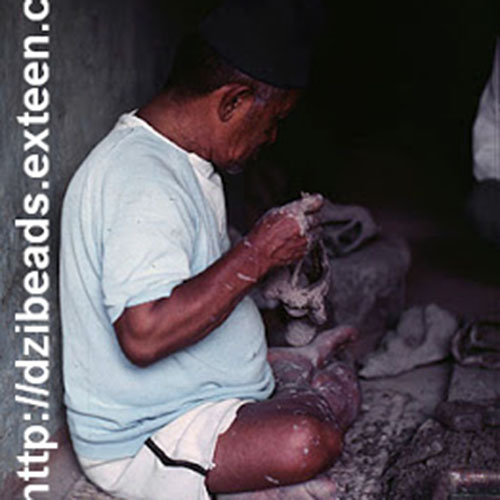
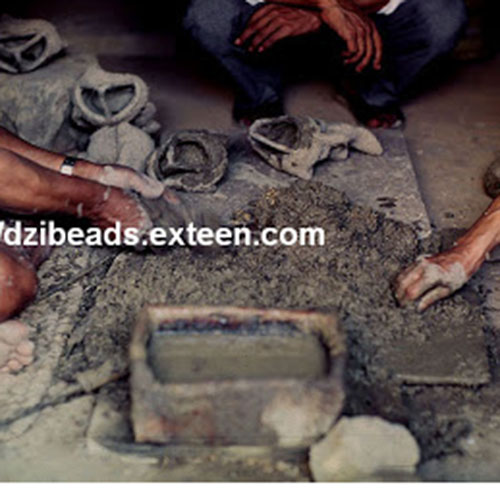
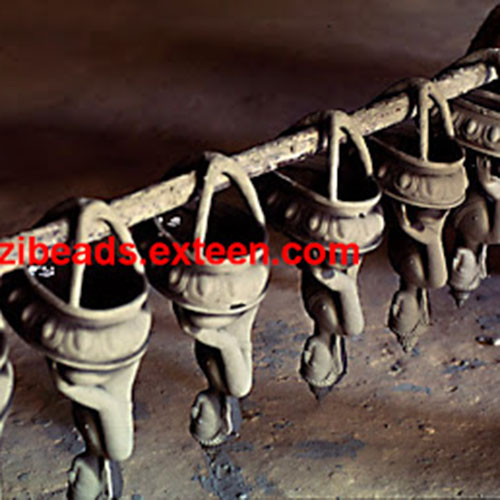
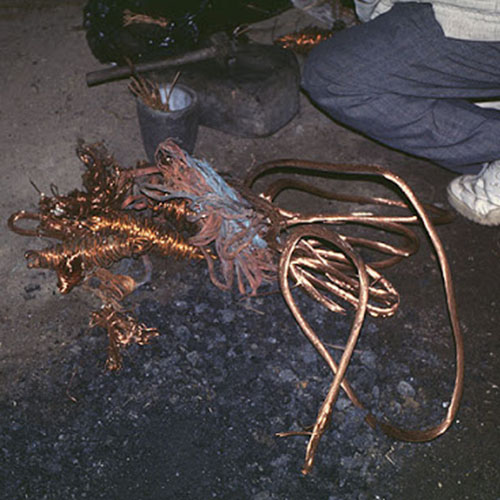
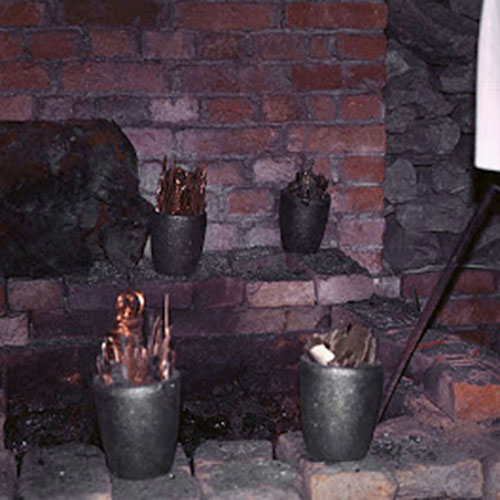
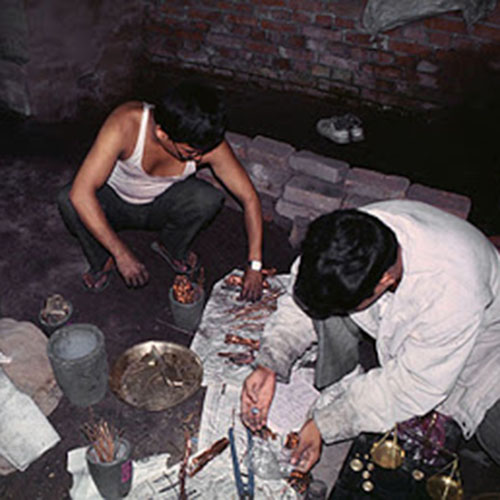
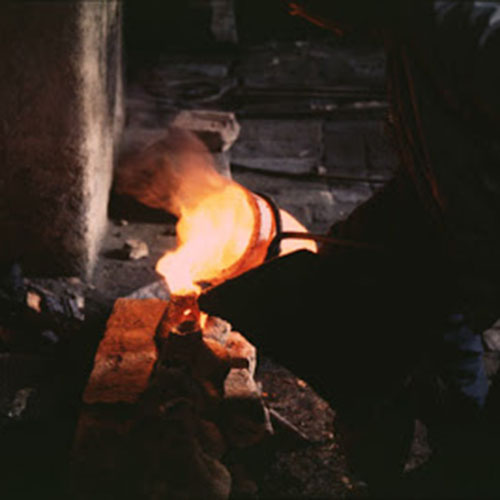
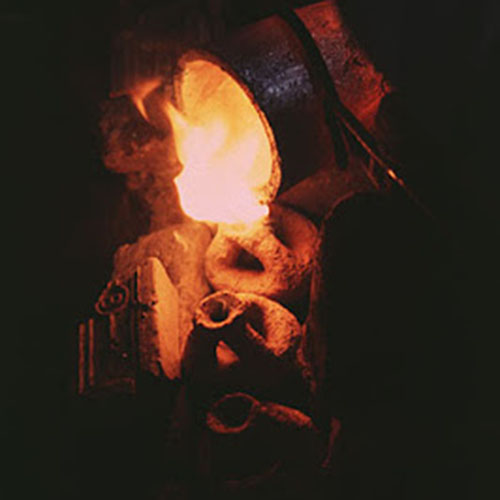
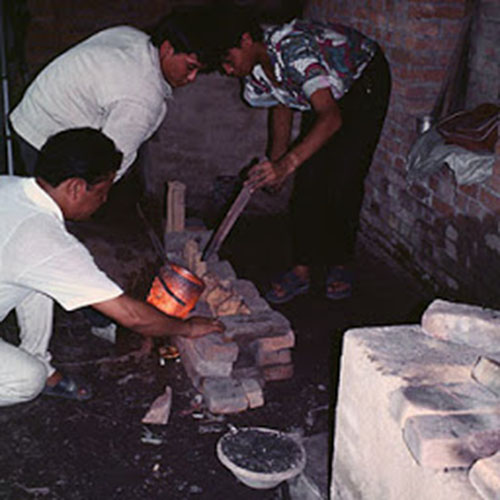
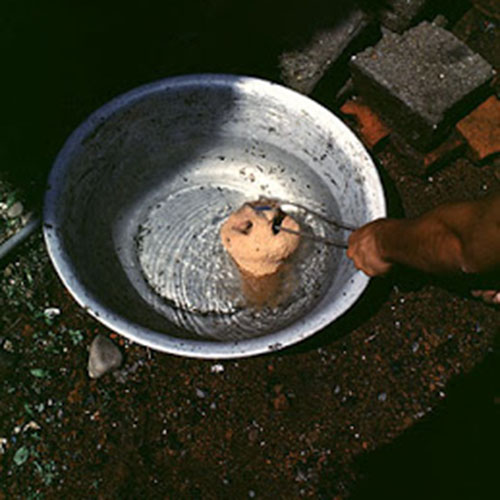
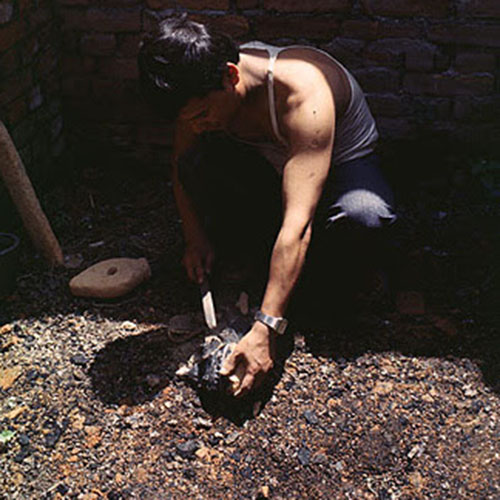
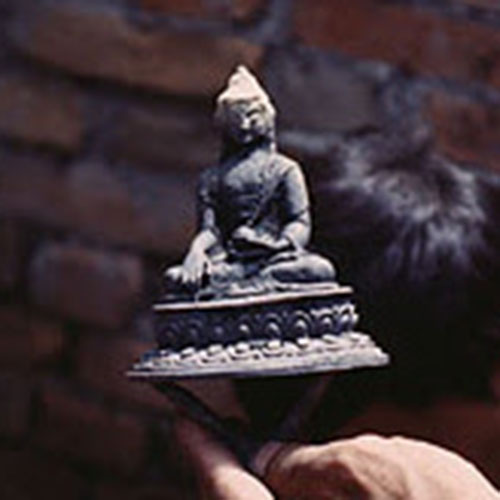
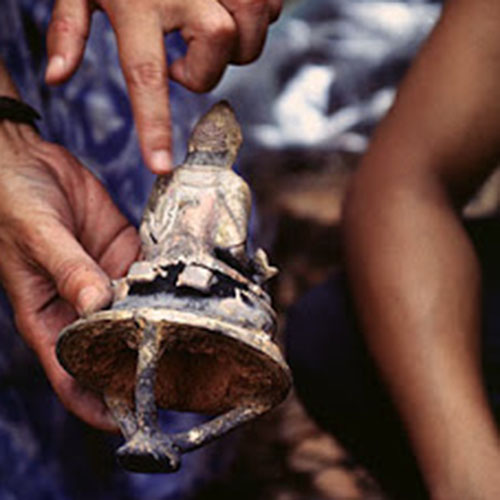
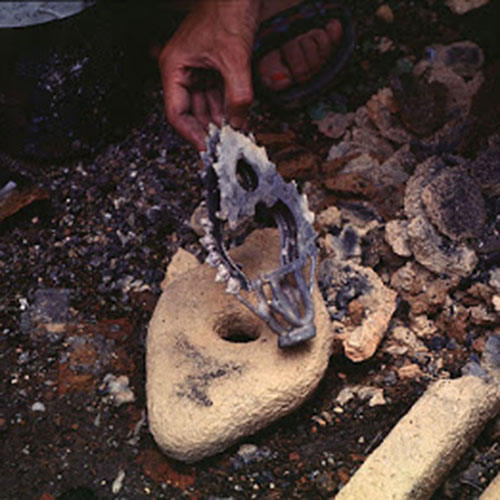
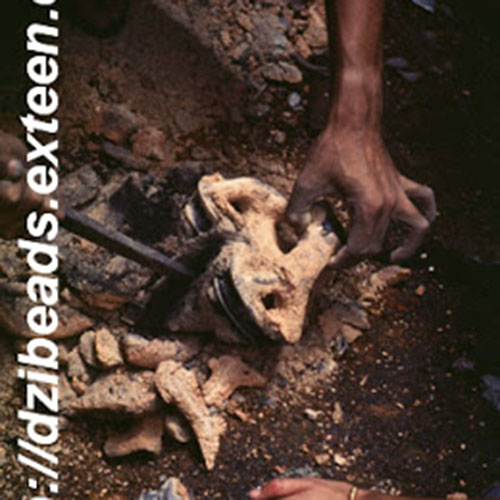
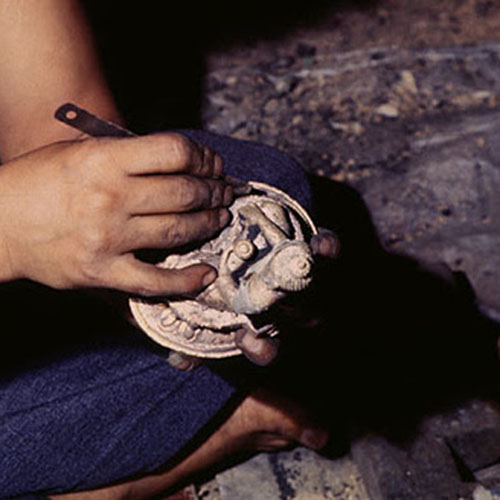
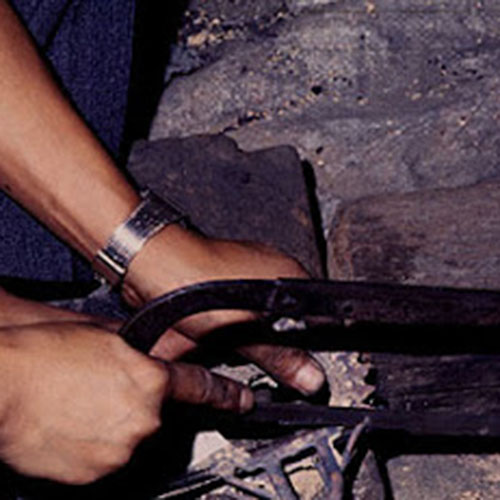
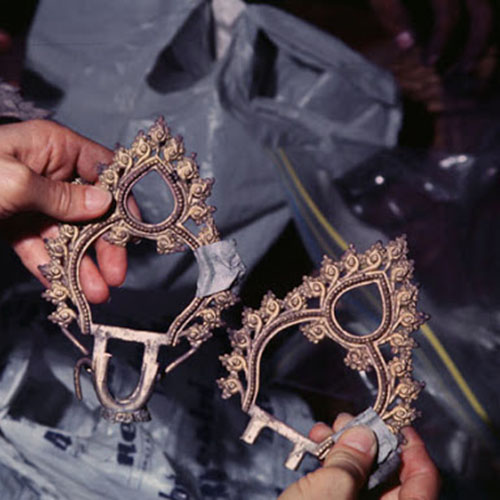
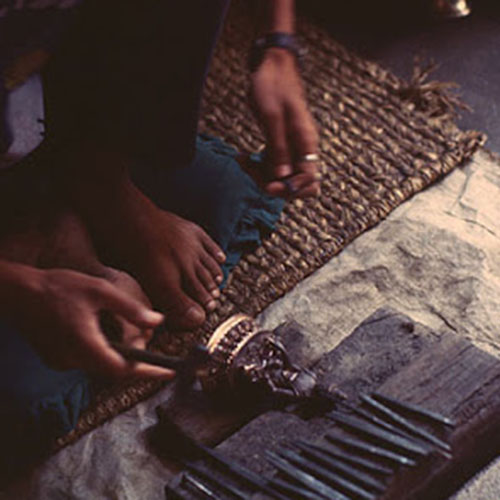
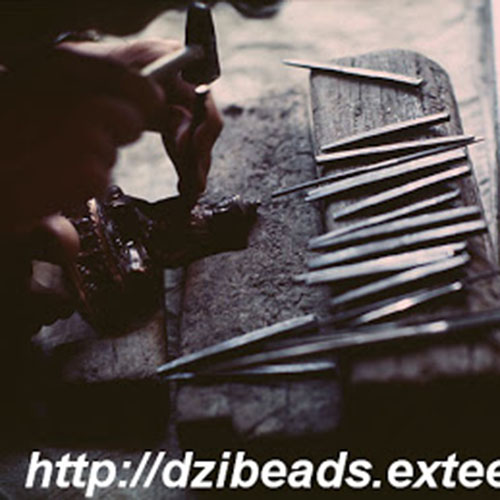
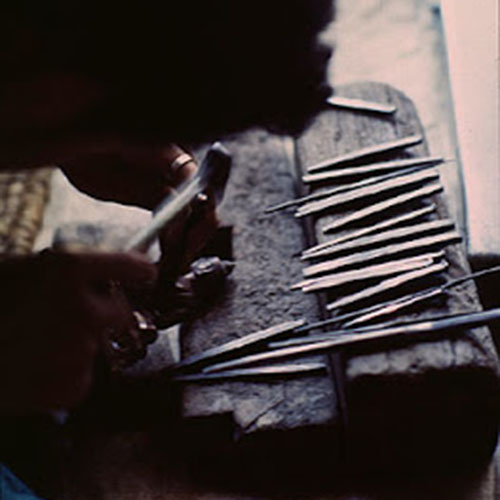
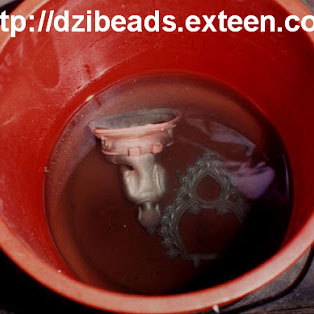
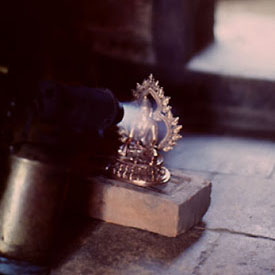
This Green Tara is made by the process of the Lost-Wax system. The lost-wax process, also known as investment casting, is a time-honored technique used to create metal sculptures. It involves several steps that have been practiced for thousands of years. Skilled artisans begin by sculpting a detailed wax model, capturing every intricate detail of the desired sculpture. The wax model is then coated with a ceramic shell, formed by multiple layers of ceramic material. Once the shell has cured, the wax is melted and drained out, leaving behind a cavity. Molten metal is poured into the cavity, creating a precise replica of the original wax model. After the metal has cooled and solidified, the ceramic shell is carefully removed, revealing the final metal sculpture. Read More
Related Products

34 cm
Buddhist Handmade Statue Of Green Tara, Full Fire Gold Plated, Face Painted, Stone Setting
US$ 540.00
15% off
$ 640.00
$ 640.00

Nepali Cotton Round Neck T-shirt Black Print Of Green Tara, By Yelos Bajracharya
US$ 19.00
15% off
$ 22.00
$ 22.00

25 cm
Green Tara, Buddhist Statue, Full Gold Plated, Stone Setting, Face Painted
US$ 980.00
15% off
$ 1,152.00
$ 1,152.00

23.5 cm
Green Tara, Buddhist Handmade Statue, Gold Plated And Face Painted
US$ 320.00
15% off
$ 380.00
$ 380.00