

Loading Content..
Please wait...
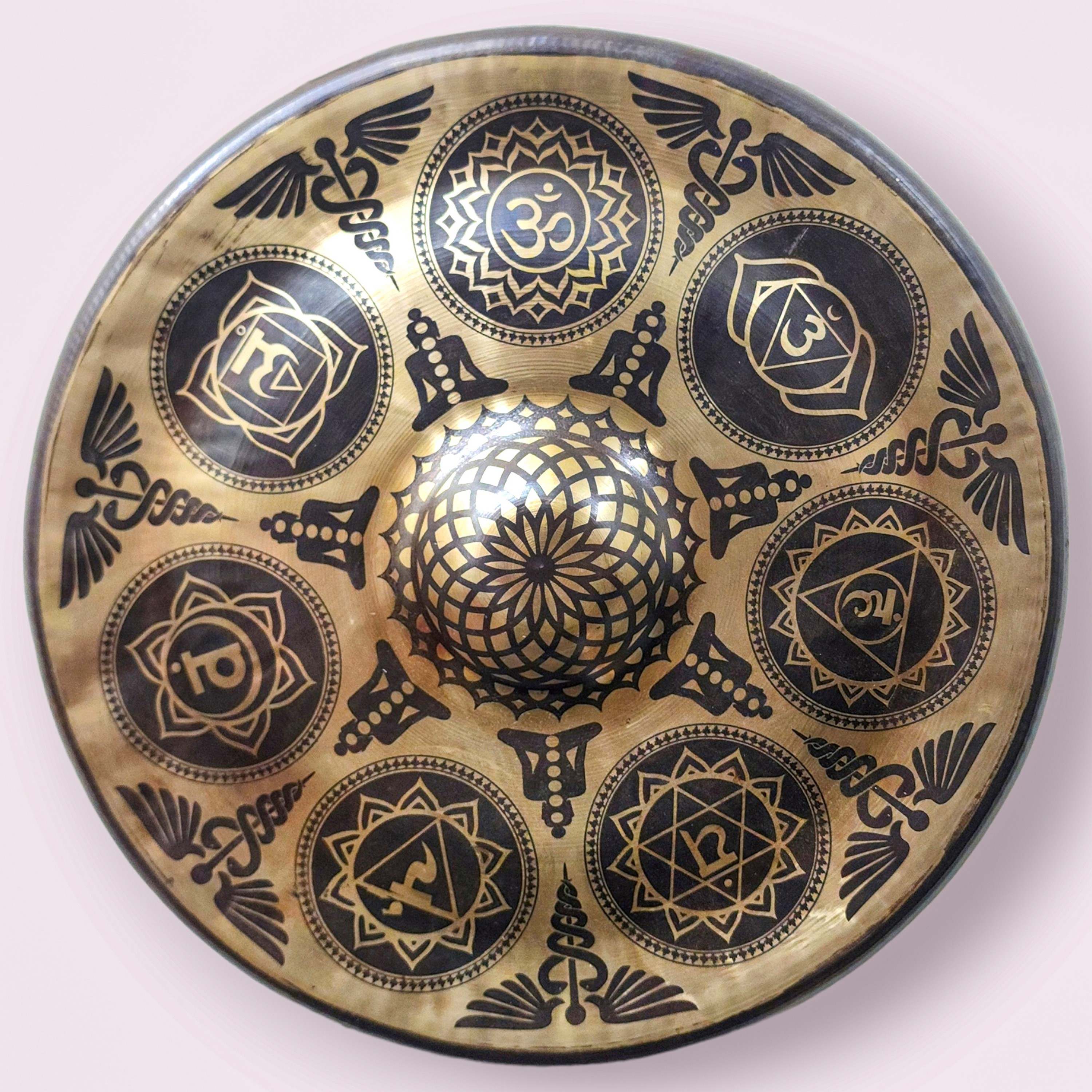
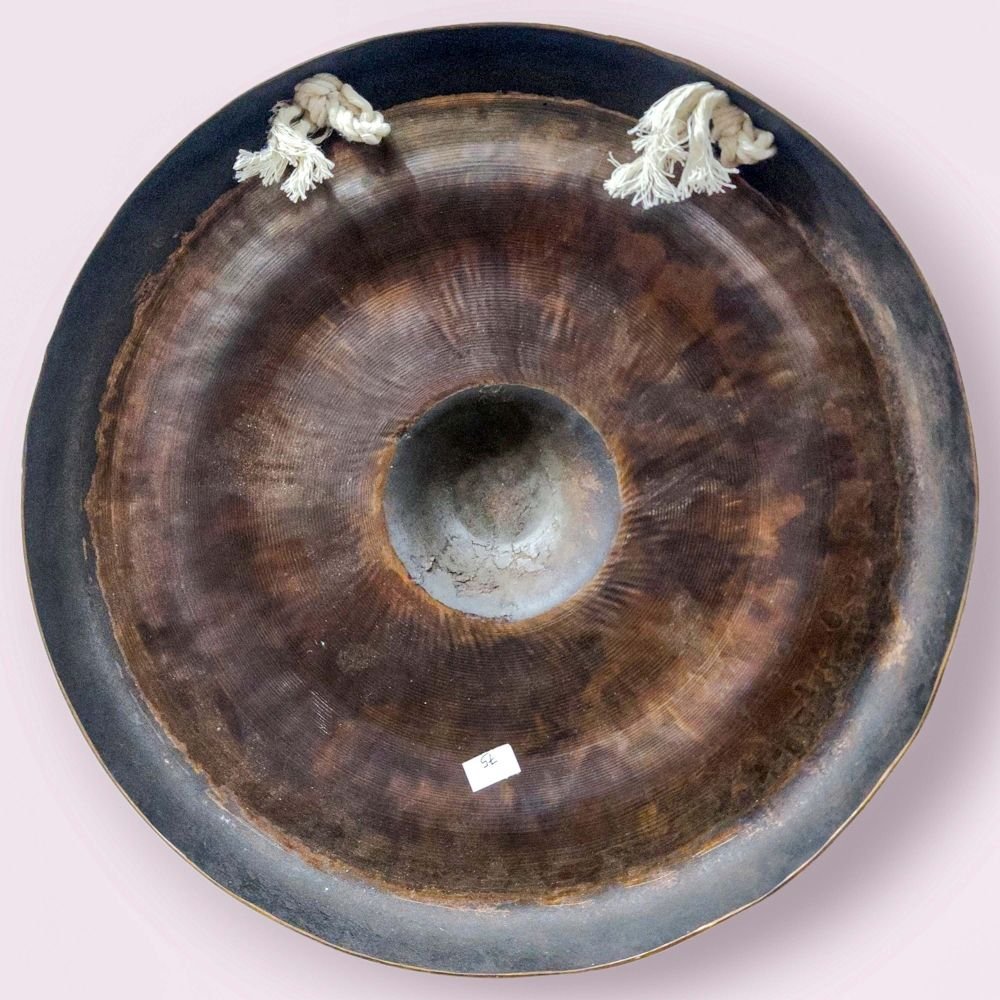
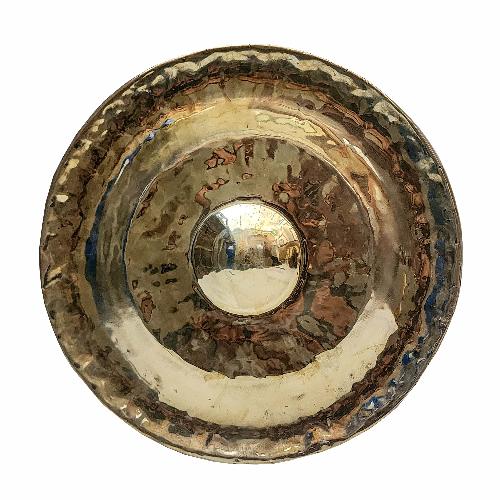
Burmese Gong, Hand Beaten, Nipple Gong with Flower Design, The Javanese Gong |
|
Product Specification |
|
| Code | HME30451 |
| Size |
Diameter 29cm (11") Depth 3cm (1") |
Weight | 1.92 kg - 4.22 lbs |
| Material | Bronze |
| Availability | Available |
|
Click Play Button to listen to Audio
Download Audio |
|
Order configuration (Optional)
Gong Stand
HIDE Select Option
Click Here to View All Option and Prices

Select

Select

Select

Select
Choose Drumstick
HIDE Select Option
Click Here to View All Option and Prices

Select

Select

Select

Select

Select

Select

Select
| Quantity | PCS |
US$ 220.00
$ 293.00 -25% off
Shipping Cost
|
| Price Adjustment [ Discount Ends in : 40 days ] |
||
Shipping Calculation
weight of 1 Pcs of the product is 2 kg and will cost USD $ 47.00
-
Item location: kathmandu, Nepal
Worldwide shipping - Dispatch
-
We normally dispatch the product in 2-5 business days. Else Buyer will be infromed personally about the dispatch Date.
- Payment
- Paypal | Credit - Debit Card | Bank Transfer | See More
- Return
- 7 days money back, buyer pays return shipping
Welcome to Handmade Handicraft
At Handmade Handicraft, we prioritize simplicity, reflected in our user-friendly website design. We have streamlined the process so everything you need is just a click away.
While our website does not support online shopping, we've incorporated a convenient shopping cart system to assist you in sending us your inquiries. Please note, we do not process payments on our site. All transactions will be handled via email, respecting the inquiries you submit.
Should you encounter any issues while submitting your inquiries, please contact us via mobile app, email, or follow the procedure outlined below. We've provided documentation to guide you through the selection process.
selecting Procedure
In every product you will find Order Now and Quick Inquiry buttons, they are the two process of sending us your enquiry.
If you have any questions or need assistance, please don't hesitate to reach out to us. We are here to help you with your inquiries and ensure a smooth experience.
Nipple gong
The nipple gong is a unique and versatile percussion instrument known for its central raised boss or nipple, which sets it apart from other traditional gongs. The boss is often made of different metals, contributing to the gong's varying degrees of quality and resonance. Nipple gongs produce a distinct sound characterized by less shimmer compared to other gongs, and they offer two different tones depending on whether they are struck on the boss or next to it. These gongs are available in various sizes, ranging from 6 to 20 inches (15 to 51 cm) or larger, and some are precisely tuned to specific pitches. Read More
History
Nipple gongs have a rich history and are commonly found in different cultural contexts. They are used in Chinese temples for worship and have significance in Buddhist temples throughout Southeast Asia. In traditional Philippine music, especially in kulintang ensembles, nipple gongs are a primary instrument and play a crucial role in producing the traditional melodic and rhythmic patterns. Additionally, in Indonesian gamelan ensembles, gongs come in various sizes and serve different functions, with nipple gongs being an integral part of the ensemble.
Uses:
The nipple gong is an essential instrument in various religious and cultural practices. In Chinese and Southeast Asian temples, it is used for worship and ceremonial purposes, adding a distinctive sound to sacred rituals. In Philippine kulintang music, sets of smaller, tuned nipple gongs are utilized to play intricate and melodious melodies, contributing to the ensemble's rich sound. Similarly, in Indonesian gamelan ensembles, nipple gongs serve different roles depending on their size, pitch, and function. The larger gong ageng, with its deep pitch, is played less frequently and creates a foundation for the ensemble, while smaller gongs like the gong suwukan and kempul add higher tones and more frequent accents.
How to Play:
Playing the nipple gong requires precision and technique to achieve the desired tones and sounds. Percussionists typically strike the gong with mallets, choosing between striking the central boss or the area next to it to produce different tones. Striking the boss creates a deeper, resonant sound, while striking the gong's surface next to the boss yields a brighter and more vibrant tone. In ensembles, players coordinate their strikes to create intricate rhythms and melodies. To play a melody, sets of smaller, tuned nipple gongs are used, with each gong producing a specific pitch. By striking the nipple gongs in sequence, performers can create beautiful and captivating musical phrases that define the character of the traditional music.
Nipple gongs have a rich history and are commonly found in different cultural contexts. They are used in Chinese temples for worship and have significance in Buddhist temples throughout Southeast Asia. In traditional Philippine music, especially in kulintang ensembles, nipple gongs are a primary instrument and play a crucial role in producing the traditional melodic and rhythmic patterns. Additionally, in Indonesian gamelan ensembles, gongs come in various sizes and serve different functions, with nipple gongs being an integral part of the ensemble.
Uses:
The nipple gong is an essential instrument in various religious and cultural practices. In Chinese and Southeast Asian temples, it is used for worship and ceremonial purposes, adding a distinctive sound to sacred rituals. In Philippine kulintang music, sets of smaller, tuned nipple gongs are utilized to play intricate and melodious melodies, contributing to the ensemble's rich sound. Similarly, in Indonesian gamelan ensembles, nipple gongs serve different roles depending on their size, pitch, and function. The larger gong ageng, with its deep pitch, is played less frequently and creates a foundation for the ensemble, while smaller gongs like the gong suwukan and kempul add higher tones and more frequent accents.
How to Play:
Playing the nipple gong requires precision and technique to achieve the desired tones and sounds. Percussionists typically strike the gong with mallets, choosing between striking the central boss or the area next to it to produce different tones. Striking the boss creates a deeper, resonant sound, while striking the gong's surface next to the boss yields a brighter and more vibrant tone. In ensembles, players coordinate their strikes to create intricate rhythms and melodies. To play a melody, sets of smaller, tuned nipple gongs are used, with each gong producing a specific pitch. By striking the nipple gongs in sequence, performers can create beautiful and captivating musical phrases that define the character of the traditional music.
Included with this Gong
When you purchase this Gong, it will come with a Felt Hitting Mallet that you can use to play the Gong. This mallet is included with your purchase and you do not need to buy it separately. If you would like additional accessories to use with your Gong, such as different types of mallets or stands, you can purchase them separately from the options provided above. These additional accessories are not included with your purchase of the Gong and must be added to your cart if you would like to buy them. Read More
what is a burmese Gong?
The Burmese gong has influenced other gong types in this region and is very similar to those found in Thailand, so they are often grouped together. Although there are several types of Burmese gong, the most common are the temple gongs and the triangular-shaped Kyeezee or 'spinning' gong. Read More
Related Products

36 cm
Burmese Gong, Hand Beaten, Nipple Gong, The Javanese Gong
US$ 280.00
25% off
$ 367.00
$ 367.00

35.5 cm
Burmese Gong, Hand Beaten Large, Nipple Gong, The Javanese Gong
US$ 150.00
25% off
$ 200.00
$ 200.00

90 cm
Burmese Gong, Hand Beaten Large, Nipple Gong, The Javanese Gong
US$ 1,860.00
25% off
$ 2,479.00
$ 2,479.00

60 cm
Burmese Gong, Hand Beaten Large, Nipple Gong, The Javanese Gong
US$ 500.00
25% off
$ 671.00
$ 671.00