

Loading Content..
Please wait...
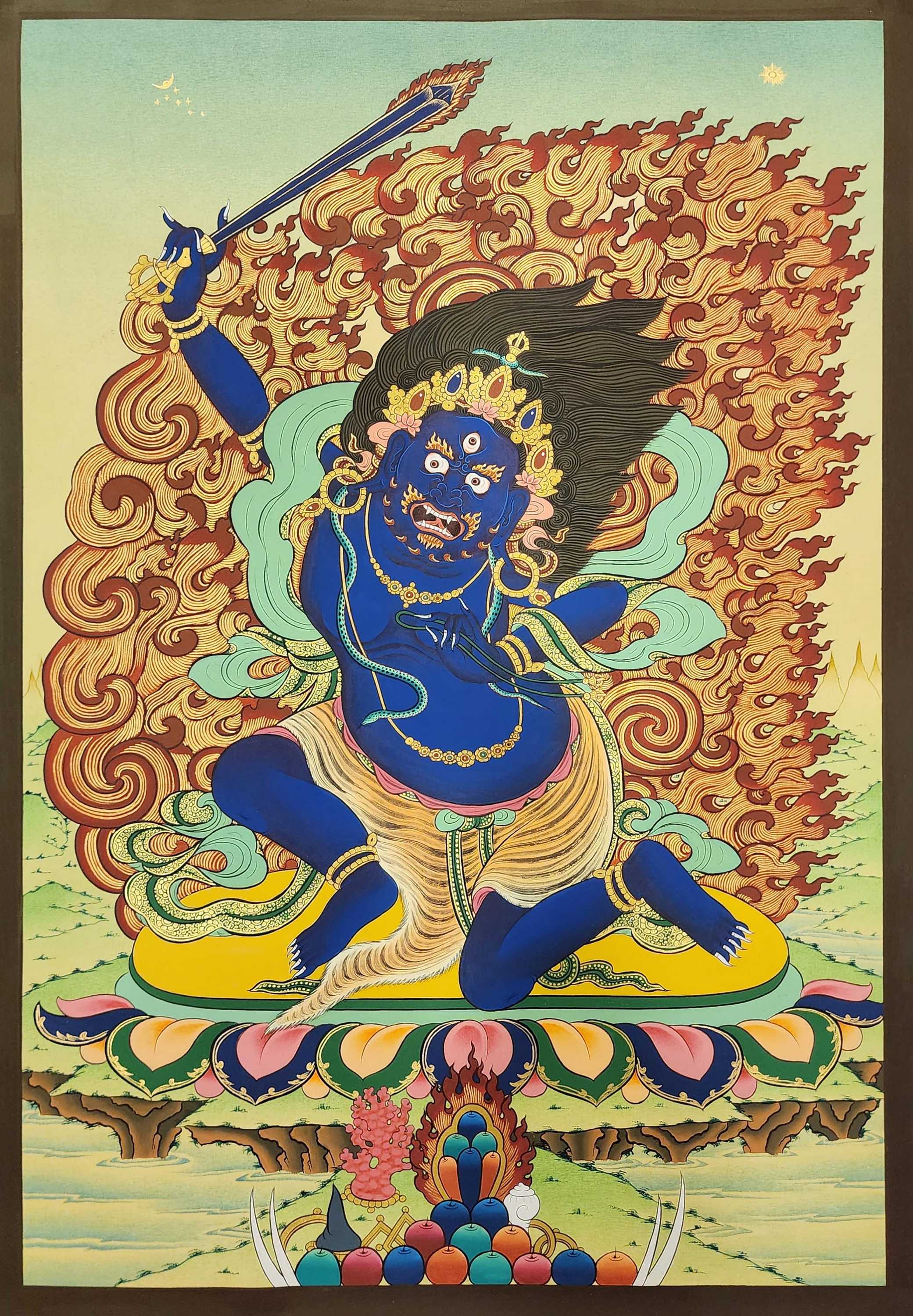


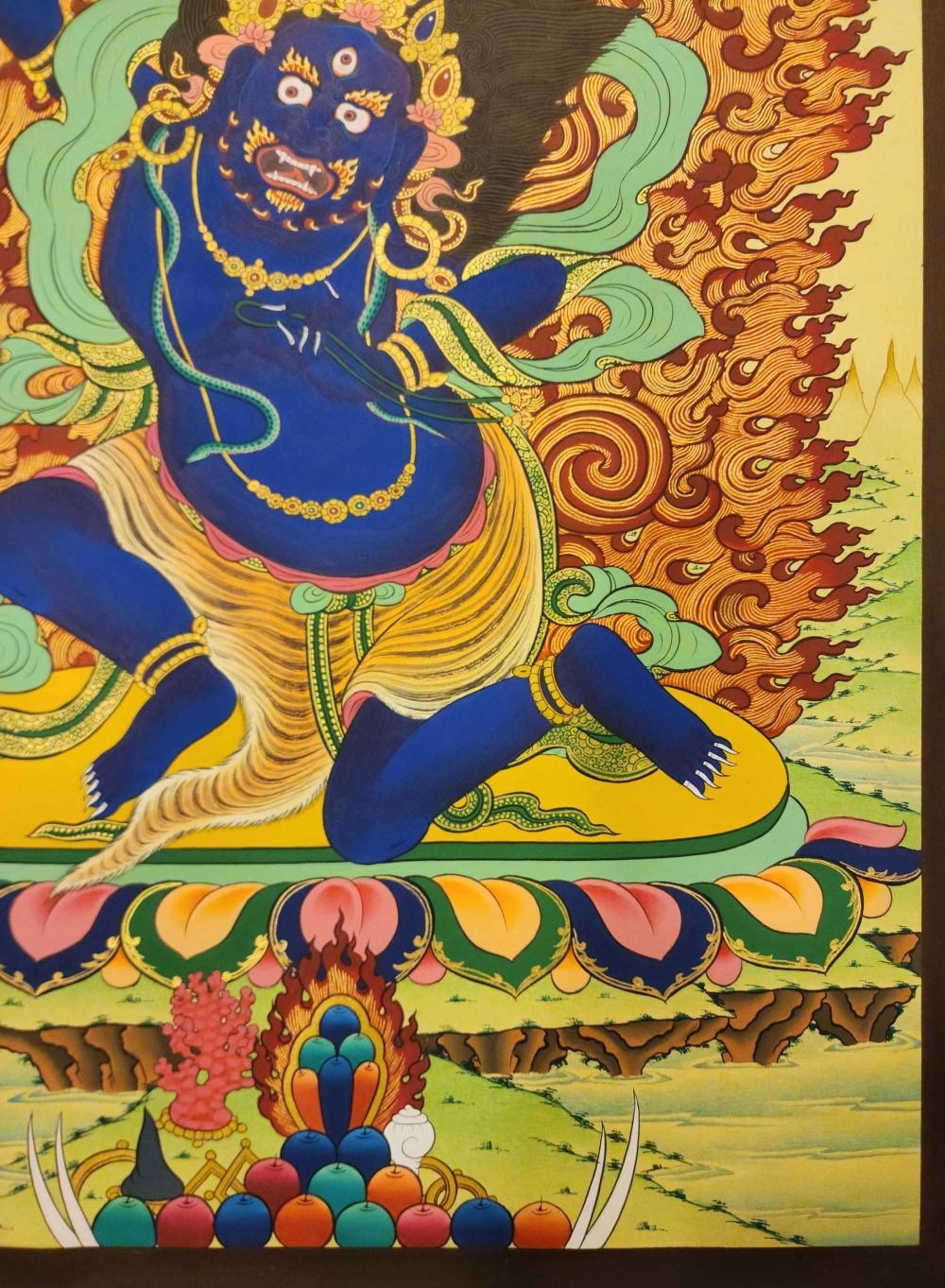
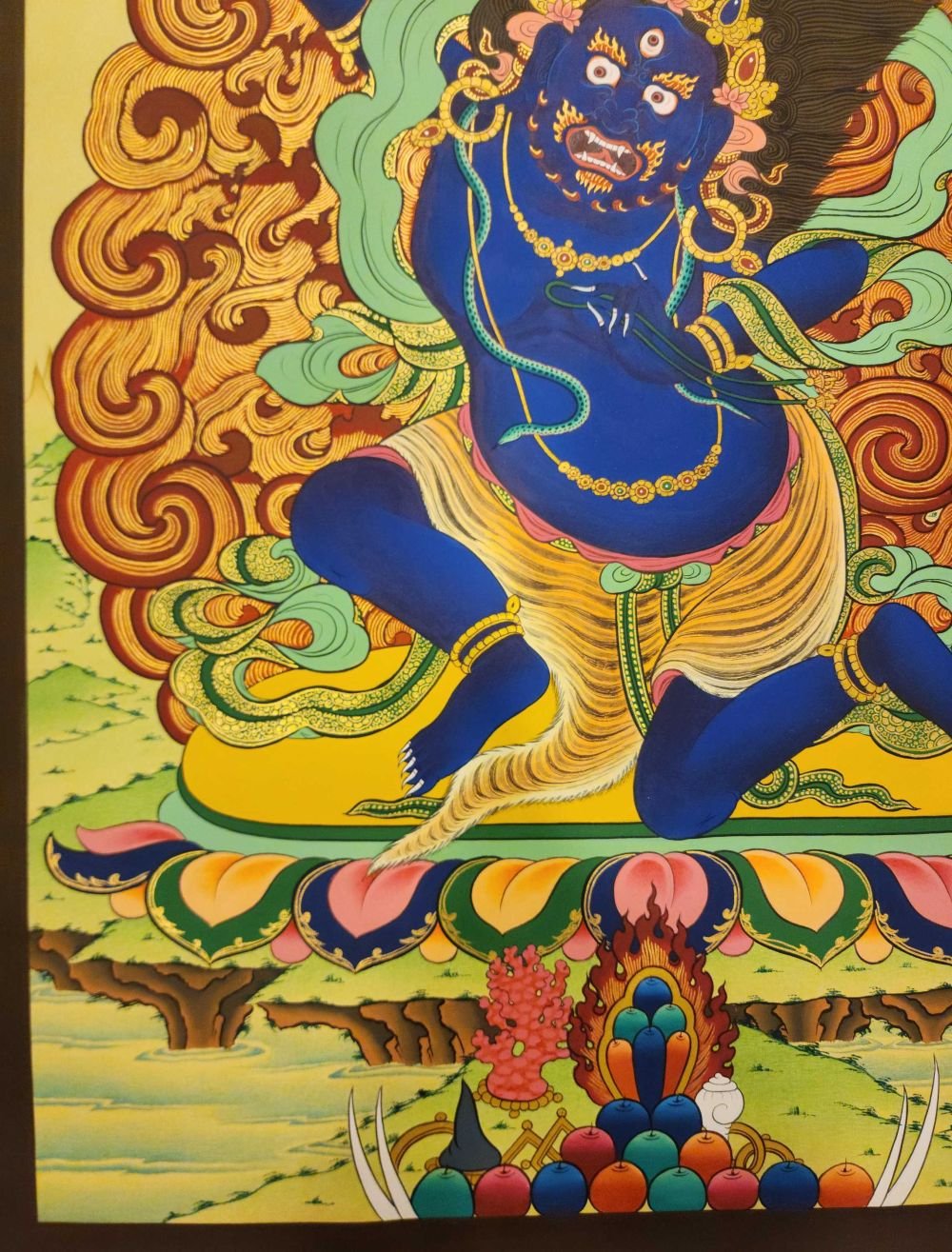
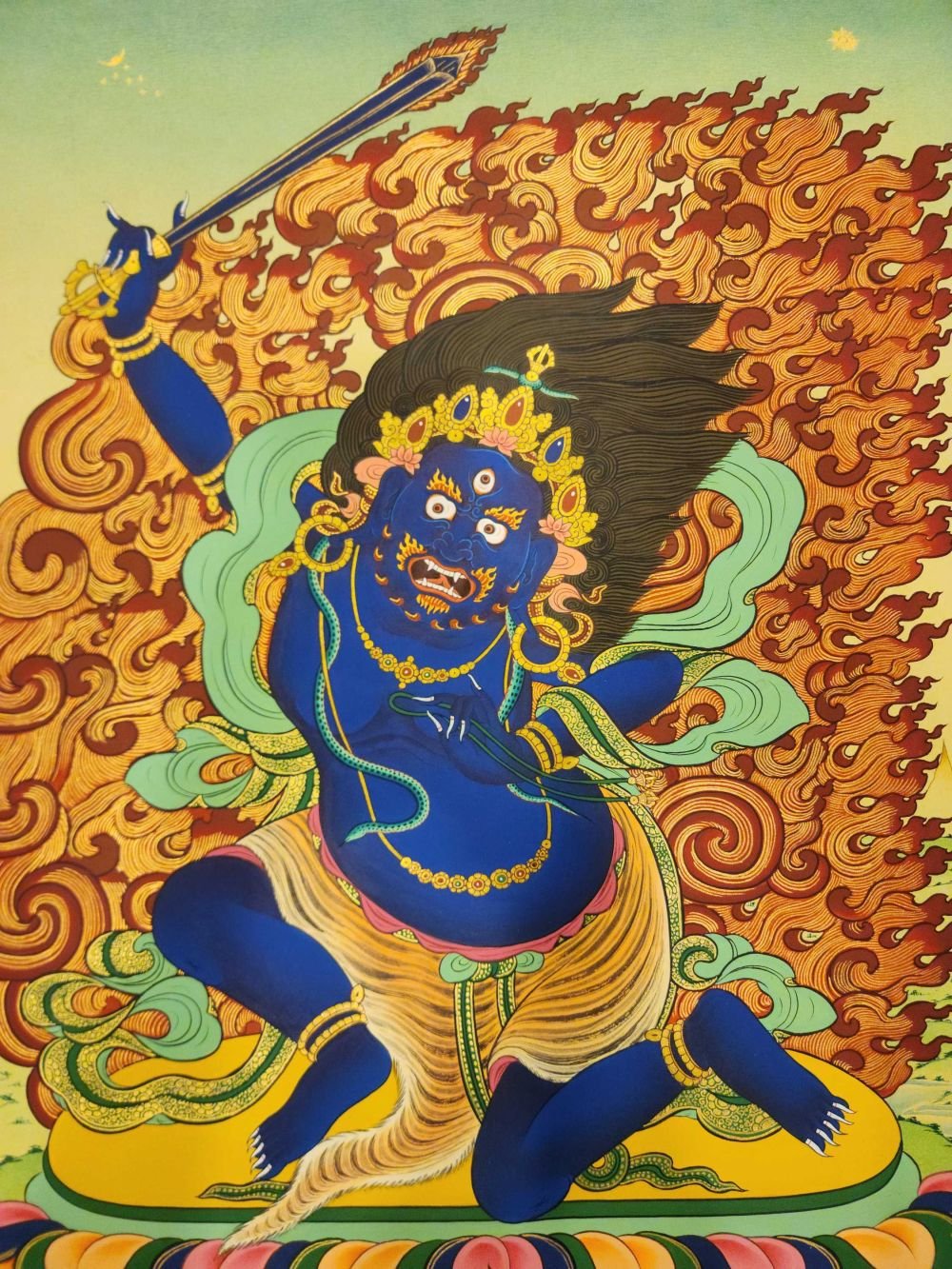

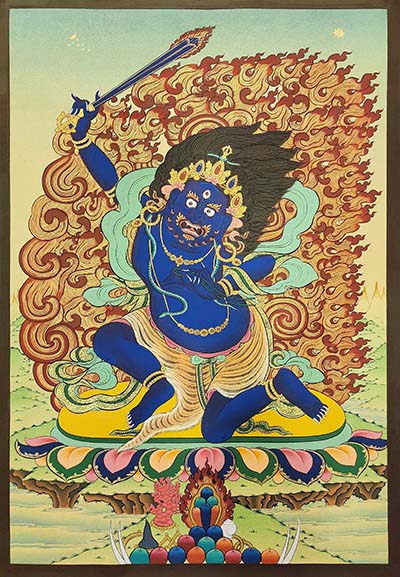
Chandamaharoshana Thangka, Buddhist Traditional Painting, Or Sankata , Wrathful Protector, Destroyer of Obstacles and Guardian of the Dharma
Chandamaharoshana
Duanbi Bodhisattva
Furyu Myoo
|
|
Product Specification |
|
| Code | HME29510 |
| Size |
Height 75cm (30") Width 50cm (20") |
Weight | 200 gm - 0.44 lbs |
| Material | Cotton Canvas & Natural Color |
| Availability | Available |
Order configuration (Optional)
Thangka Brocading
HIDE Select Option
Click Here to View All Option and Prices
Select
Select
Select
Select
Select
Select
Select
Select
Select

Select
Select
Select
Select

Select

Select

Select

Select

Select

Select

Select

Select

Select

Select

Select

Select

Select

Select

Select

Select

Select
Select

Select

Select

Select

Select

Select

Select
Brocade knob
HIDE Select Option
Click Here to View All Option and Prices

Select

Select

Select

Select

Select

Select

Select

Select
Thangka Blessing
HIDE Select Option
Click Here to View All Option and Prices

Select

Select
| Quantity | PCS |
US$ 270.00
$ 360.00 -25% off
Shipping Cost
|
| Price Adjustment [ Discount Ends in : 35 days ] |
||
Shipping Calculation
weight of 1 Pcs of the product is 0.5 kg and will cost USD $ 31.00
-
Item location: kathmandu, Nepal
Worldwide shipping - Dispatch
-
We normally dispatch the product in 2-5 business days. Else Buyer will be infromed personally about the dispatch Date.
- Payment
- Paypal | Credit - Debit Card | Bank Transfer | See More
- Return
- 7 days money back, buyer pays return shipping
Welcome to Handmade Handicraft
At Handmade Handicraft, we prioritize simplicity, reflected in our user-friendly website design. We have streamlined the process so everything you need is just a click away.
While our website does not support online shopping, we've incorporated a convenient shopping cart system to assist you in sending us your inquiries. Please note, we do not process payments on our site. All transactions will be handled via email, respecting the inquiries you submit.
Should you encounter any issues while submitting your inquiries, please contact us via mobile app, email, or follow the procedure outlined below. We've provided documentation to guide you through the selection process.
selecting Procedure
In every product you will find Order Now and Quick Inquiry buttons, they are the two process of sending us your enquiry.
If you have any questions or need assistance, please don't hesitate to reach out to us. We are here to help you with your inquiries and ensure a smooth experience.
Chandamaharoshana
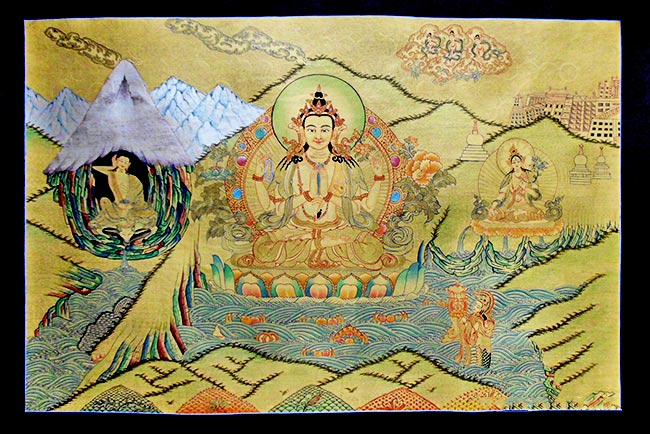
Chandamaharoshana, meaning the "Extremely Violent and Wrathful One," is a fierce aspect of the blue Akshobhya Buddha, also known as Achala. The Chandamaharoshana Tantra belongs to the Anuttarayoga or 'Supreme Yoga' Tantra of the 'father-tantra' class, emphasizing skillful means. With origins in early India, this Tantra employs highly esoteric sexual symbolism expressed in the 'twilight language. Its practice remains popular in the Newar Buddhist tradition, while Achala is recognized as one of the Ten Wrathful Ones in Vajrayana Buddhism. In Japan's Shingon Tradition, he is revered as Fudo Myo-o, one of the 'thirteen deities.' This visionary Newar paubha painting, created by Raj Prakash Tuladhar, depicts the powerful form of Chandamaharoshana and his consort, Mamaki, set within a symbolic landscape. Read More
Iconography
Chandamaharoshana manifests as a blue-black deity with a fierce face, three eyes, and two arms. He is depicted in the kneeling achalasana posture, pressing his left knee and foot upon the forms of the Vedic gods Maheshvara, Vishnu, and Indra. Brahma is crushed under his right foot. These deities symbolize the four maras or 'obstructive demons.' Chandamaharoshana's body is adorned with golden bracelets and filigree bone ornaments. He wears a billowing green silk scarf, a loosened tiger-skin loincloth for sexual intercourse, and a garland of severed heads. His golden crown features five dry white skulls, five radiant jewels, and five silver kikinpa crowned with ornate parasols. A crescent moon and a serpent adorn his tawny upward-streaming hair, while golden victory flags appear above his ears. His red eyebrows and facial hair blaze upward, and his three bloodshot eyes gaze down at his consort.
History
Chandamaharoshana finds its roots in the ancient traditions of Vajrayana Buddhism. The deity holds significant importance in both Tibetan and Newar Buddhist practices. The Chandamaharoshana Tantra, originating from early India, has preserved its esoteric symbolism and continues to be revered in the Newar Buddhist tradition. Throughout history, the worship of Chandamaharoshana has spread to various regions, including Japan, where he is known as Fudo Myo-o in the Shingon Tradition.
Temples and Monasteries
Unfortunately, specific information regarding temples and monasteries dedicated to Chandamaharoshana, particularly in Nepal, is not available within my knowledge base. However, it is likely that dedicated spaces for worship exist, especially in areas influenced by Vajrayana Buddhism. Further research or local sources can provide more accurate and up-to-date information on the locations of temples or monasteries associated with Chandamaharoshana.
Benefits of Practicing Chandamaharoshana
The practice of Chandamaharoshana is believed to offer numerous benefits to its practitioners. These benefits may include spiritual empowerment, protection from obstacles, the cultivation of skillful means, and transforming negative emotions into wisdom. By engaging with the symbolism and teachings associated with Chandamaharoshana, practitioners aim to harness his fierce energy to overcome inner and outer hindrances, ultimately progressing on the path to enlightenment.
How to Practice
The practice of Chandamaharoshana involves engaging with the deity through meditation, visualization, recitation of mantras, and ritual offerings. Practitioners may receive specific instructions and empowerment from qualified teachers within the Vajrayana Buddhist tradition. The detailed methods and practices may vary depending on the lineage or tradition. It is recommended to seek guidance from experienced practitioners or spiritual teachers to ensure a proper understanding and implementation of the practices associated with Chandamaharoshana.
Mantras of Chandamaharoshana
The mantras associated with Chandamaharoshana are considered potent and effective in invoking the deity's presence and blessings. While I don't have access to specific mantras associated with Chandamaharoshana, these mantras typically contain sacred syllables and sounds believed to represent the enlightened qualities and essence of the deity. Chanting or reciting these mantras with devotion and understanding is believed to establish a deep connection with Chandamaharoshana and facilitate spiritual growth and transformation. Seek guidance from qualified teachers or practitioners to receive authentic mantras and instructions pertaining to Chandamaharoshana's practice.
Chandamaharoshana manifests as a blue-black deity with a fierce face, three eyes, and two arms. He is depicted in the kneeling achalasana posture, pressing his left knee and foot upon the forms of the Vedic gods Maheshvara, Vishnu, and Indra. Brahma is crushed under his right foot. These deities symbolize the four maras or 'obstructive demons.' Chandamaharoshana's body is adorned with golden bracelets and filigree bone ornaments. He wears a billowing green silk scarf, a loosened tiger-skin loincloth for sexual intercourse, and a garland of severed heads. His golden crown features five dry white skulls, five radiant jewels, and five silver kikinpa crowned with ornate parasols. A crescent moon and a serpent adorn his tawny upward-streaming hair, while golden victory flags appear above his ears. His red eyebrows and facial hair blaze upward, and his three bloodshot eyes gaze down at his consort.
History
Chandamaharoshana finds its roots in the ancient traditions of Vajrayana Buddhism. The deity holds significant importance in both Tibetan and Newar Buddhist practices. The Chandamaharoshana Tantra, originating from early India, has preserved its esoteric symbolism and continues to be revered in the Newar Buddhist tradition. Throughout history, the worship of Chandamaharoshana has spread to various regions, including Japan, where he is known as Fudo Myo-o in the Shingon Tradition.
Temples and Monasteries
Unfortunately, specific information regarding temples and monasteries dedicated to Chandamaharoshana, particularly in Nepal, is not available within my knowledge base. However, it is likely that dedicated spaces for worship exist, especially in areas influenced by Vajrayana Buddhism. Further research or local sources can provide more accurate and up-to-date information on the locations of temples or monasteries associated with Chandamaharoshana.
Benefits of Practicing Chandamaharoshana
The practice of Chandamaharoshana is believed to offer numerous benefits to its practitioners. These benefits may include spiritual empowerment, protection from obstacles, the cultivation of skillful means, and transforming negative emotions into wisdom. By engaging with the symbolism and teachings associated with Chandamaharoshana, practitioners aim to harness his fierce energy to overcome inner and outer hindrances, ultimately progressing on the path to enlightenment.
How to Practice
The practice of Chandamaharoshana involves engaging with the deity through meditation, visualization, recitation of mantras, and ritual offerings. Practitioners may receive specific instructions and empowerment from qualified teachers within the Vajrayana Buddhist tradition. The detailed methods and practices may vary depending on the lineage or tradition. It is recommended to seek guidance from experienced practitioners or spiritual teachers to ensure a proper understanding and implementation of the practices associated with Chandamaharoshana.
Mantras of Chandamaharoshana
The mantras associated with Chandamaharoshana are considered potent and effective in invoking the deity's presence and blessings. While I don't have access to specific mantras associated with Chandamaharoshana, these mantras typically contain sacred syllables and sounds believed to represent the enlightened qualities and essence of the deity. Chanting or reciting these mantras with devotion and understanding is believed to establish a deep connection with Chandamaharoshana and facilitate spiritual growth and transformation. Seek guidance from qualified teachers or practitioners to receive authentic mantras and instructions pertaining to Chandamaharoshana's practice.
Introduction to Thangka
A thangka, also known as tangka, thanka, or tanka, is a vibrant and intricate Tibetan Buddhist painting that serves as a visual representation of spiritual teachings. Crafted with meticulous detail on cotton or silk appliqué, thangkas depict a wide range of subjects including Buddhist deities, sacred scenes, mandalas, and narrative stories. These sacred artworks are traditionally kept unframed and rolled up for storage, resembling ancient scrolls. To protect their delicate nature, thangkas are mounted on textile backings and often adorned with a silk cover on the front. Proper preservation in dry environments is crucial to maintain the integrity and longevity of the silk. Read More
Related Products

16 cm
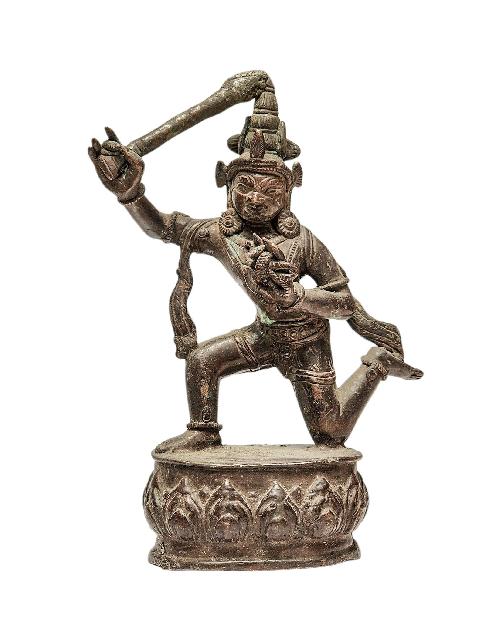
+ 50 Year Old Buddhist Miniature Statue Of Chandamaharoshana, Old Stock, Sankata
US$ 110.00
25% off
$ 150.00
$ 150.00

75 cm
Chandamaharoshana Thangka, Buddhist Traditional Painting, Or Sankata
US$ 270.00
25% off
$ 360.00
$ 360.00

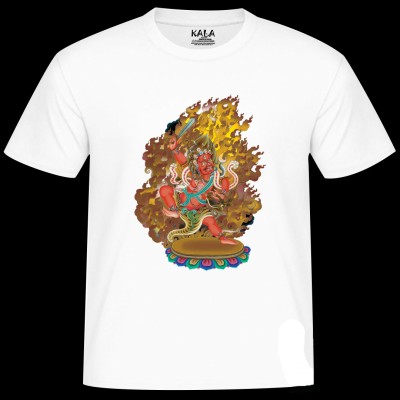
Nepali Cotton Round Neck T-shirt White Print Of Chandamaharoshana, By Yelos Bajracharya
US$ 17.00
25% off
$ 22.00
$ 22.00

78 cm
Chandamaharoshana, Khadga Pani With Chenrezig, Shakyamuni Buddha And Various Gods, Buddhist Traditional Painting, Hand Painted, Newari Thangka
US$ 230.00
Featured