

Loading Content..
Please wait...
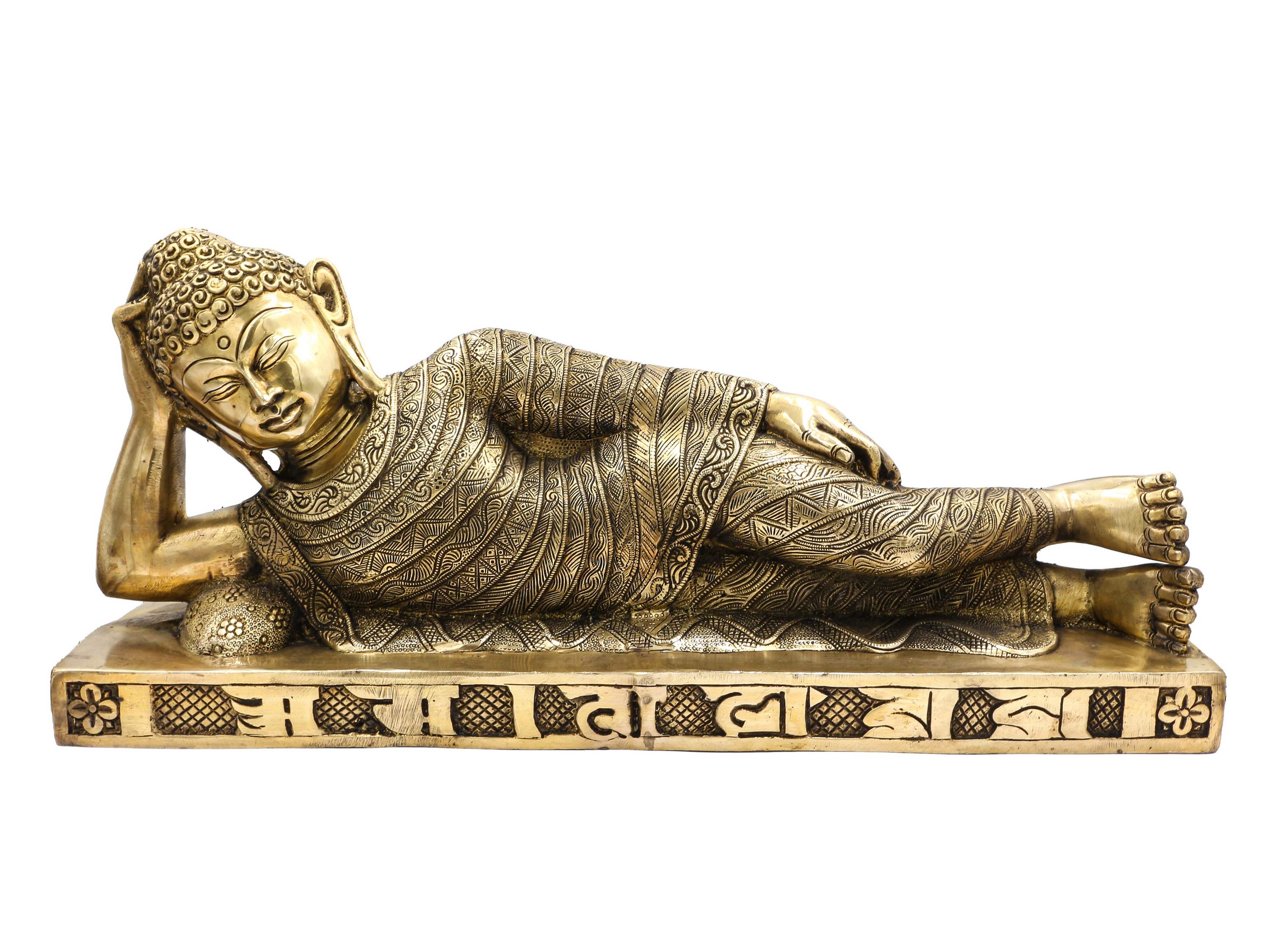


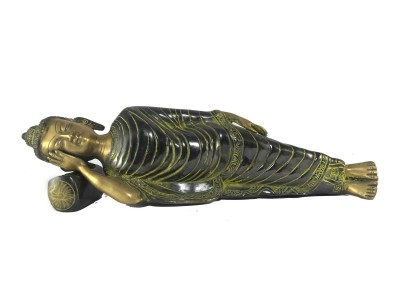
Buddhist Statue of Buddha Nirvana Or Sleeping Buddha, Sand Casting, Glossy Finishing , final state of liberation and peace that the Buddha attained upon his passing, where he transcended the cycle of birth, death, and rebirth, entering a state of ultimate freedom
same
Fó Nirvana
Butsudan Nirvana
|
|
Product Specification |
|
| Code | HME28650 |
| Size |
Height 25cm (10") Width 52cm (20") Depth 15cm (6") |
Weight | 9.26 kg - 20.41 lbs |
| Material | Brass |
| Availability | Available |
| Quantity | PCS |
US$ 320.00
$ 420.00 -25% off
Shipping Cost
|
| Price Adjustment [ Discount Ends in : 40 days ] |
||
Shipping Calculation
weight of 1 Pcs of the product is 9.5 kg and will cost USD $ 133.00
-
Item location: kathmandu, Nepal
Worldwide shipping - Dispatch
-
We normally dispatch the product in 2-5 business days. Else Buyer will be infromed personally about the dispatch Date.
- Payment
- Paypal | Credit - Debit Card | Bank Transfer | See More
- Return
- 7 days money back, buyer pays return shipping
Welcome to Handmade Handicraft
At Handmade Handicraft, we prioritize simplicity, reflected in our user-friendly website design. We have streamlined the process so everything you need is just a click away.
While our website does not support online shopping, we've incorporated a convenient shopping cart system to assist you in sending us your inquiries. Please note, we do not process payments on our site. All transactions will be handled via email, respecting the inquiries you submit.
Should you encounter any issues while submitting your inquiries, please contact us via mobile app, email, or follow the procedure outlined below. We've provided documentation to guide you through the selection process.
selecting Procedure
In every product you will find Order Now and Quick Inquiry buttons, they are the two process of sending us your enquiry.
If you have any questions or need assistance, please don't hesitate to reach out to us. We are here to help you with your inquiries and ensure a smooth experience.
Buddha Nirvana
Nirvana (Sanskrit: nirvāṇa; Pali: nibbana, nibbāna) is the goal of the Buddhist path. The literal meaning of the term is "blowing out" or "quenching". Nirvana is the ultimate spiritual goal in Buddhism and marks the soteriological release from rebirths in saṃsāra. Nirvana is part of the Third Truth on "cessation of dukkha" in the Four Noble Truths, and the summum bonum destination of the Noble Eightfold Path. Read More
In the Buddhist tradition, nirvana has commonly been interpreted as the extinction of the "three fires", or "three poisons",[note 1] greed (raga), aversion (dvesha) and ignorance (moha). When these fires are extinguished, release from the cycle of rebirth (saṃsāra) is attained.
Nirvana has also been claimed by some scholars to be identical with anatta (non-self) and sunyata (emptiness) states though this is hotly contested by other scholars and practicing monks.[web 1] In time, with the development of the Buddhist doctrine, other interpretations were given, such as the absence of the weaving (vana) of activity of the mind, the elimination of desire, and escape from the woods, cq. the five skandhas or aggregates.
Buddhist scholastic tradition identifies two types of nirvana: sopadhishesa-nirvana (nirvana with a remainder), and parinirvana or anupadhishesa-nirvana (nirvana without remainder, or final nirvana). The founder of Buddhism, the Buddha, is believed to have reached both these states.
Nirvana, or the liberation from cycles of rebirth, is the highest aim of the Theravada tradition. In the Mahayana tradition, the highest goal is Buddhahood, in which there is no abiding in nirvana. Buddha helps liberate beings from saṃsāra by teaching the Buddhist path. There is no rebirth for Buddha or people who attain nirvana. But his teachings remain in the world for a certain time as a guidance to attain nirvana.
Nirvana has also been claimed by some scholars to be identical with anatta (non-self) and sunyata (emptiness) states though this is hotly contested by other scholars and practicing monks.[web 1] In time, with the development of the Buddhist doctrine, other interpretations were given, such as the absence of the weaving (vana) of activity of the mind, the elimination of desire, and escape from the woods, cq. the five skandhas or aggregates.
Buddhist scholastic tradition identifies two types of nirvana: sopadhishesa-nirvana (nirvana with a remainder), and parinirvana or anupadhishesa-nirvana (nirvana without remainder, or final nirvana). The founder of Buddhism, the Buddha, is believed to have reached both these states.
Nirvana, or the liberation from cycles of rebirth, is the highest aim of the Theravada tradition. In the Mahayana tradition, the highest goal is Buddhahood, in which there is no abiding in nirvana. Buddha helps liberate beings from saṃsāra by teaching the Buddhist path. There is no rebirth for Buddha or people who attain nirvana. But his teachings remain in the world for a certain time as a guidance to attain nirvana.
Process: Sand Casting
This Buddha Nirvana has been created using the sand casting system, also known as sand molding casting. This widely employed manufacturing process utilizes a sand mold to produce metal products and components in various sizes and shapes. Sand casting holds significant popularity in the industry, accounting for approximately 60% of all metal castings. The sand casting process involves six primary steps. First, a pattern or replica of the desired sculpture, in this case, Buddha Nirvana, is created using a material like wood or metal. The pattern is then placed in a flask, which is a box-like structure divided into two halves. The next step involves packing the flask tightly with specially formulated molding sand, creating a mold cavity that matches the shape of the pattern. The pattern is subsequently removed, leaving behind a negative impression of the sculpture within the sand mold. Read More
Related Products

25 cm
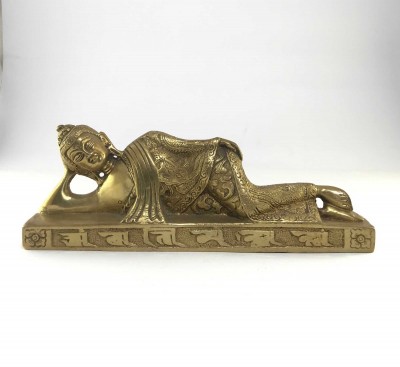
Statue Of Nirvana Buddha Double Color Finishing
US$ 56.00
25% off
$ 74.00
$ 74.00

21 cm
Statue Of Nirvana Buddha Glossy Finishing
US$ 38.00
25% off
$ 50.00
$ 50.00

15 cm
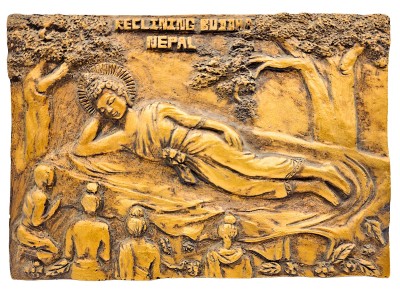
3D Fiber Art Of Buddha Nirvana Or Sleeping Buddha With Stand And Wall Hanger
US$ 7.50
25% off
$ 10.00
$ 10.00

43 cm
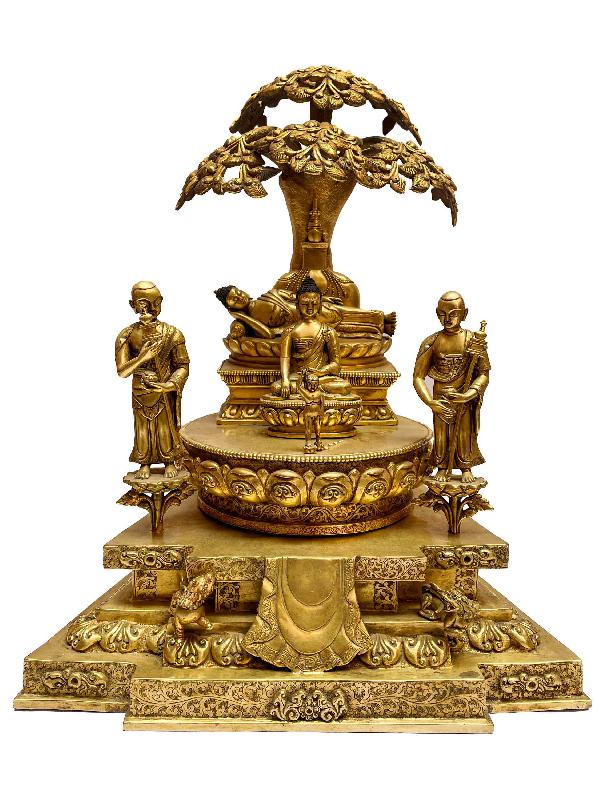
Master Quality, Buddhist Statue Of Buddha Nirvana, Full Gold Plated
US$ 3,750.00
25% off
$ 5,000.00
$ 5,000.00