

Loading Content..
Please wait...
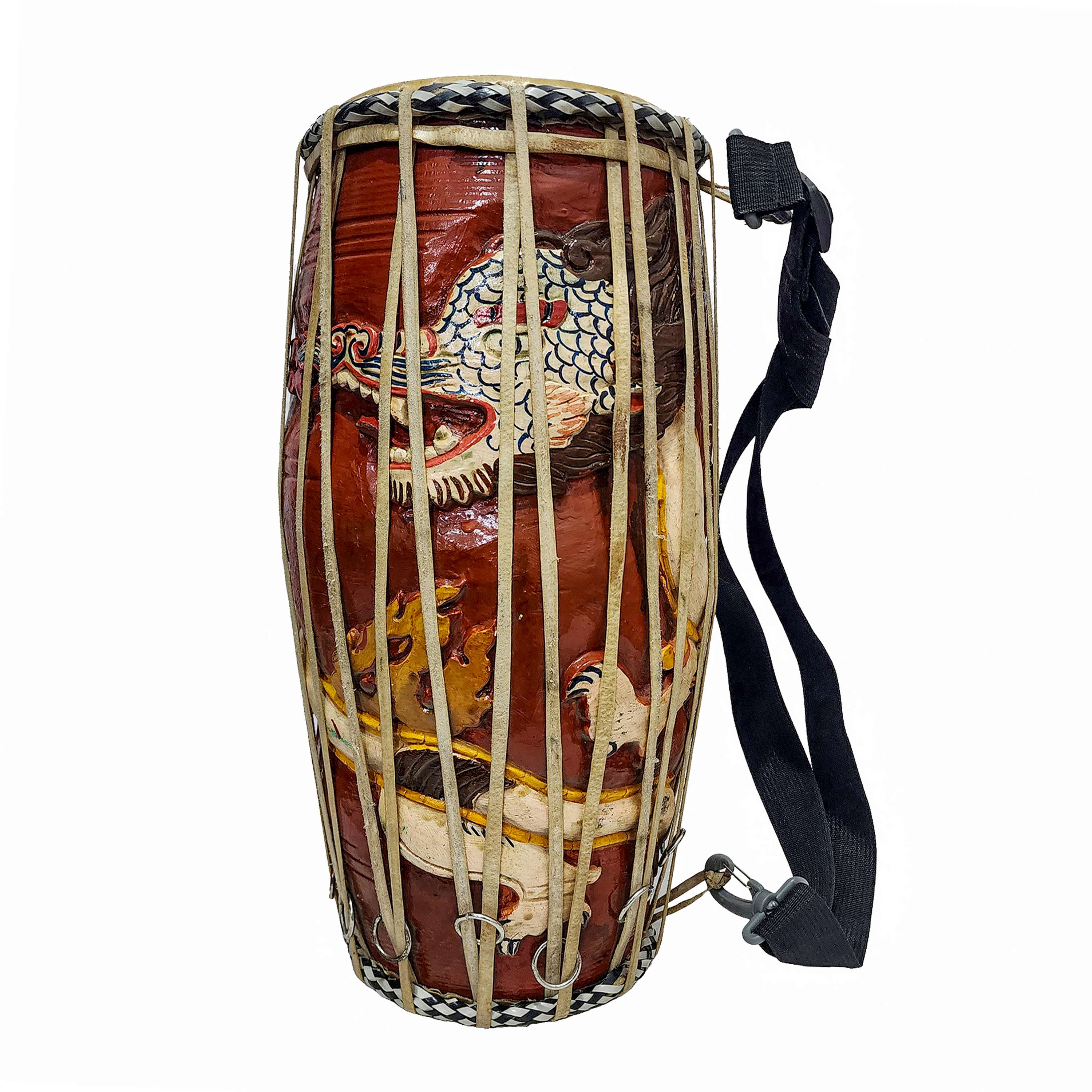
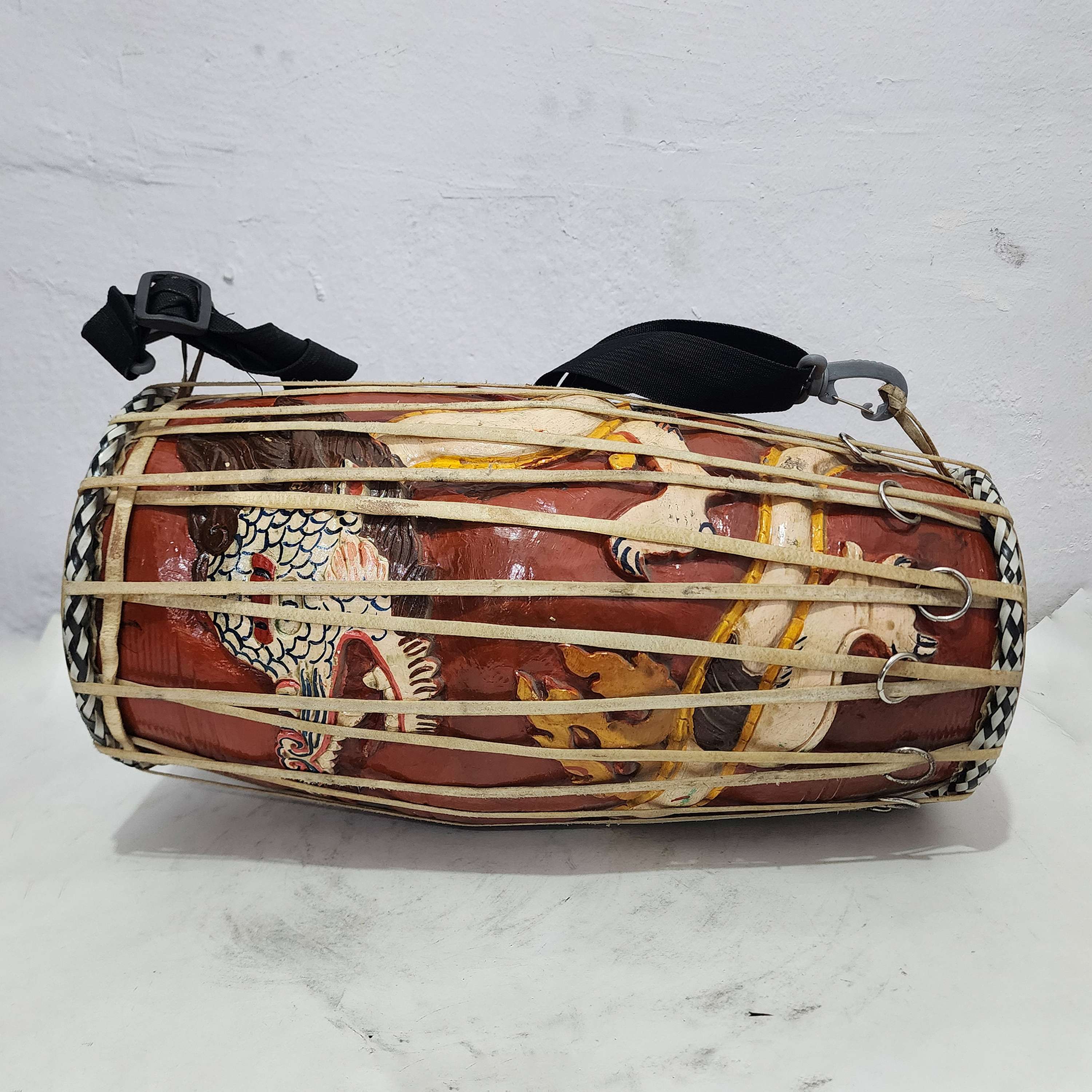


Nepali Folk Musical Instrument Jali Madal with Dragon Design carved, Professional |
|
Product Specification |
|
| Code | HME28183 |
| Size |
Height 21cm (8") Width 46cm (18") Depth 21cm (8") |
Weight | 2.97 kg - 6.54 lbs |
| Material | Wood and Leather |
| Availability | Available |
| Quantity | PCS |
US$ 200.00
$ 260.00 -25% off
Shipping Cost
|
| Price Adjustment [ Discount Ends in : 40 days ] |
||
Shipping Calculation
weight of 1 Pcs of the product is 6 kg and will cost USD $ 90.00
-
Item location: kathmandu, Nepal
Worldwide shipping - Dispatch
-
We normally dispatch the product in 2-5 business days. Else Buyer will be infromed personally about the dispatch Date.
- Payment
- Paypal | Credit - Debit Card | Bank Transfer | See More
- Return
- 7 days money back, buyer pays return shipping
Welcome to Handmade Handicraft
At Handmade Handicraft, we prioritize simplicity, reflected in our user-friendly website design. We have streamlined the process so everything you need is just a click away.
While our website does not support online shopping, we've incorporated a convenient shopping cart system to assist you in sending us your inquiries. Please note, we do not process payments on our site. All transactions will be handled via email, respecting the inquiries you submit.
Should you encounter any issues while submitting your inquiries, please contact us via mobile app, email, or follow the procedure outlined below. We've provided documentation to guide you through the selection process.
selecting Procedure
In every product you will find Order Now and Quick Inquiry buttons, they are the two process of sending us your enquiry.
If you have any questions or need assistance, please don't hesitate to reach out to us. We are here to help you with your inquiries and ensure a smooth experience.
Madal
The madal is a traditional hand drum that is widely used in Nepalese folk music for rhythm-keeping. It is considered the national instrument of Nepal and has been incorporated into many other forms of music, including Bollywood. The madal has a cylindrical body with heads at both ends, one larger than the other, and is played horizontally while seated. It originated in the Magar community of Nepal and its name is believed to have derived from an earlier instrument called the mardal. Read More
The construction of a madal typically involves carving a wooden log to create a hollow cavity and fixing double-layered goat skin heads to the body using leather strips. A black paste made of flour, iron filings, and egg is added to the center of each head, adding weight and changing the sound of the drum. Playing the madal requires coordination and proper hand techniques to produce a clear sound. The tension of the heads can be adjusted to tune the drum to the desired sound. Cleaning the madal regularly involves wiping down the goat skin heads with a soft cloth and dusting the wooden body.In conclusion, the madal is a versatile and important instrument in Nepalese folk music and its popularity continues to spread globally. Whether playing solo or in a group, the madal provides a strong rhythmic foundation for a wide range of musical styles.
Playing Instructions:
Playing the Madal requires practice and coordination. It is usually played in a seated position, with both heads played simultaneously. The performer sits with the drum between their legs and uses their hands to beat the heads. To produce a clear sound, the performer should use their palms and fingers, rather than their fists. It is also important to keep a consistent rhythm and play with proper hand techniques to avoid fatigue and injury.
Cleaning Instructions:
To keep your Madal in good condition, it is important to regularly clean it. The goat skin heads should be wiped down with a soft, dry cloth after each use to remove sweat, oils, and other residue. Avoid using any harsh chemicals or water on the heads as it can damage the skin. It's also important to keep the wooden body of the Madal dust-free by wiping it down with a microfiber cloth.
Tuning Instructions:
The Madal does not have a fixed tuning and can be adjusted to fit the specific needs of a performance. The tension of the skin heads can be adjusted by tightening or loosening the leather strips that secure the heads to the body of the drum. It's important to regularly check the tension of the heads and make any necessary adjustments as needed. A well-tuned Madal will produce a clear and resonant sound.
History and Nomenclature:
The Madal originated in the Magar community of Nepal and is considered the national instrument of the country. It is said to have been derived from the mardal, which in turn was derived from the mridung, a classical Indian instrument. In the Palpa district of Nepal, it is known as the "r?ni m?dal," while in the Nepalbhasa language, it is referred to as the "maga kh?."
Construction:
The Madal is typically constructed from a wooden log that has been carved to form a hollow cavity, known as the "ghar." The heads of the drum are made of double-layered goat skins and are fixed to the body of the drum using leather strips. A black paste made of flour, iron filings, and egg is burned into a circular area in the center of each head, adding weight and altering the sound of the drum. The larger and smaller heads are referred to as "male" and "female," respectively.
Related Products

20 cm
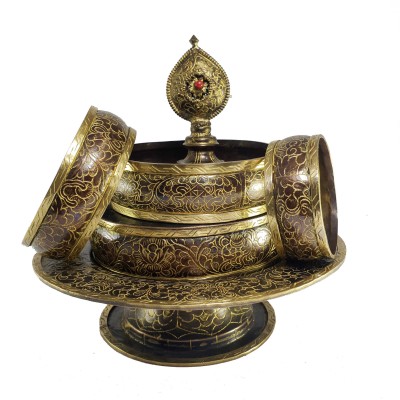
Large Copper Ratna Mandala Offering With Carving And Antique Finishing 5 Inches Madala Size
US$ 68.00
25% off
$ 90.00
$ 90.00

60 cm
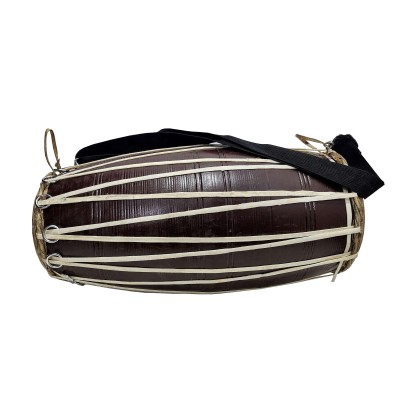
High Quality Nepali Folk Musical Instrument Madal With Bag, Professional
US$ 340.00
25% off
$ 450.00
$ 450.00

31 cm
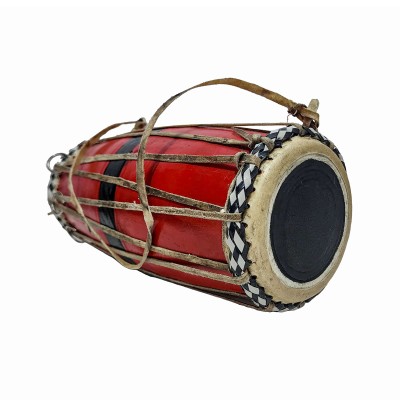
Nepali Folk Musical Instrument Jali Madal, Professional
US$ 45.00
25% off
$ 60.00
$ 60.00

24 cm
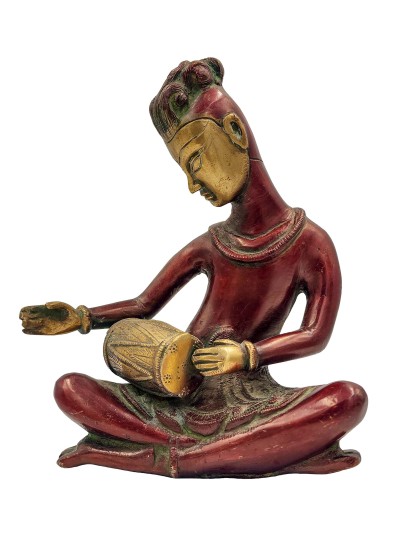
Nepali Statue Of A Man Playing Madal, Musical Instrument, Sand Casting, Chocolate Oxidized
US$ 89.00
25% off
$ 119.00
$ 119.00