

Loading Content..
Please wait...
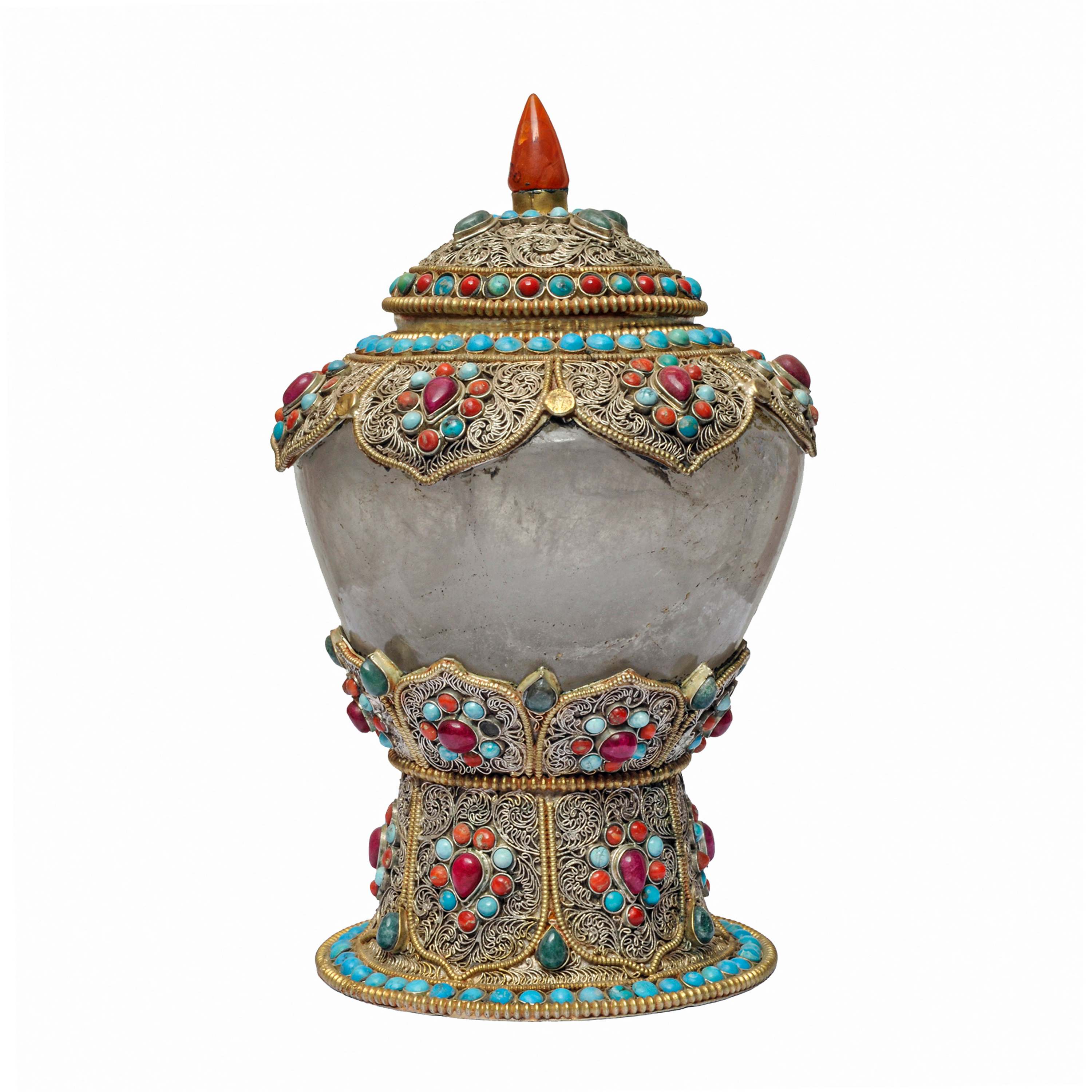
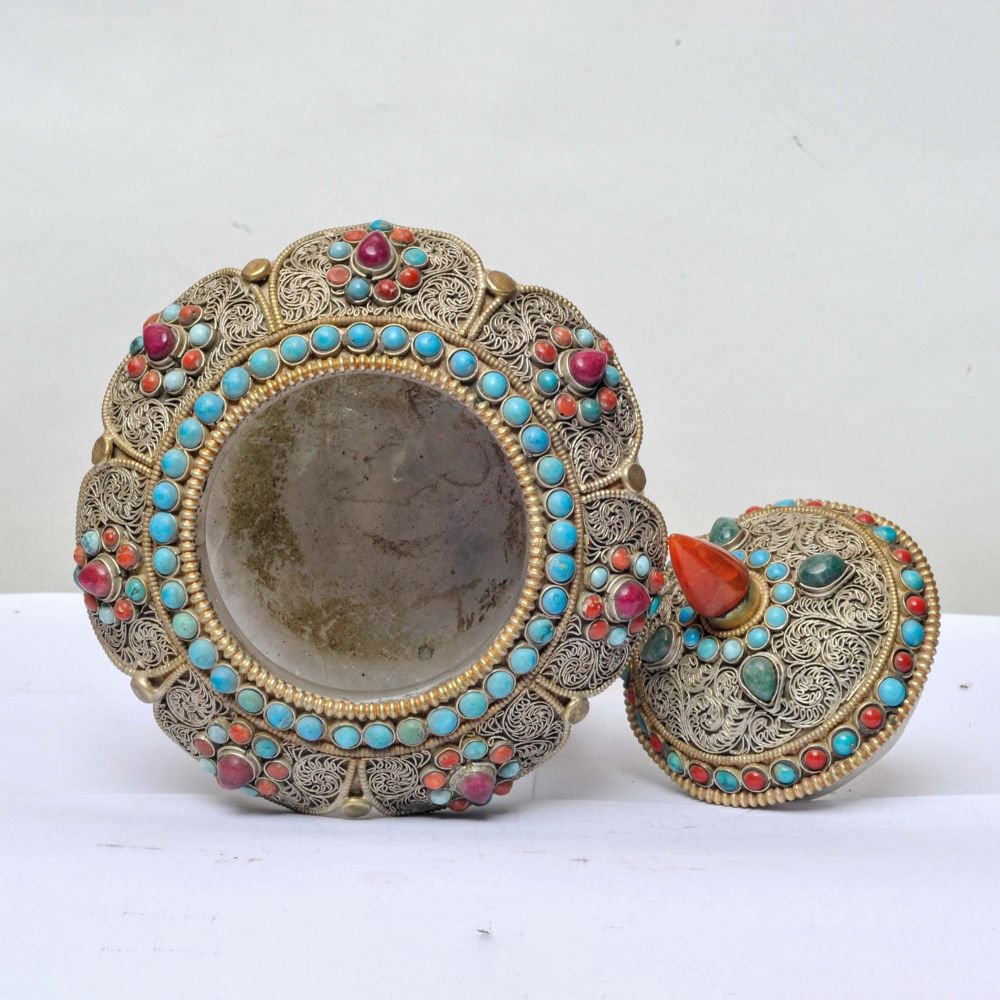


Nepali Handmade Crystal and Metal Siku Design Buddhist Urn offering Vessel |
|
Product Specification |
|
| Code | HME27874 |
| Size |
Height 21cm (8") Width 13cm (5") Depth 13cm (5") |
Weight | 1.53 kg - 3.36 lbs |
| Material | Silver |
| Availability | Available |
| Quantity | PCS |
US$ 480.00
$ 560.00 -15% off
Shipping Cost
|
| Price Adjustment Status: Active |
||
Shipping Calculation
weight of 1 Pcs of the product is 2 kg and will cost USD $ 47.00
-
Item location: kathmandu, Nepal
Worldwide shipping - Dispatch
-
We normally dispatch the product in 2-5 business days. Else Buyer will be infromed personally about the dispatch Date.
- Payment
- Paypal | Credit - Debit Card | Bank Transfer | See More
- Return
- 7 days money back, buyer pays return shipping
Welcome to Handmade Handicraft
At Handmade Handicraft, we prioritize simplicity, reflected in our user-friendly website design. We have streamlined the process so everything you need is just a click away.
While our website does not support online shopping, we've incorporated a convenient shopping cart system to assist you in sending us your inquiries. Please note, we do not process payments on our site. All transactions will be handled via email, respecting the inquiries you submit.
Should you encounter any issues while submitting your inquiries, please contact us via mobile app, email, or follow the procedure outlined below. We've provided documentation to guide you through the selection process.
selecting Procedure
In every product you will find Order Now and Quick Inquiry buttons, they are the two process of sending us your enquiry.
If you have any questions or need assistance, please don't hesitate to reach out to us. We are here to help you with your inquiries and ensure a smooth experience.
Tibetan urn
A Tibetan urn is a vessel typically made of metal, often brass or bronze, and used for a variety of purposes in Tibetan culture. These urns are usually ornate in design, featuring intricate patterns and symbols that hold significant meaning in Tibetan Buddhism.One common use for Tibetan urns is as a container for ashes or relics of deceased spiritual masters or other important figures in Tibetan Buddhist history. These urns are often placed on altars or in sacred spaces as a way of honoring and paying respect to these individuals. Read More
Tibetan urns are also used in various religious ceremonies and rituals, such as offerings of food, water, and other items to deities or other spiritual beings. In some cases, the urns may be used to hold sacred substances or objects, such as holy water or prayer beads.
Due to their intricate designs and cultural significance, Tibetan urns are often viewed as works of art in their own right and may be displayed in museums or private collections.
Due to their intricate designs and cultural significance, Tibetan urns are often viewed as works of art in their own right and may be displayed in museums or private collections.
Finishing: Stone Setting
The Tibetan urn is adorned with an exquisite array of semi-precious stones, including turquoise, coral, and lapis lazuli. These stones are carefully selected and meticulously placed on the Tibetan urn's surface, adding a touch of opulence and enhancing its overall beauty. Each stone is thoughtfully positioned using a high-quality adhesive, ensuring secure and long-lasting attachment. The vibrant colors and unique patterns of the stones create a captivating contrast against the backdrop of the Tibetan urn, elevating its visual appeal and making it truly eye-catching. Read More
what is metal setting
The metal setting process is a traditional technique used to decorate Buddhist ritual objects and statues. It involves hammering metal, such as copper or brass, into relief designs and then finishing the metal with gold or silver plating. The process also includes adding stone settings for additional embellishment. This technique has been used for centuries and originally served the purpose of protecting objects from damage. Read More
Crystal
: Brief IntroductionA crystal or crystalline solid is a solid material whose constituents (such as atoms, molecules, or ions) are arranged in a highly ordered microscopic structure, forming a crystal lattice that extends in all directions.[1][2] In addition, macroscopic single crystals are usually identifiable by their geometrical shape, consisting of flat faces with specific, characteristic orientations. The scientific study of crystals and crystal formation is known as crystallography. The process of crystal formation via mechanisms of crystal growth is called crystallization or solidification. Read More
Related Products

23 cm
Nepali Handmade Crystal And Metal Siku Design Buddhist Urn Offering Vessel
US$ 600.00
15% off
$ 700.00
$ 700.00

13 cm
Tibetan Tea And Water Offering Vessel, Black Color, With Silver And Metal Design, Offering Tea, Silver Carving
US$ 77.00
15% off
$ 90.00
$ 90.00

21 cm
Nepali Handmade Crystal And Metal Siku Design Buddhist Urn Offering Vessel
US$ 480.00
15% off
$ 560.00
$ 560.00