

Loading Content..
Please wait...
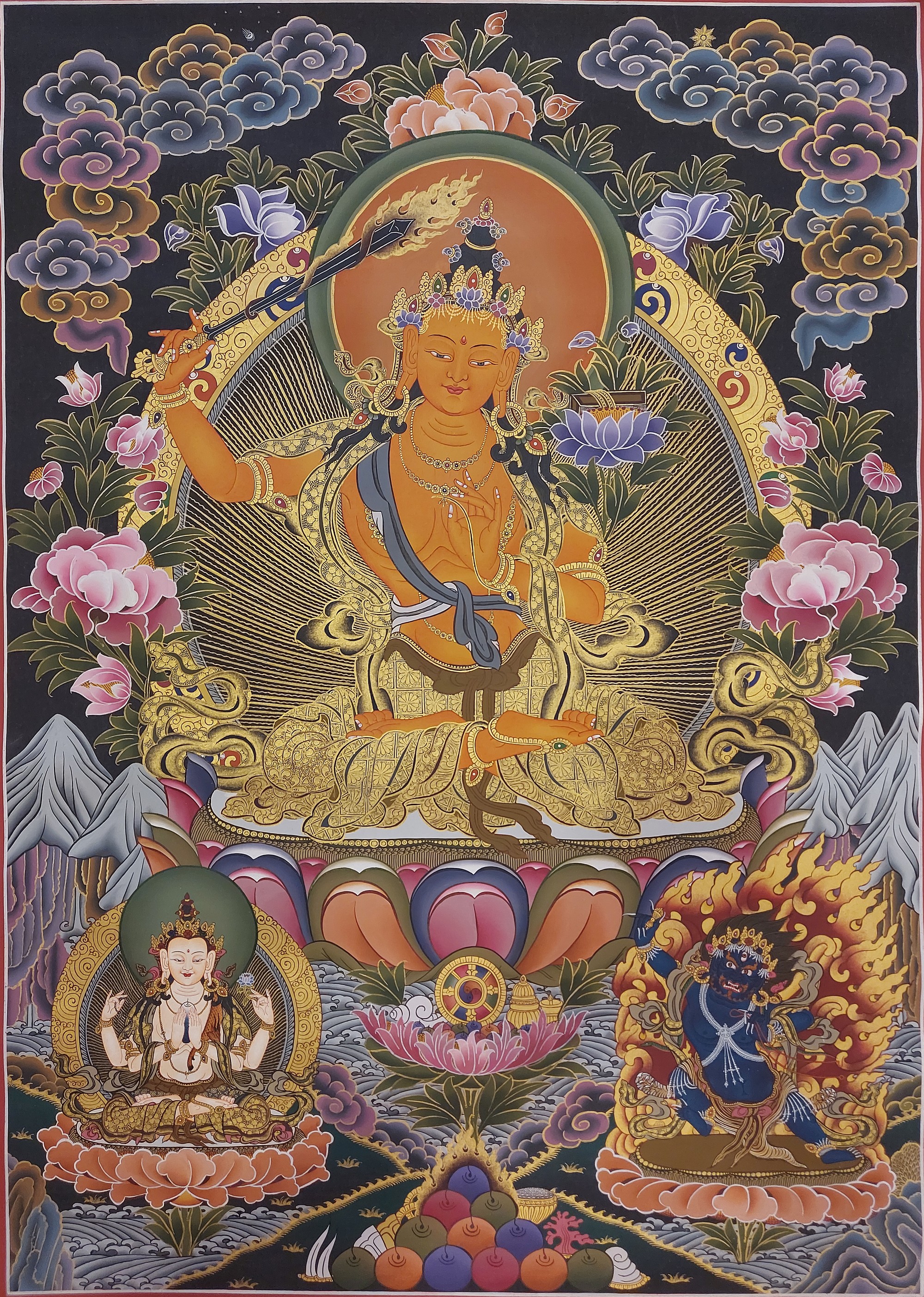
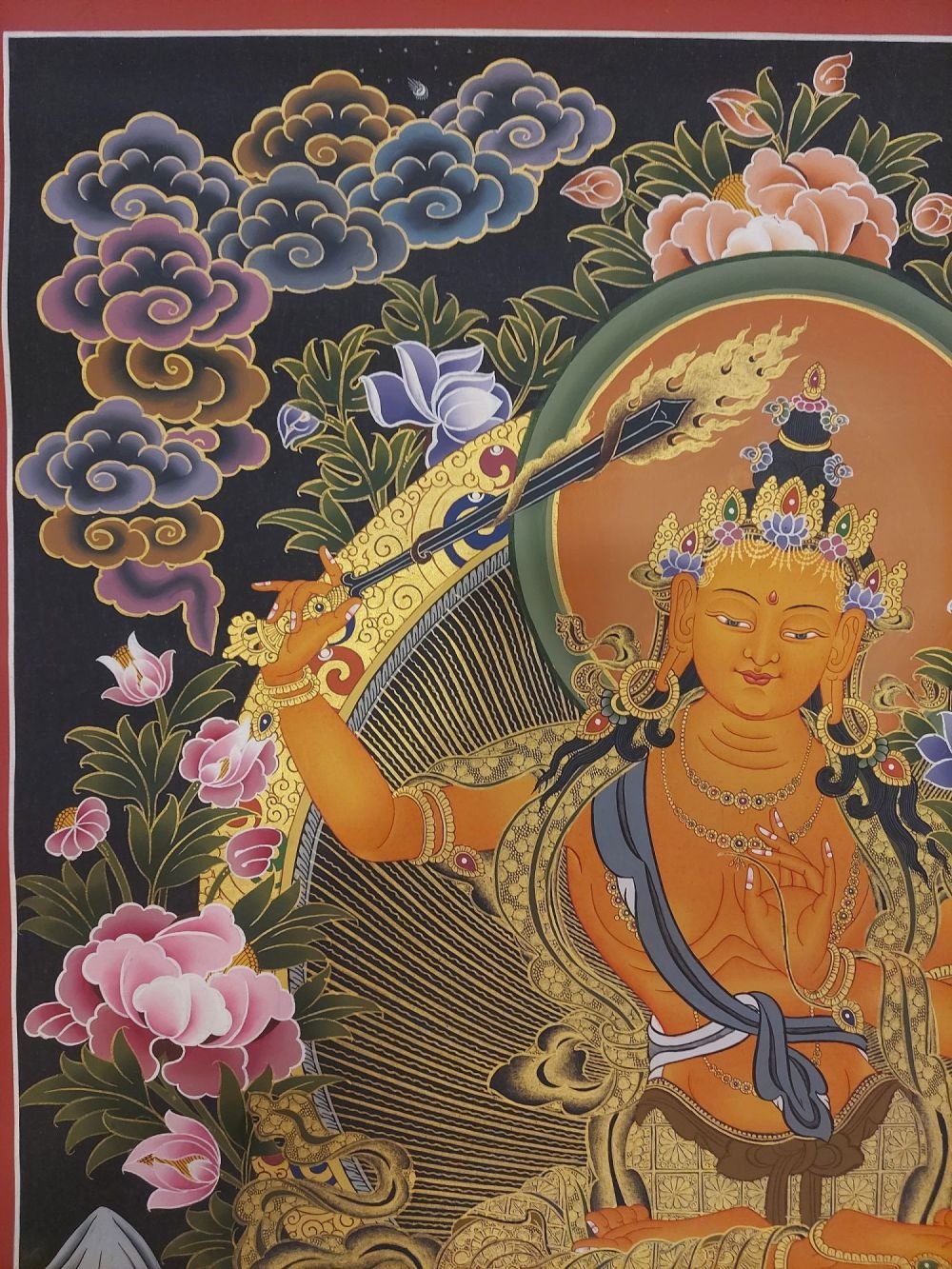

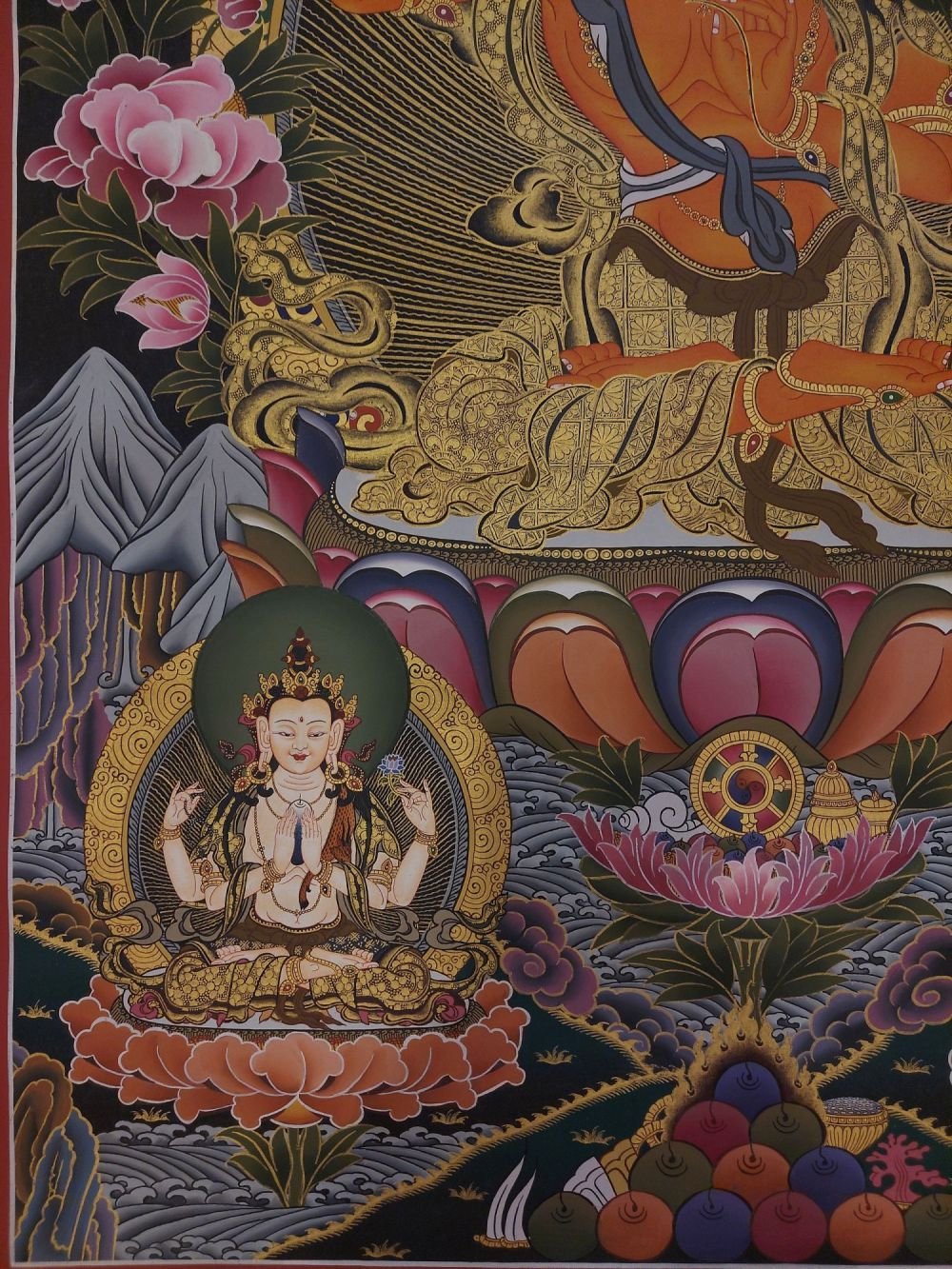
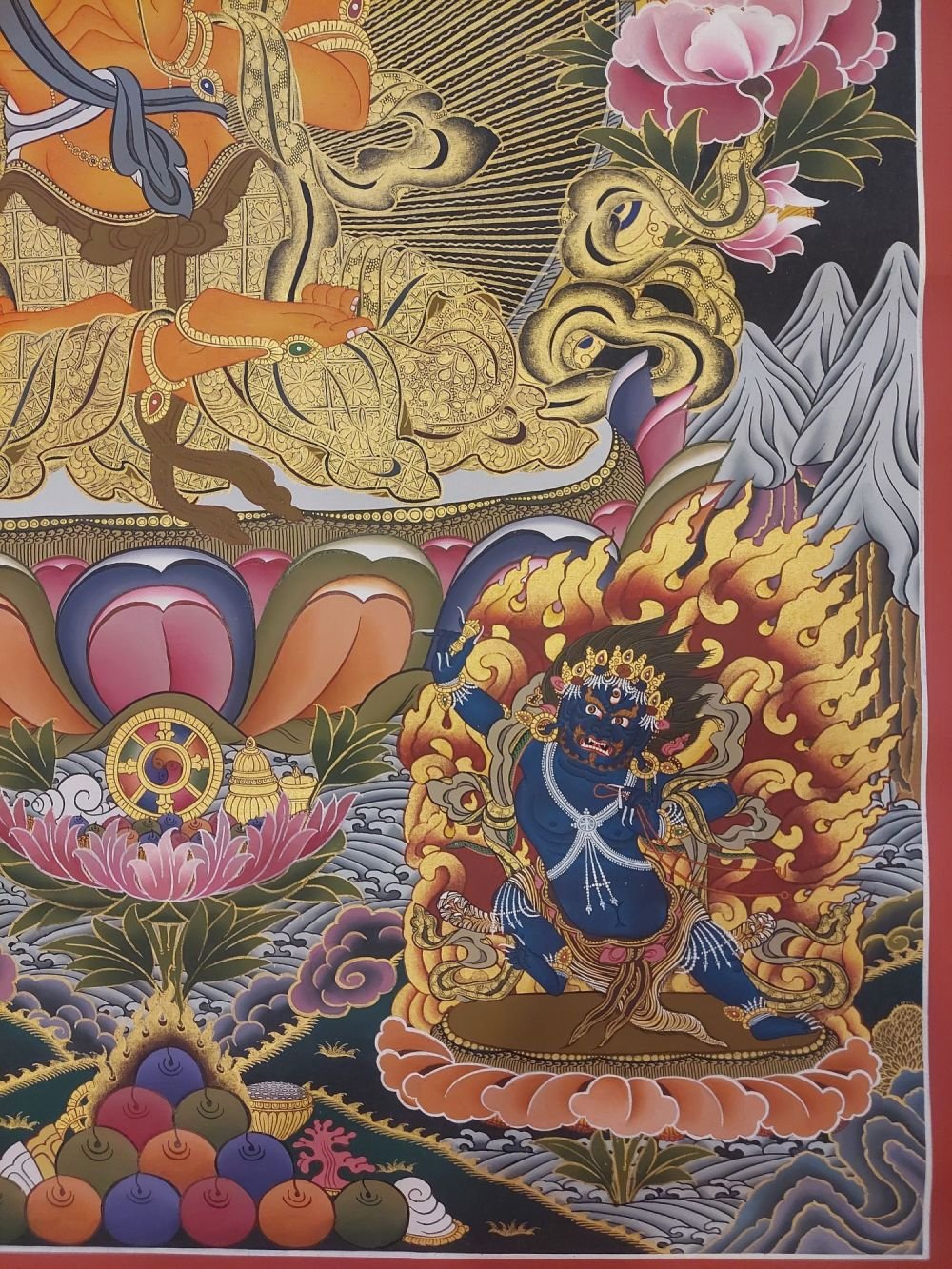
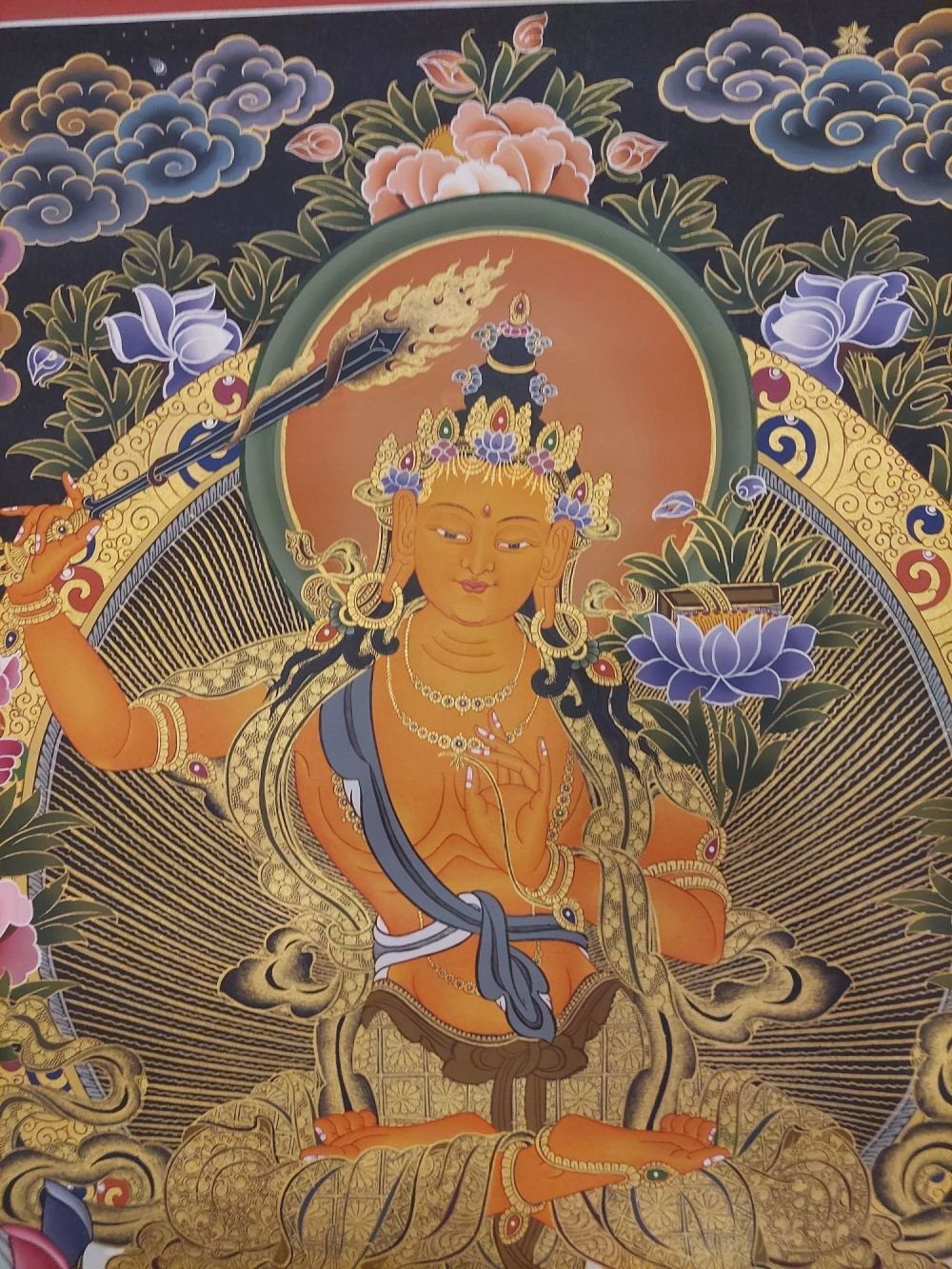
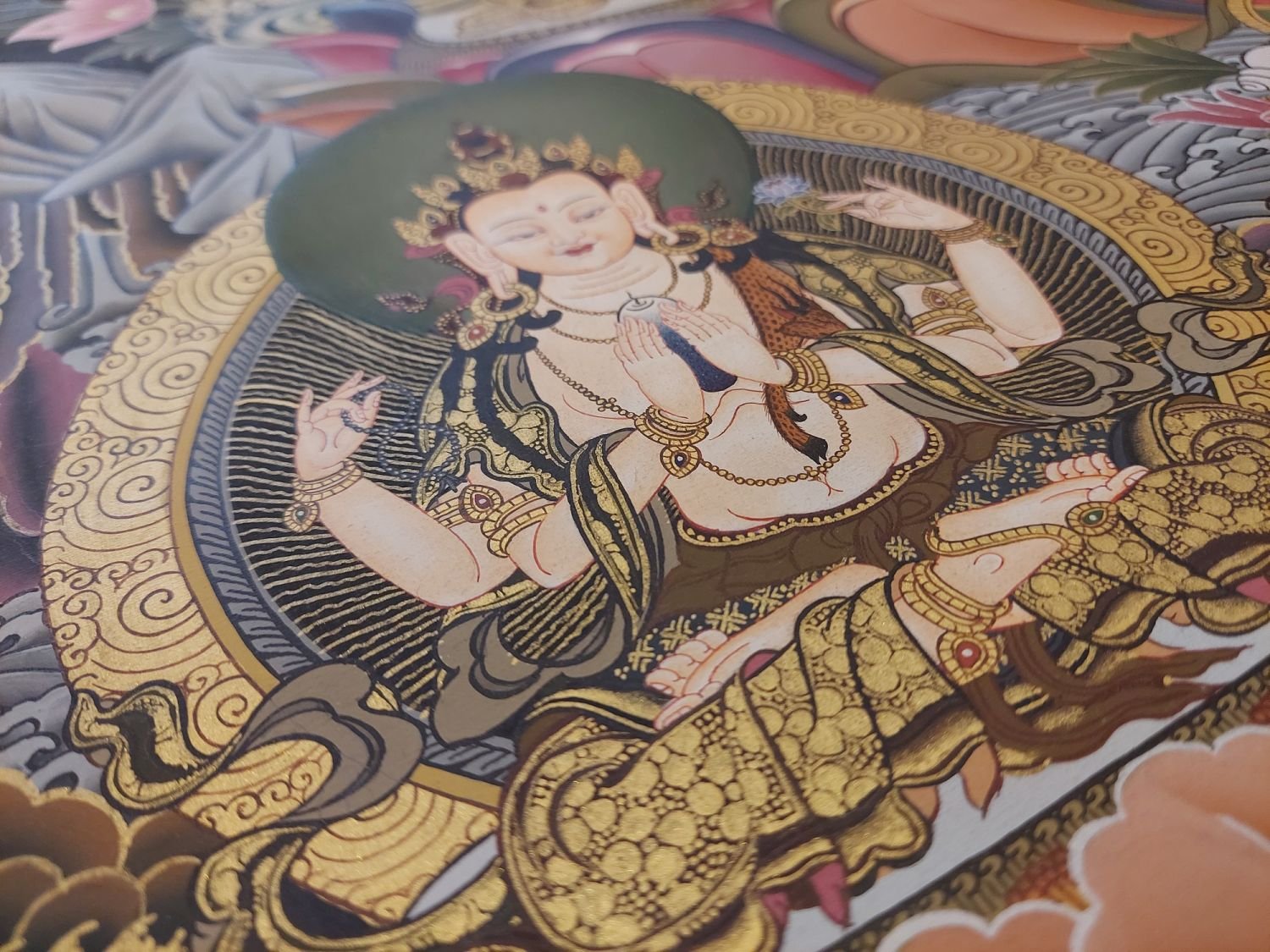
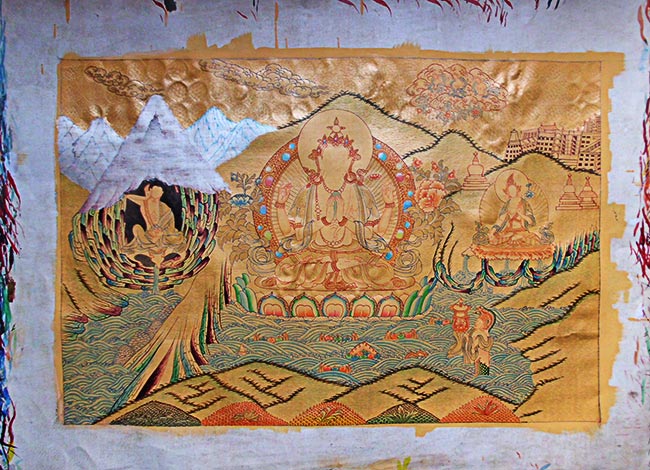
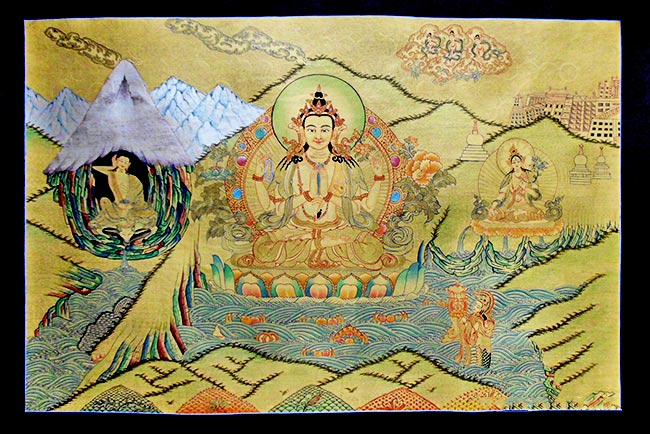
Buddhist Handmade Thangka of Manjushree, Hand Painted, Real Gold Supported By Chenrezig and Vajrapani, Three Great Bodhisattvas , Wisdom Buddha, cutting through ignorance with the sword of insight
Jampelyang
Wenshu Pusa
Monju Bosatsu
|
|
Product Specification |
|
| Code | HME26328 |
| Size |
Height 90cm (35") Width 58cm (23") |
Weight | 100 gm - 0.22 lbs |
| Material | Cotton Canvas and Mineral Color |
| Availability | Available |
Order configuration (Optional)
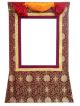
Thangka Brocading
HIDE Select Option
Click Here to View All Option and Prices
Select
Select
Select
Select
Select
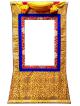
Select
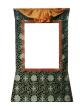
Select
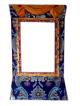
Select
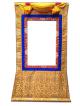
Select

Select
Select
Select
Select

Select

Select

Select

Select
Select

Select

Select

Select

Select

Select

Select

Select

Select

Select

Select

Select

Select
Select

Select

Select

Select

Select

Select

Select
Brocade knob
HIDE Select Option
Click Here to View All Option and Prices

Select

Select

Select

Select

Select

Select

Select

Select
Thangka Blessing
HIDE Select Option
Click Here to View All Option and Prices

Select

Select
| Quantity | PCS |
US$ 230.00
$ 300.00 -25% off
Shipping Cost
|
| Price Adjustment [ Discount Ends in : 37 days ] |
||
Shipping Calculation
weight of 1 Pcs of the product is 0.5 kg and will cost USD $ 31.00
-
Item location: kathmandu, Nepal
Worldwide shipping - Dispatch
-
We normally dispatch the product in 2-5 business days. Else Buyer will be infromed personally about the dispatch Date.
- Payment
- Paypal | Credit - Debit Card | Bank Transfer | See More
- Return
- 7 days money back, buyer pays return shipping
Welcome to Handmade Handicraft
At Handmade Handicraft, we prioritize simplicity, reflected in our user-friendly website design. We have streamlined the process so everything you need is just a click away.
While our website does not support online shopping, we've incorporated a convenient shopping cart system to assist you in sending us your inquiries. Please note, we do not process payments on our site. All transactions will be handled via email, respecting the inquiries you submit.
Should you encounter any issues while submitting your inquiries, please contact us via mobile app, email, or follow the procedure outlined below. We've provided documentation to guide you through the selection process.
selecting Procedure
In every product you will find Order Now and Quick Inquiry buttons, they are the two process of sending us your enquiry.
If you have any questions or need assistance, please don't hesitate to reach out to us. We are here to help you with your inquiries and ensure a smooth experience.
Manjushri
Manjushree is a Sanskrit word meaning 'gentle glory'. In Sanskrit, "shree" means 'glorious' or 'honorable'. His name signifies one who embodies enlightened wisdom. He confers mastery of the Dharma, wisdom, and eloquence and teaches the path of a bodhisattva in the Mahayana tradition. Read More
Commentary
Manjushree is the Bodhisattva who holds the flaming sword [Skt. Khadga] of enlightenment, by his left hand in a warning( Tarjani) hand gesture ( Mudra) in his left hand representing his realization of wisdom to cut through ignorance & wrong view. His right hand depicted in teaching (Jnana Mudra) holds the stem of a Blue Lotus (Utpala) flower upon which rests the Book (Pustaka) of Perfection of Transcendental Wisdom. The blue lotus is a symbol of the victory of the spirit over the senses and signifies the wisdom of knowledge. This represents the lotus that he obtained from the middle of the lake in the Kathmandu Valley out of which grew a lotus bearing a Blue Flame which represents wisdom. Manjushree sits upon a moon disc upon a lotus with an elongated stem arising from a lake. He wears a gold diadem fitted with precious jewels. He wears a silk scarf fastened at the waist and over this, a softly glowing green scarf decorated with golden motifs. His head is silhouetted against a nimbus. The lotus he is sitting on has an elongated stem and arises from a lake representing his recovery of the blue flame of transcendent wisdom and the teaching he originated. The white sash is the attire of the Vajrayana school of Buddhism.
According to legend, Manjushree founded the Nepalese civilization. In ancient times, way before Buddha Shakyamuni the Kathmandu Valley was a vast lake. The Buddha Vipashyin came to Nepal to meditate on the hill above the lake. Wishing to give the rough mountain people an object of worship, Vipashyin threw a lotus seed into the lake. When this lotus bloomed, a blue flame of wisdom light shone from the center of its thousand petals. This light was called the Swayambhunath Dharmadhatu, the Self-Sprung Infinite Field of Light, and the flame of the enlightened mind of the primal Buddha, Vajradhara burned at its center. The light of Vajradhara also emanated in the colors of the rainbow and in each of the five colors appeared one of the Five Buddhas - Vairochana, Akshobhya, Ratnasambhava, Amitabha, and Amoghasiddhi. Then Manjushri went to Nagarkot Peak on the edge of the lake, and after having pondered in Samadhi how best the lake may be drained, with his keen-edged sword of wisdom he cut three Gorges. After the lake had been drained and the Valley bottom made suitable for cultivation Manjushree founded the city of Patan which was originally called Manjupattan. He taught the people many things. Manjushree manifests himself in the form of Yamantaka, known also as Vajrabhairava in order to overcome the lord of Death, Yama.
The Book (Pustaka) represents Transcendent Wisdom which came to be embodied by the Dyani {Pancha} Buddha Families. The book symbolically contains Buddhist teaching that had been lost to mankind & which was revealed to Manjushree. The book is commonly mistaken for the Prajna Paramita which was written by many hands between 100 & 200 CE realizing the Boddhisattva Principle. The book of Manjushree alludes to Wisdom and the emanation of the Five Transcendent Buddha Families. These are Vairochana, Akshobhya, Ratnasambhava, Amitabha & Amoghasiddhi. Wisdom Energy is a power that can extinguish the Five Negative afflictions. Each family heads wisdom and energy to overcome these Five hindrances to enlightenment which are greed, hatred, delusion, jealousy & pride.
Three Great Bodhisattvas
: Brief IntroductionThree Great Bodhisattvas are commonly depicted together because they represent three essential aspects of the path to enlightenment: compassion, wisdom, and power. These qualities are considered interdependent and complementary, reflecting the holistic nature of the bodhisattva path. The bodhisattva path is dedicated to the liberation of all sentient beings, and the Triad of Bodhisattvas serves as an inspiration and guiding force for practitioners in developing these vital qualities within themselves.
By visualizing, praying to, or meditating on the Triad of Bodhisattvas, practitioners aspire to cultivate compassion, wisdom, and spiritual strength in their own lives. They seek to integrate these qualities, recognizing their interconnectedness and their role in bringing about the liberation of oneself and all beings. The Triad of Bodhisattvas serves as a reminder of the balanced approach necessary for the path to enlightenment and provides a comprehensive framework for the practice of compassion, wisdom, and power. Read More
Vajrapani
: Brief IntroductionVajrapaṇi is one of the earliest bodhisattvas of Mahayana Buddhism. He is the protector and guide of the Buddha, and rose to symbolize the Buddha's power. Vajrapani was used extensively in Buddhist iconography as one of the three protective deities surrounding the Buddha. Each of them symbolizes one of the Buddha's virtues: Manjusri (the manifestation of all the Buddhas' wisdom), Avalokitesvara (the manifestation of all the Buddhas' compassion) and Vajrapani (the manifestation of all the Buddhas' power). Furthermore, Vajrapani is one of the earliest Dharmapalas and one of the rare Buddhist deities to be worshiped in the original Zen Buddhism of the Shaolin Temple, Tibetan Buddhism, and even Pure Land Buddhism (where he is known as Mahasthamaprapta). Manifestations of Vajrapani can also be found in many Buddhist temples in Japan as Dharma protectors called Nio. Read More
Chenrezig
: Brief IntroductionOf all the deities in Mahayana Buddhism, the bodhisattva Avalokiteshvara, Chenrezig, is one of the most celebrated. He is the lord gifted with complete enlightenment, who refrains from entering the blissful state of nirvana to remain here below and save the living being of the earth. This devotion to the salvation of others emphasizes profound compassion.
Compassion for others had always been regarded as a virtue in early Buddhism, but it had a somewhat subordinate place to wisdom. In Mahayana Buddhism, compassion received an equal emphasis with wisdom, perhaps because the Mahayana was more consciously universal and covered a wider sector of society. In this view of the world, all men and women, not just those leading a monastic life, could achieve nirvana. Read More
Use of Real Gold
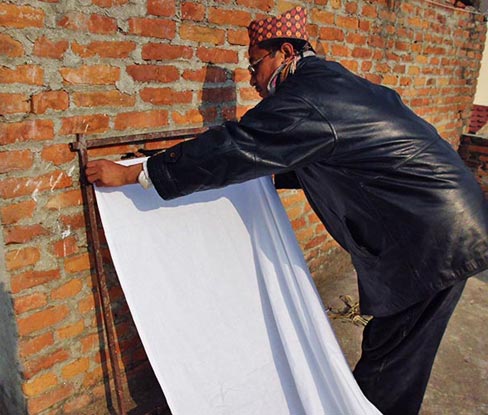
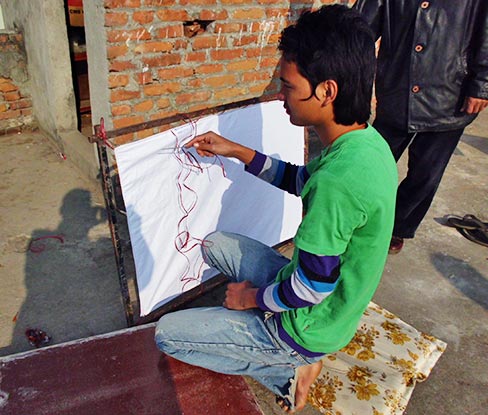
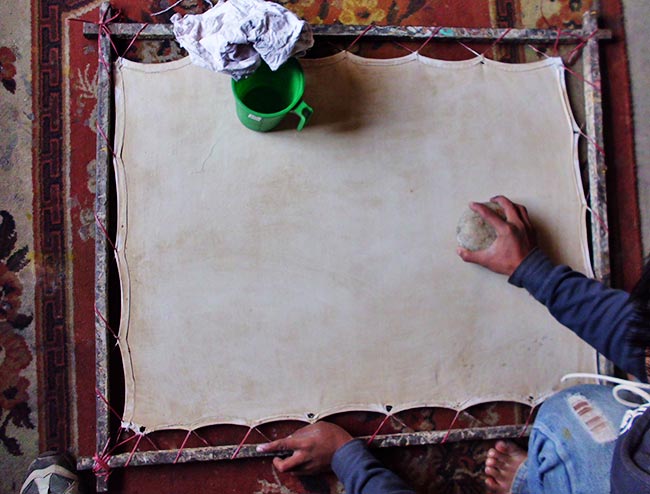
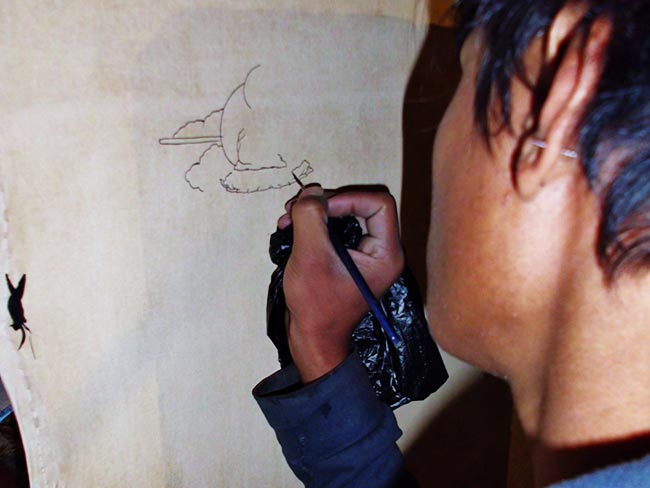
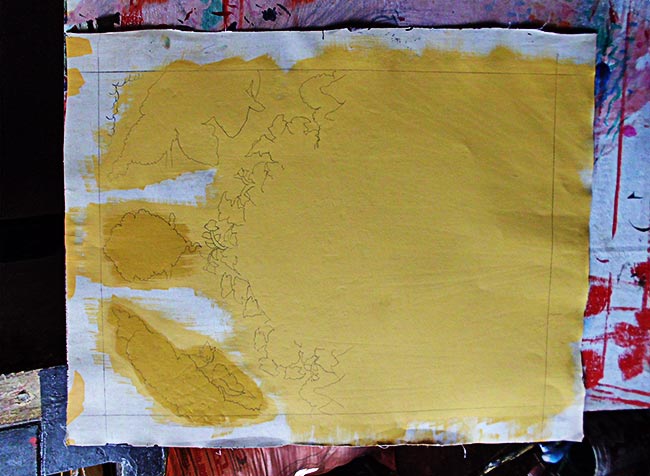
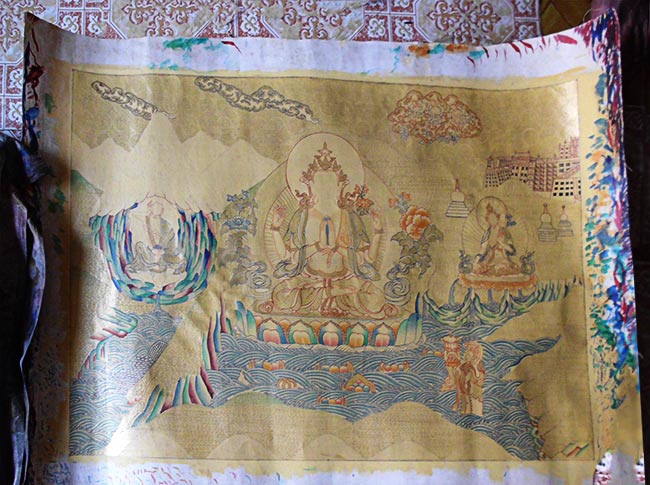
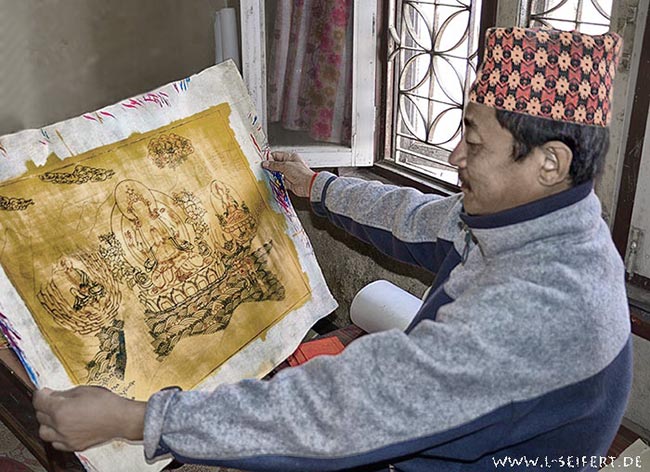
This thangka of Manjushri has real gold painted on its surface along with other paints. This is an ancient process of decorating the thangka in Tibetan Buddhism, Here gold is ground into gold dust, which is then mixed with other undisclosed material to make it paintable on the canvas. this mixture is then mixed with transparent glue and painted on the thangka. Read More
Introduction to Thangka
A thangka, also known as tangka, thanka, or tanka, is a vibrant and intricate Tibetan Buddhist painting that serves as a visual representation of spiritual teachings. Crafted with meticulous detail on cotton or silk appliqué, thangkas depict a wide range of subjects including Buddhist deities, sacred scenes, mandalas, and narrative stories. These sacred artworks are traditionally kept unframed and rolled up for storage, resembling ancient scrolls. To protect their delicate nature, thangkas are mounted on textile backings and often adorned with a silk cover on the front. Proper preservation in dry environments is crucial to maintain the integrity and longevity of the silk. Read More
Related Products

22 cm
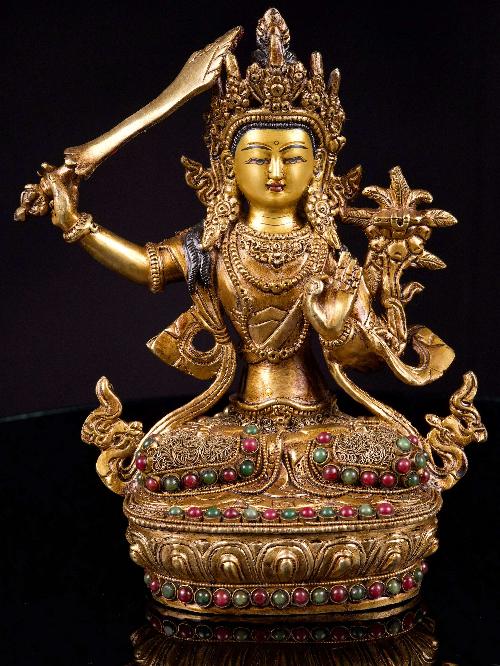
Manjushri Buddhist Handmade Statue With Siku Design, Full Gold Plated, Stone Setting, Face Painted
US$ 480.00
25% off
$ 634.00
$ 634.00

35 cm
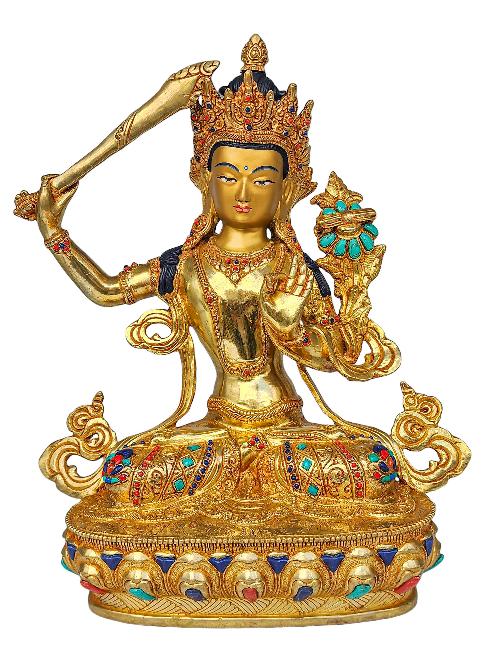
Manjushri, Buddhist Handmade Statue, Face Painted, Gold Plated And Stone Setting
US$ 1,280.00
25% off
$ 1,700.00
$ 1,700.00

23 cm
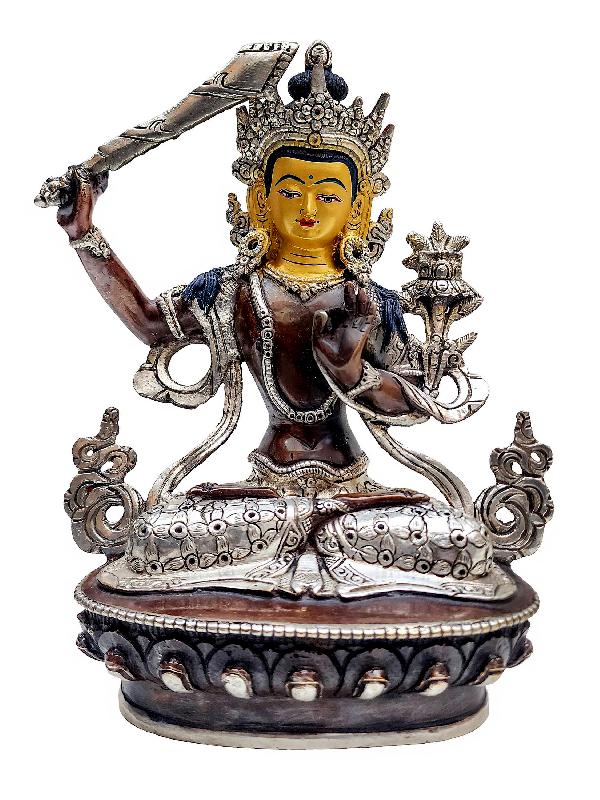
Buddhist Handmade Statue Of Manjushri, Silver Plated And Chocolate Oxidized With Painted Face
US$ 98.00
25% off
$ 130.00
$ 130.00

34 cm
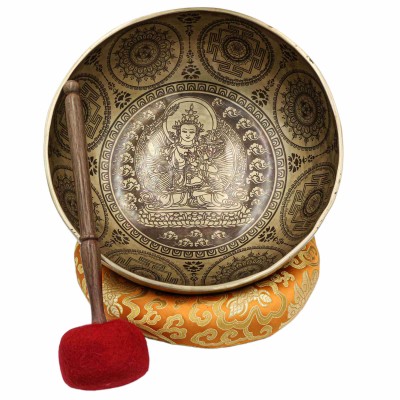
Buddhist Hand Beaten Jambati Singing Bowl, With Super Fine Etching Carving, Manjushri, Select Accessories
US$ 300.00
25% off
$ 404.00
$ 404.00