

Loading Content..
Please wait...
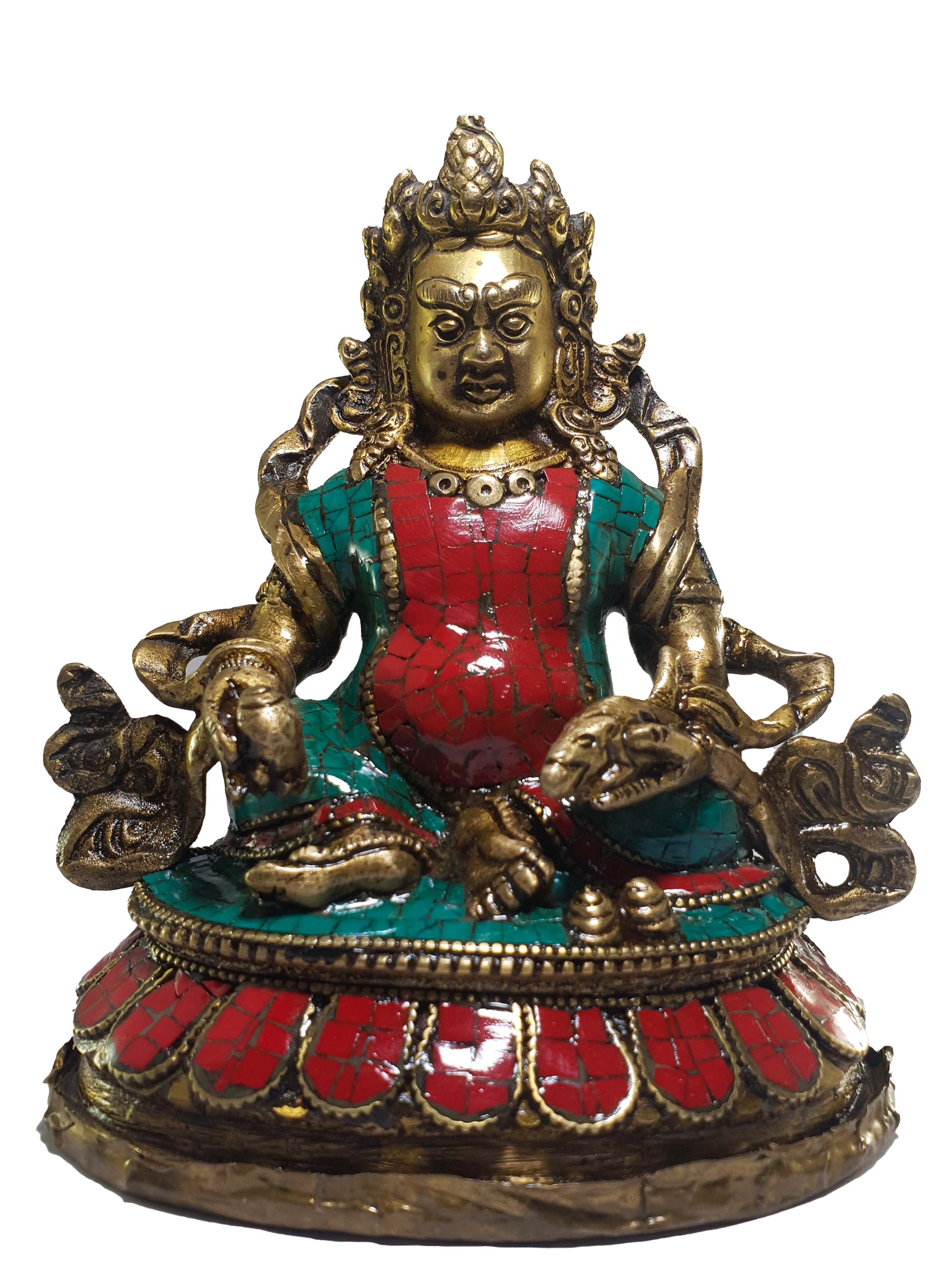


Statue of Red Jambhala with Real Stone Setting , The wealth deity, bestower of prosperity
Zhamabala
Hong Zhamabala
Akaneshin
|
|
Product Specification |
|
| Code | HME22320 |
| Size |
Height 16cm (6") Width 13cm (5") Depth 9cm (4") |
Weight | 1.22 kg - 2.69 lbs |
| Material | Brass and Stone |
| Availability | Available |
| Quantity | PCS |
US$ 60.00
$ 80.00 -25% off
Shipping Cost
|
| Price Adjustment [ Discount Ends in : 39 days ] |
||
Shipping Calculation
weight of 1 Pcs of the product is 1.5 kg and will cost USD $ 42.00
-
Item location: kathmandu, Nepal
Worldwide shipping - Dispatch
-
We normally dispatch the product in 2-5 business days. Else Buyer will be infromed personally about the dispatch Date.
- Payment
- Paypal | Credit - Debit Card | Bank Transfer | See More
- Return
- 7 days money back, buyer pays return shipping
Welcome to Handmade Handicraft
At Handmade Handicraft, we prioritize simplicity, reflected in our user-friendly website design. We have streamlined the process so everything you need is just a click away.
While our website does not support online shopping, we've incorporated a convenient shopping cart system to assist you in sending us your inquiries. Please note, we do not process payments on our site. All transactions will be handled via email, respecting the inquiries you submit.
Should you encounter any issues while submitting your inquiries, please contact us via mobile app, email, or follow the procedure outlined below. We've provided documentation to guide you through the selection process.
selecting Procedure
In every product you will find Order Now and Quick Inquiry buttons, they are the two process of sending us your enquiry.
If you have any questions or need assistance, please don't hesitate to reach out to us. We are here to help you with your inquiries and ensure a smooth experience.
Red Jambhala
Jambhala (also known as Dzambhala, Dzambala, Zambala or Jambala) is the God of Wealth and appropriately a member of the Jewel Family (see Ratnasambhava). He is sometimes equated with the Hindu deity Kubera. Jambhala is also believed to be an emanation of Avalokitesvara or Chenrezig, the Bodhisattva of Compassion. There are five different wealth Jambhalas; each has his own practice and mantra to help eliminate poverty and create financial stability.
Gyalten Sogdzin Rinpoche said that Jambhala is the protector of all Lineages and of all sentient beings from all sickness and difficulties. Jambhala is a Bodhisattva of material and spiritual wealth as well as many other things, especially of granting financial stability.
”Because in this world, there are all kinds of wrathful and negative emotions or bad spirits, and sometimes they will harm you and other sentient beings, Dzambhala must take on such a wrathful and powerful form to protect us from these harmful spirits and negative karma. Especially, Dzambhala helps us minimize or decrease all misfortunes and obstacles and helps us increase all good fortune and happiness.” Read More
About Red Jambala
Red Jambhala is depicted practising together with his consort, the heavenly mother of wealth that is in charge of wealth in the human realm. In ancient times, this deity was practiced mainly by kings and royalty. His practice is most suitable to people in high power, or to pray for high power, for it can attract people, wealth and fame. One will enjoy wealth in abundance and shall be well respected and supported by people. There is also the Red Jambhala magnetizing method that can bless the practitioner with marital bliss and a harmonious family.
Red Jambhala is the manifisation of Vajrasattva. He has two faces and four arms and holds a treasury mongoose on his left hand. His Tibetan name is Dzambhala Mapo. Red Jambhala has a red colored body, sits in the vajra position with Dakini in front of him. His right leg is panhandle with right foot is above a snail and lotus flower, his left leg is bent. He is holding an animal known as Nehulay (mongoose) in his left hand, his right hand holding Khorlo (Cakra), the Dakini holding Kapala containing Nectar in her left hand and Norbu Mebar in her right hand. The Mantra of Red Jambhala is:
 |
| Ganapati, Maha Rakta |
Om Jambhala Jalendraye Dhanam Medehi Hrih Dakini Jambhala Sambhara Svaha
Some people believe he is the Hindu God of Wealth Ganesha, the Red Ganapati, and has the head of an elephant. After the rise of Tantric Buddhism, Ganesha became a Tantric wealth deity and is known as the "Lord of Provisions in Tibetan Tantrism". According to legend, Red Jambhala was in charge of the heavenly treasury that belonged to Lord Mahesvara’s son. Due to his extreme compassion, Red Jambhala had unfailingly answered the prayers of many worshippers. Enraged by Red Jambhala’s indiscriminate charity to both the good and evil, Dharma guardian Mahakala decapitated him. It was only after the wealth deity repents that Mahakala plants an elephant’s head on his neck and receives him as a retainer.
Finishing: Stone Setting
The Red Jambhala is adorned with an exquisite array of semi-precious stones, including turquoise, coral, and lapis lazuli. These stones are carefully selected and meticulously placed on the Red Jambhala's surface, adding a touch of opulence and enhancing its overall beauty. Each stone is thoughtfully positioned using a high-quality adhesive, ensuring secure and long-lasting attachment. The vibrant colors and unique patterns of the stones create a captivating contrast against the backdrop of the Red Jambhala, elevating its visual appeal and making it truly eye-catching. Read More
Process: Sand Casting
This Red Jambhala has been created using the sand casting system, also known as sand molding casting. This widely employed manufacturing process utilizes a sand mold to produce metal products and components in various sizes and shapes. Sand casting holds significant popularity in the industry, accounting for approximately 60% of all metal castings. The sand casting process involves six primary steps. First, a pattern or replica of the desired sculpture, in this case, Red Jambhala, is created using a material like wood or metal. The pattern is then placed in a flask, which is a box-like structure divided into two halves. The next step involves packing the flask tightly with specially formulated molding sand, creating a mold cavity that matches the shape of the pattern. The pattern is subsequently removed, leaving behind a negative impression of the sculpture within the sand mold. Read More
Related Products

11 cm
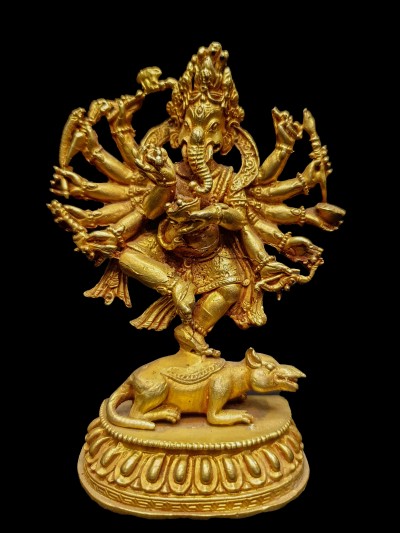
Buddhist Miniature Statue Of Ganesh Red Jambhala, Ganesha, Full Gold Plated
US$ 60.00
25% off
$ 80.00
$ 80.00

18 cm
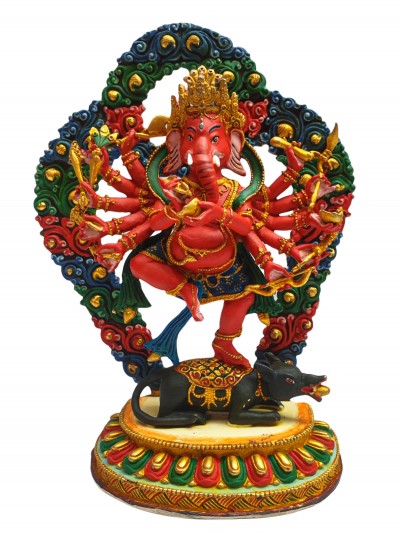
Buddhist Statue Miniature Statue Of, Red Jambhala, Traditional Color
US$ 380.00
25% off
$ 500.00
$ 500.00

46 cm
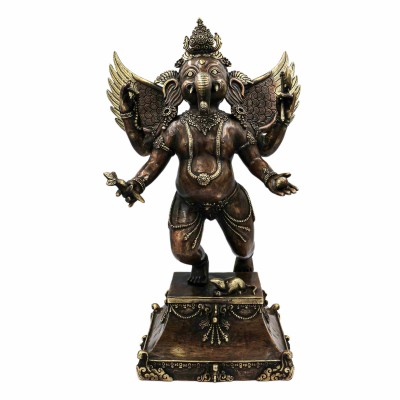
Buddhist Miniature Statue Of Ganesh Red Jambhala, Ganesha
US$ 900.00
25% off
$ 1,200.00
$ 1,200.00

11 cm
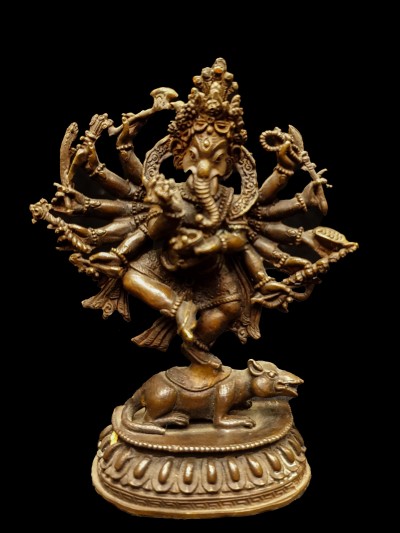
Buddhist Miniature Statue Of Ganesh Red Jambhala, Ganesha, Chocolate Oxidized
US$ 60.00
25% off
$ 80.00
$ 80.00