

Loading Content..
Please wait...
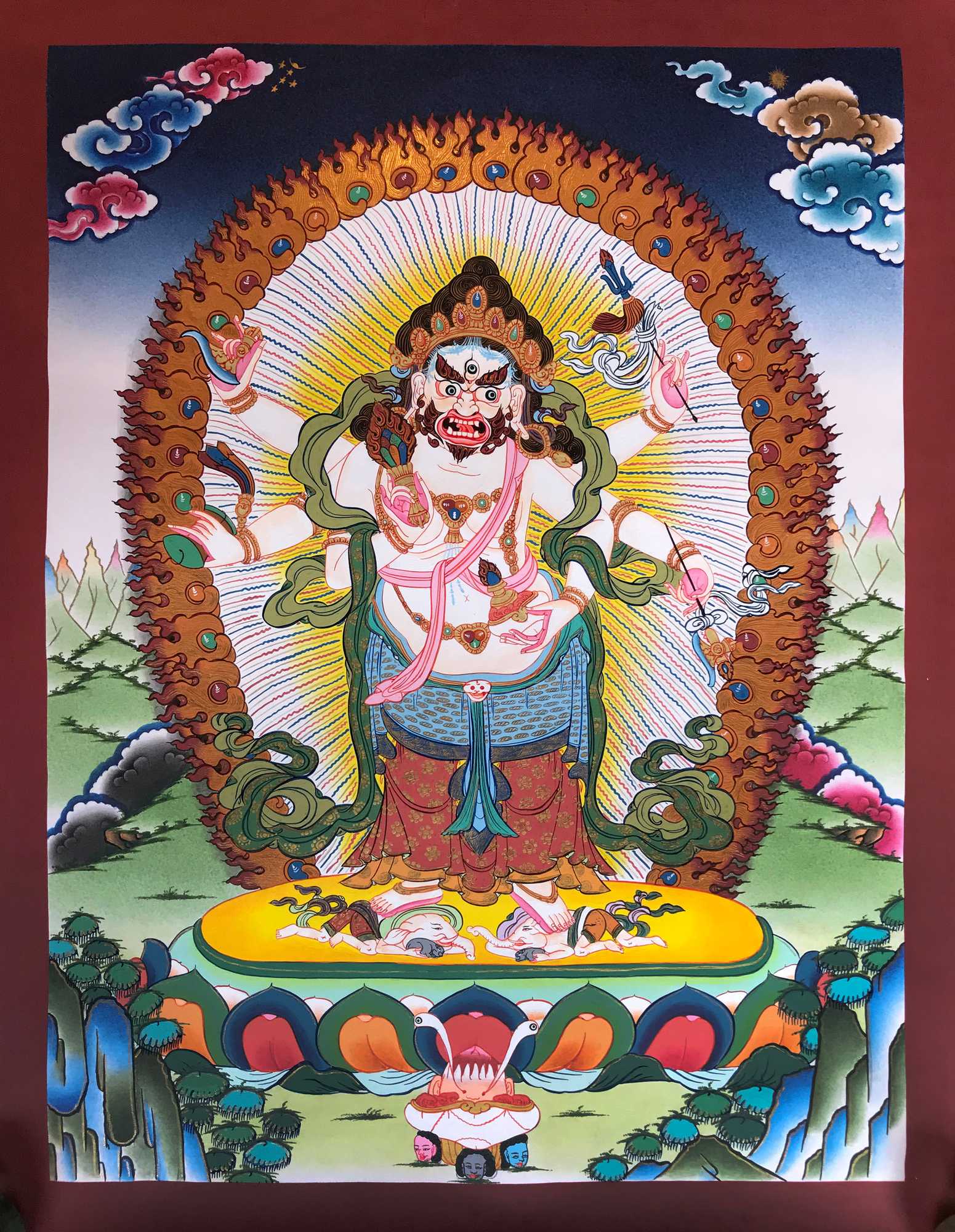


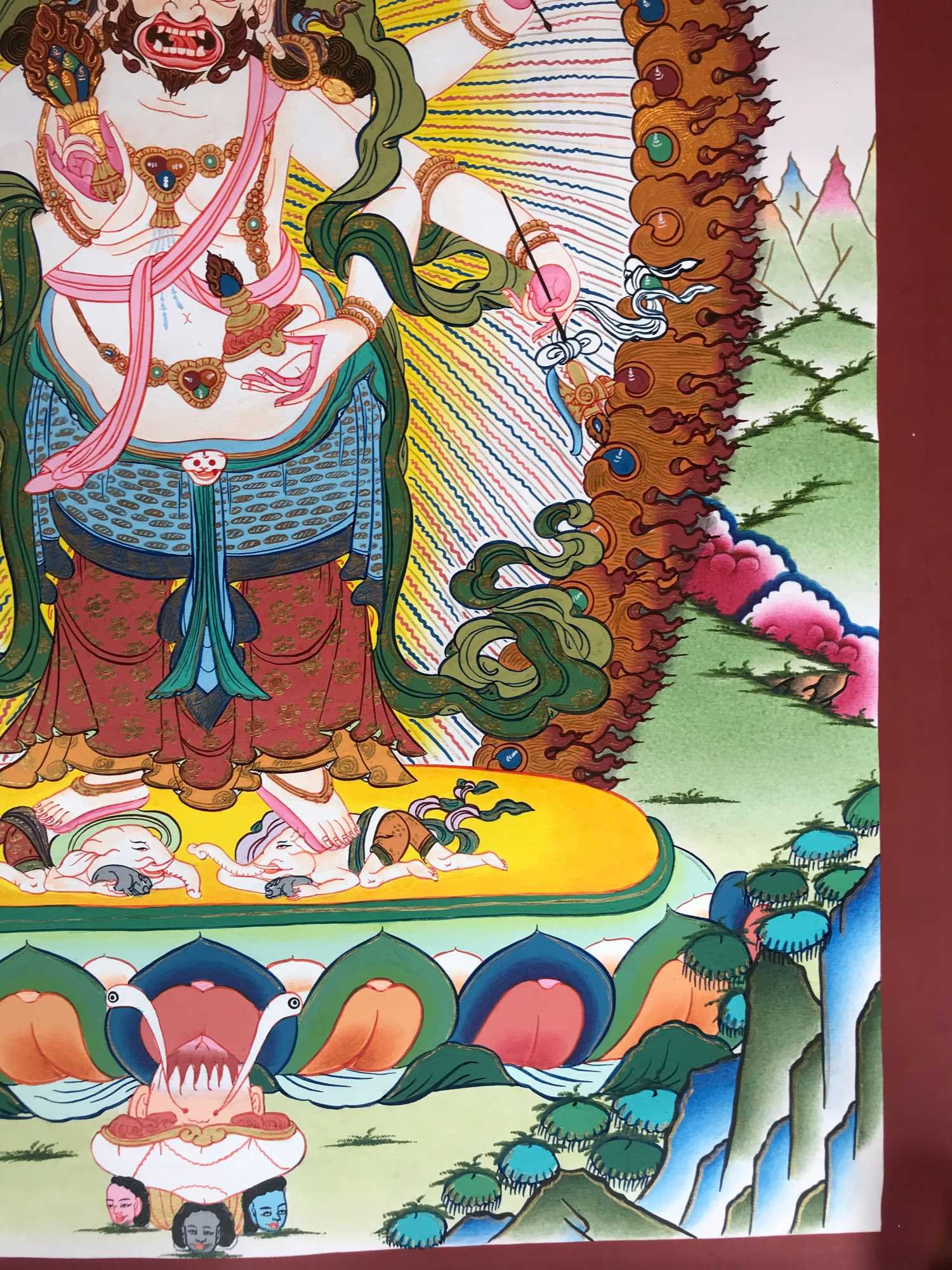
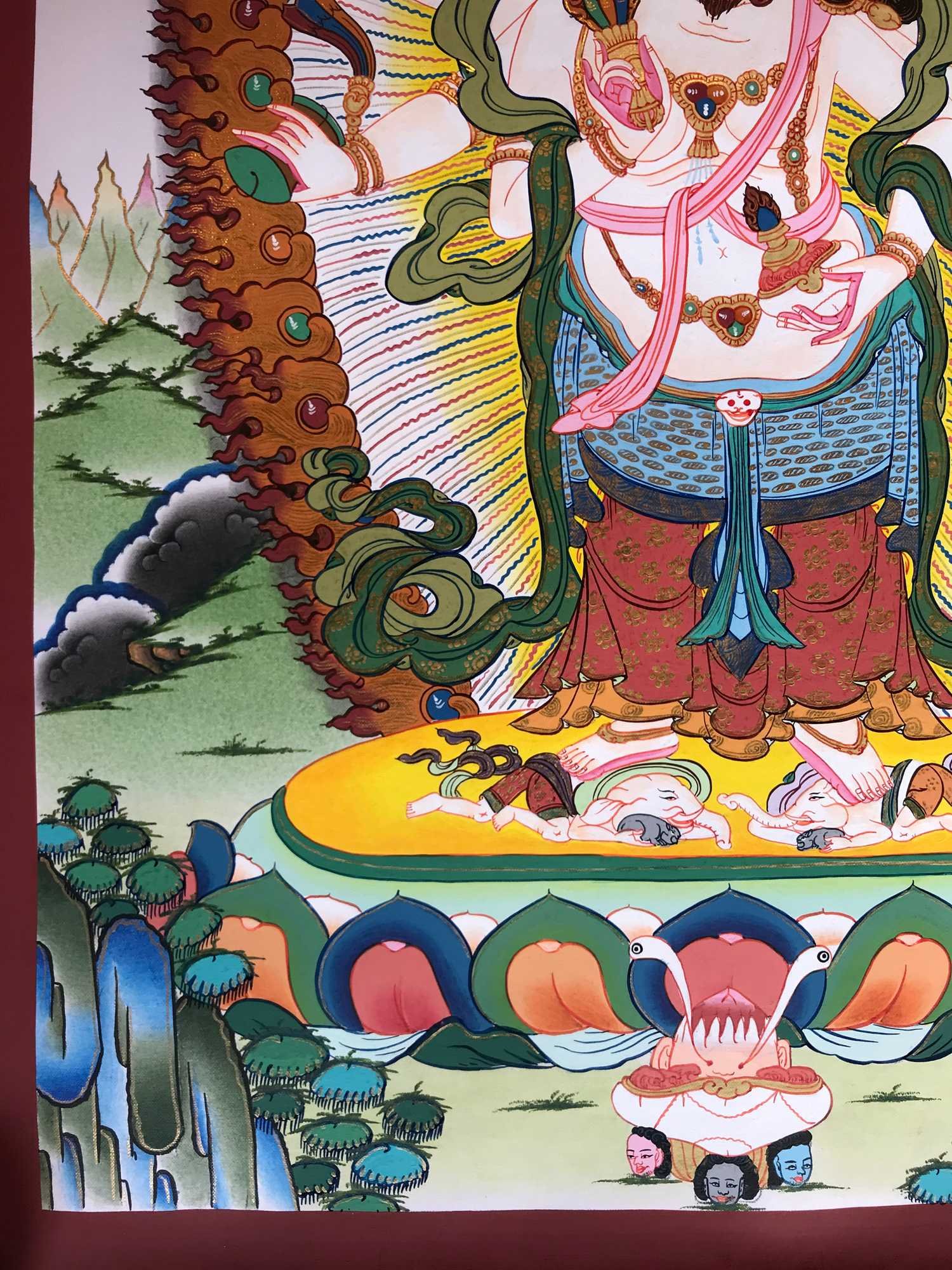

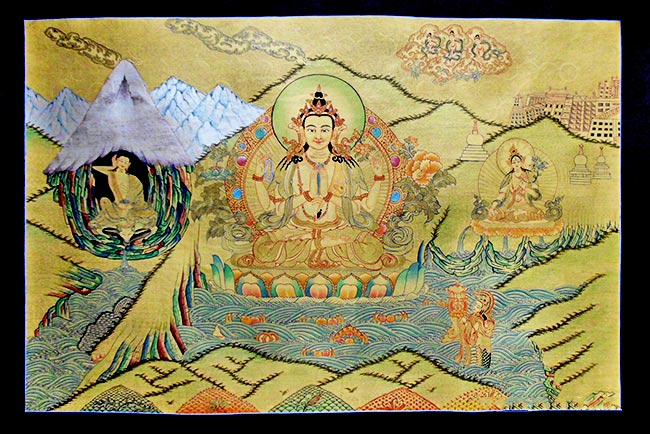
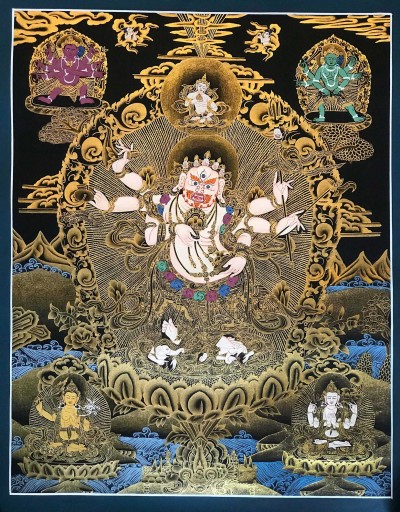
Tibetan Thangka of White Mahakala,Traditional Color, using Real Gold , Peaceful protector, bestowing wealth and dispelling poverty
Gonpo Karpo
Bai Da Hei Tian
Shiro Daikokuten
|
|
Product Specification |
|
| Code | HME17555 |
| Size |
Height 50cm (20") Width 38cm (15") |
Weight | 100 gm - 0.22 lbs |
| Material | Handmade Cotton Canvas |
| Availability | Available |
Order configuration (Optional)
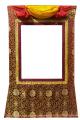
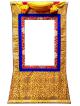
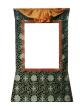
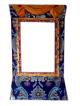
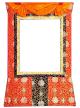
Thangka Brocading
HIDE Select Option
Click Here to View All Option and Prices
Select
Select
Select
Select
Select
Select
Select
Select
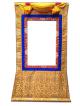
Select
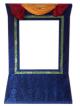
Select
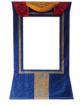
Select
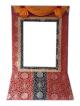
Select
Select
Select

Select

Select
Select
Select

Select

Select
Select

Select

Select

Select

Select

Select

Select

Select

Select

Select
Select
Select

Select

Select

Select

Select

Select
Brocade knob
HIDE Select Option
Click Here to View All Option and Prices

Select

Select

Select

Select

Select

Select

Select

Select
Thangka Blessing
HIDE Select Option
Click Here to View All Option and Prices

Select

Select
| Quantity | PCS |
US$ 120.00
$ 160.00 -25% off
Shipping Cost
|
| Price Adjustment [ Discount Ends in : 38 days ] |
||
Shipping Calculation
weight of 1 Pcs of the product is 0.5 kg and will cost USD $ 31.00
-
Item location: kathmandu, Nepal
Worldwide shipping - Dispatch
-
We normally dispatch the product in 2-5 business days. Else Buyer will be infromed personally about the dispatch Date.
- Payment
- Paypal | Credit - Debit Card | Bank Transfer | See More
- Return
- 7 days money back, buyer pays return shipping
Welcome to Handmade Handicraft
At Handmade Handicraft, we prioritize simplicity, reflected in our user-friendly website design. We have streamlined the process so everything you need is just a click away.
While our website does not support online shopping, we've incorporated a convenient shopping cart system to assist you in sending us your inquiries. Please note, we do not process payments on our site. All transactions will be handled via email, respecting the inquiries you submit.
Should you encounter any issues while submitting your inquiries, please contact us via mobile app, email, or follow the procedure outlined below. We've provided documentation to guide you through the selection process.
selecting Procedure
In every product you will find Order Now and Quick Inquiry buttons, they are the two process of sending us your enquiry.
If you have any questions or need assistance, please don't hesitate to reach out to us. We are here to help you with your inquiries and ensure a smooth experience.
White Mahakala
White Mahakala, also known as Tseringma or White Umbrella deity, is a significant figure in Tibetan Buddhism. This peaceful manifestation of Mahakala represents compassion, wisdom, and protection. White Mahakala is depicted with a serene expression, dressed in white garments and holding a white parasol, symbolizing protection from obstacles and negativity. Originating from ancient Indian Buddhism, White Mahakala has become particularly revered in the Nyingma and Sakya schools of Tibetan Buddhism. While specific temples solely dedicated to White Mahakala might not be widely known, various Buddhist monasteries and temples in Nepal and other regions have dedicated spaces or shrines for this deity. Practicing White Mahakala is believed to bring blessings of compassion, wisdom, and the ability to overcome obstacles. Visualization, mantra recitation, and cultivating virtues like generosity and loving-kindness are common practices associated with White Mahakala. Read More
Iconography:
White Mahakala is depicted with a serene expression, often seated on a lotus throne. He is adorned with white garments and holds a white parasol or umbrella, symbolizing protection from obstacles and negative influences. On his other hands, he may hold various symbolic objects such as a wish-fulfilling gem or a mongoose.
History:
White Mahakala originated in ancient Indian Buddhism and was subsequently incorporated into Tibetan Buddhist traditions. He is particularly associated with the Nyingma and Sakya schools of Tibetan Buddhism, where he is considered a guardian and protector of the teachings.
Temples and Monasteries:
While specific temples solely dedicated to White Mahakala might not be widely known, various Buddhist monasteries and temples in Nepal and other regions have dedicated spaces or shrines for this deity. These sacred places serve as centers for practitioners to gather, engage in rituals, and pay homage to White Mahakala. Examples of such temples and monasteries include Boudhanath Stupa, Swayambhunath Stupa, Kopan Monastery, and Shechen Monastery in Nepal. These revered sites attract pilgrims and devotees seeking blessings, guidance, and a deeper connection with White Mahakala. Within the serene and prayerful ambiance of these temples and monasteries, individuals can immerse themselves in the practice and devotion associated with White Mahakala.
Benefits of practicing White Mahakala:
Practicing White Mahakala is believed to bring blessings of compassion, wisdom, and protection from obstacles. Devotees seek his assistance in overcoming difficulties, increasing positive energy, and cultivating spiritual growth.
How to practice:
Practices related to White Mahakala typically involve visualization, mantra recitation, and meditation. Devotees may also engage in acts of generosity, ethical conduct, and the cultivation of loving-kindness and compassion towards all beings.
Mantras of White Mahakala:
The primary mantra associated with White Mahakala is "OM TARE TUTTARE TURE MAMA AYU PUNYE JNANA PUSHTIM KURU SVAHA." Chanting this mantra is believed to invoke the blessings and protection of White Mahakala. Additional mantras and prayers specific to particular lineages or practices may also be used.
White Mahakala is depicted with a serene expression, often seated on a lotus throne. He is adorned with white garments and holds a white parasol or umbrella, symbolizing protection from obstacles and negative influences. On his other hands, he may hold various symbolic objects such as a wish-fulfilling gem or a mongoose.
History:
White Mahakala originated in ancient Indian Buddhism and was subsequently incorporated into Tibetan Buddhist traditions. He is particularly associated with the Nyingma and Sakya schools of Tibetan Buddhism, where he is considered a guardian and protector of the teachings.
Temples and Monasteries:
While specific temples solely dedicated to White Mahakala might not be widely known, various Buddhist monasteries and temples in Nepal and other regions have dedicated spaces or shrines for this deity. These sacred places serve as centers for practitioners to gather, engage in rituals, and pay homage to White Mahakala. Examples of such temples and monasteries include Boudhanath Stupa, Swayambhunath Stupa, Kopan Monastery, and Shechen Monastery in Nepal. These revered sites attract pilgrims and devotees seeking blessings, guidance, and a deeper connection with White Mahakala. Within the serene and prayerful ambiance of these temples and monasteries, individuals can immerse themselves in the practice and devotion associated with White Mahakala.
Benefits of practicing White Mahakala:
Practicing White Mahakala is believed to bring blessings of compassion, wisdom, and protection from obstacles. Devotees seek his assistance in overcoming difficulties, increasing positive energy, and cultivating spiritual growth.
How to practice:
Practices related to White Mahakala typically involve visualization, mantra recitation, and meditation. Devotees may also engage in acts of generosity, ethical conduct, and the cultivation of loving-kindness and compassion towards all beings.
Mantras of White Mahakala:
The primary mantra associated with White Mahakala is "OM TARE TUTTARE TURE MAMA AYU PUNYE JNANA PUSHTIM KURU SVAHA." Chanting this mantra is believed to invoke the blessings and protection of White Mahakala. Additional mantras and prayers specific to particular lineages or practices may also be used.
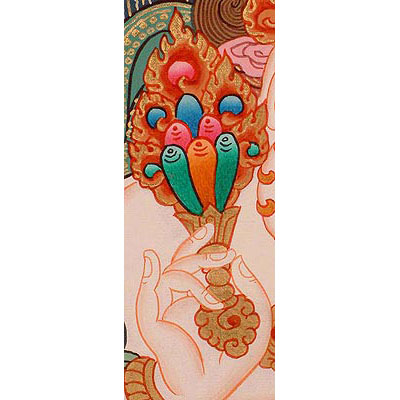 The Chintamani Jewel in White Mahakala's Hand | This is the wealth aspect of Mahakala which specifically supports the comfort and economic well-being of tantric practitioners. The following description is according to his sadhana: "His body is white. His face is wrathful and he has three eyes. He has six arms. His main right hand holds a wish- fulfilling jewel (chintamani) mounted on a jewel-tipped handle, in front of his chest." |
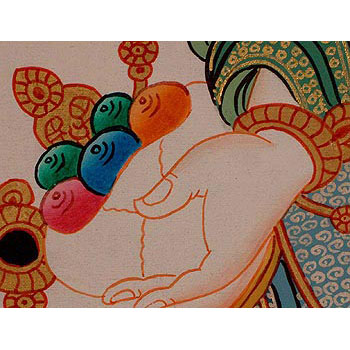 White Mahakala's Bowl of Jewels | The White Mahakala is known as mGon po yid bzhin nor bu in Tibetan with the last four meaning 'Wish-Granting Gem,' and he is the special protector of Mongolian Buddhists. His iconography is rich in symbols delineating his 'wealth-deity' status. For example his skull bowl, rather than contain the mortal remains of his victims, is full of various jewels, |
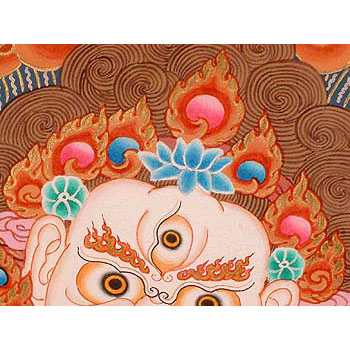 White Mahakala's Crown of Jewels | and his crown is made up of five jewels instead of the trademark five skulls. |
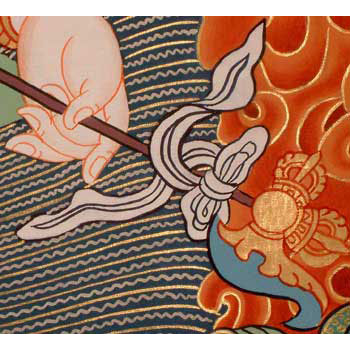 The Elephant Goad | The other notable departure from the normal Mahakala iconography is the elephant goad held in the center left hand, the sharp point of which symbolizes penetrating awareness. |
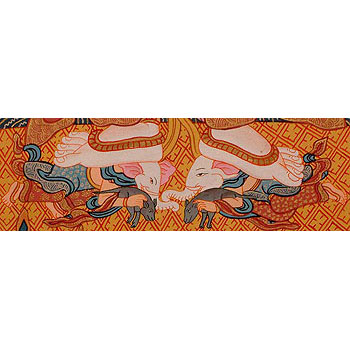 Two Elephants Under His Feet | Also, in contrast to other Mahakalas, he stands on two elephants rather than one. |
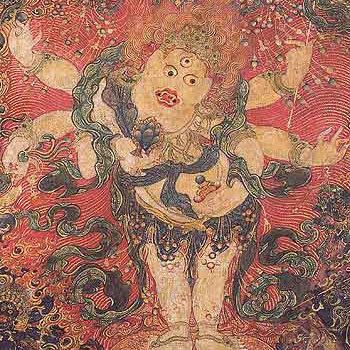 White Mahakala in Tribhanga Central Tibet 7th century | The elephant skin stretched at the back refers to the deity having torn asunder the pachyderm of ignorance. Another interesting aspect of White Mahakala is that he is occasionally shown in the tribhanga posture. In this typical stance of the body, the head, torso, and legs slant in contrary directions. The legs and hips jutt to the right, the trunk to the left, and the neck and head then again gently to the right. It is a lyrical, dreamy, very graceful pose. The three curves formed by the body symbolize the three worlds, upper, lower and middle, better known in Sanskrit as triloka. This is also popularly known as the posture of three bends. White Mahakala is popular for both mundane as well as spiritual reasons, ranging from the basic desire for wealth and prosperity to the ultimate attainment of the precious jewel, which is none other than the Buddhist Dharma. |
Use of Real Gold
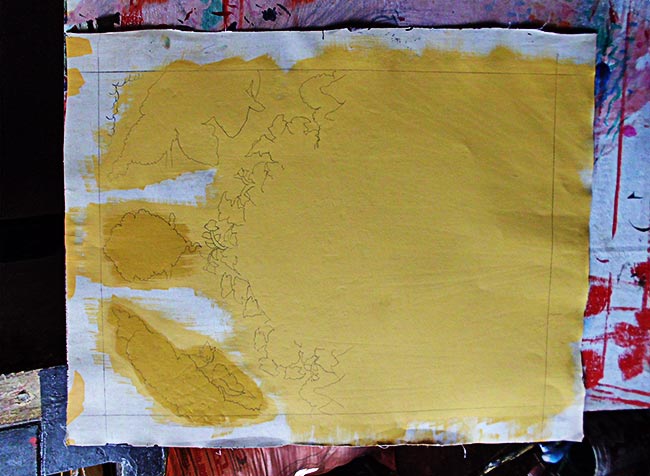
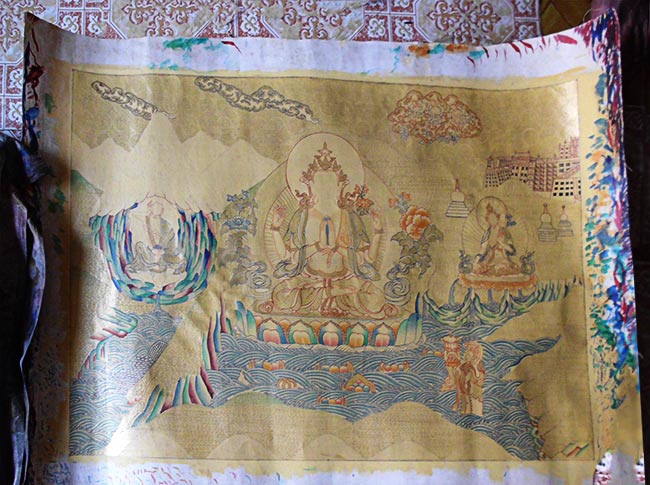
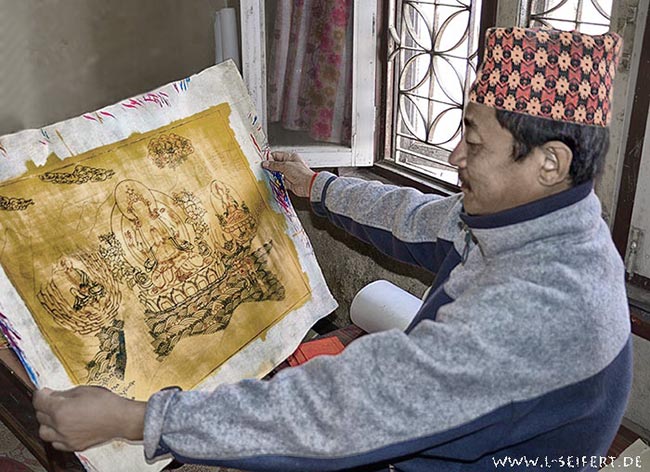
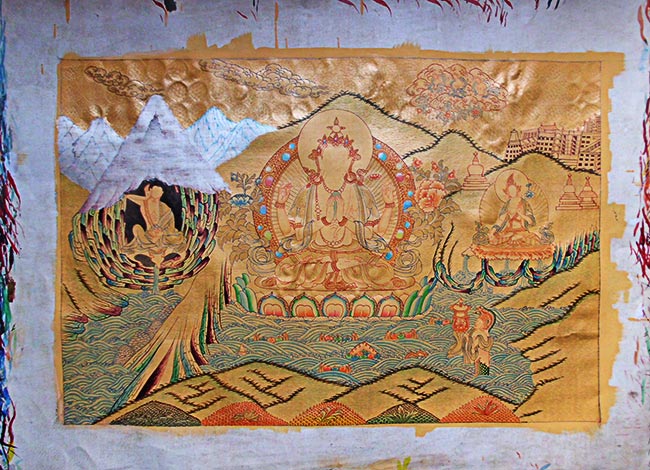
This thangka of White Mahakala has real gold painted on its surface along with other paints. This is an ancient process of decorating the thangka in Tibetan Buddhism, Here gold is ground into gold dust, which is then mixed with other undisclosed material to make it paintable on the canvas. this mixture is then mixed with transparent glue and painted on the thangka. Read More
Introduction to Thangka
A thangka, also known as tangka, thanka, or tanka, is a vibrant and intricate Tibetan Buddhist painting that serves as a visual representation of spiritual teachings. Crafted with meticulous detail on cotton or silk appliqué, thangkas depict a wide range of subjects including Buddhist deities, sacred scenes, mandalas, and narrative stories. These sacred artworks are traditionally kept unframed and rolled up for storage, resembling ancient scrolls. To protect their delicate nature, thangkas are mounted on textile backings and often adorned with a silk cover on the front. Proper preservation in dry environments is crucial to maintain the integrity and longevity of the silk. Read More
Related Products

144 cm
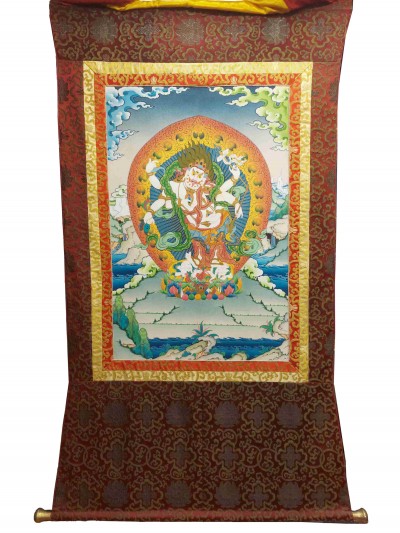
Buddhist Hand Painting Thangka Of White Mahakala, With Brocade, Hand Painted
US$ 1,380.00
25% off
$ 1,840.00
$ 1,840.00

20 cm
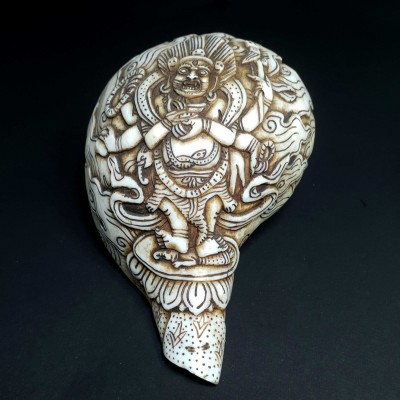
Tibetan Conch Shell With White Mahakala Hand Carved
US$ 83.00
25% off
$ 110.00
$ 110.00

27 cm
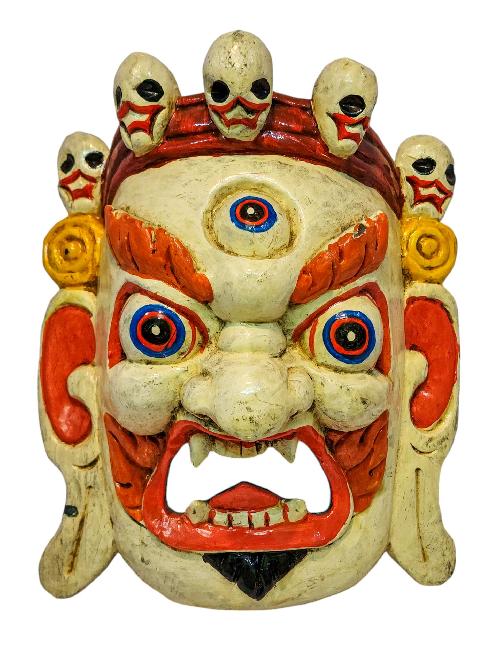
Bhairav, Handmade Wooden Mask, Wall Hanging, Painted, Poplar Wood, White Mahakala
US$ 17.00
25% off
$ 22.00
$ 22.00

47 cm
Tibetan Thangka Of White Mahakala
US$ 60.00
25% off
$ 80.00
$ 80.00