

Loading Content..
Please wait...
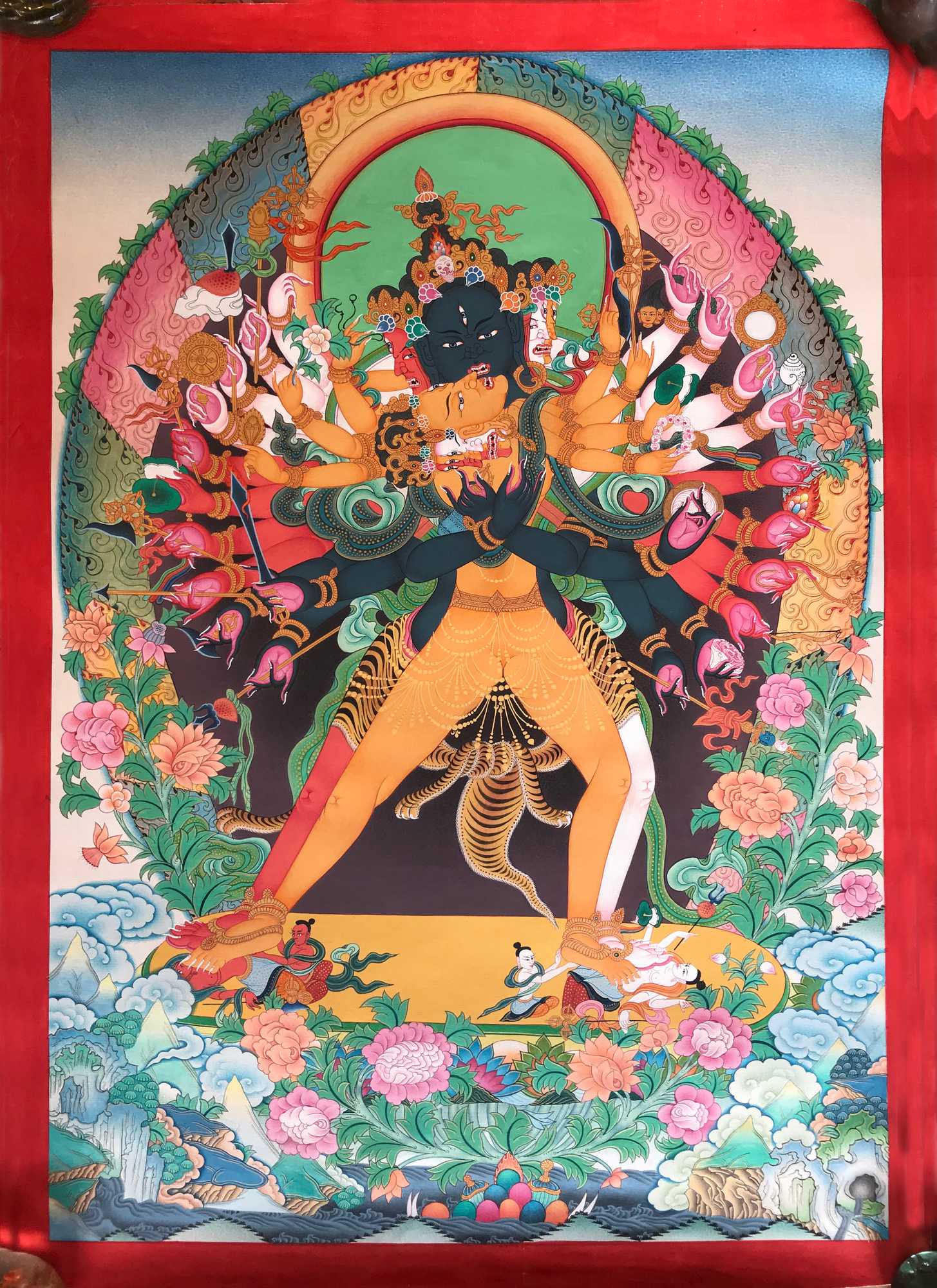

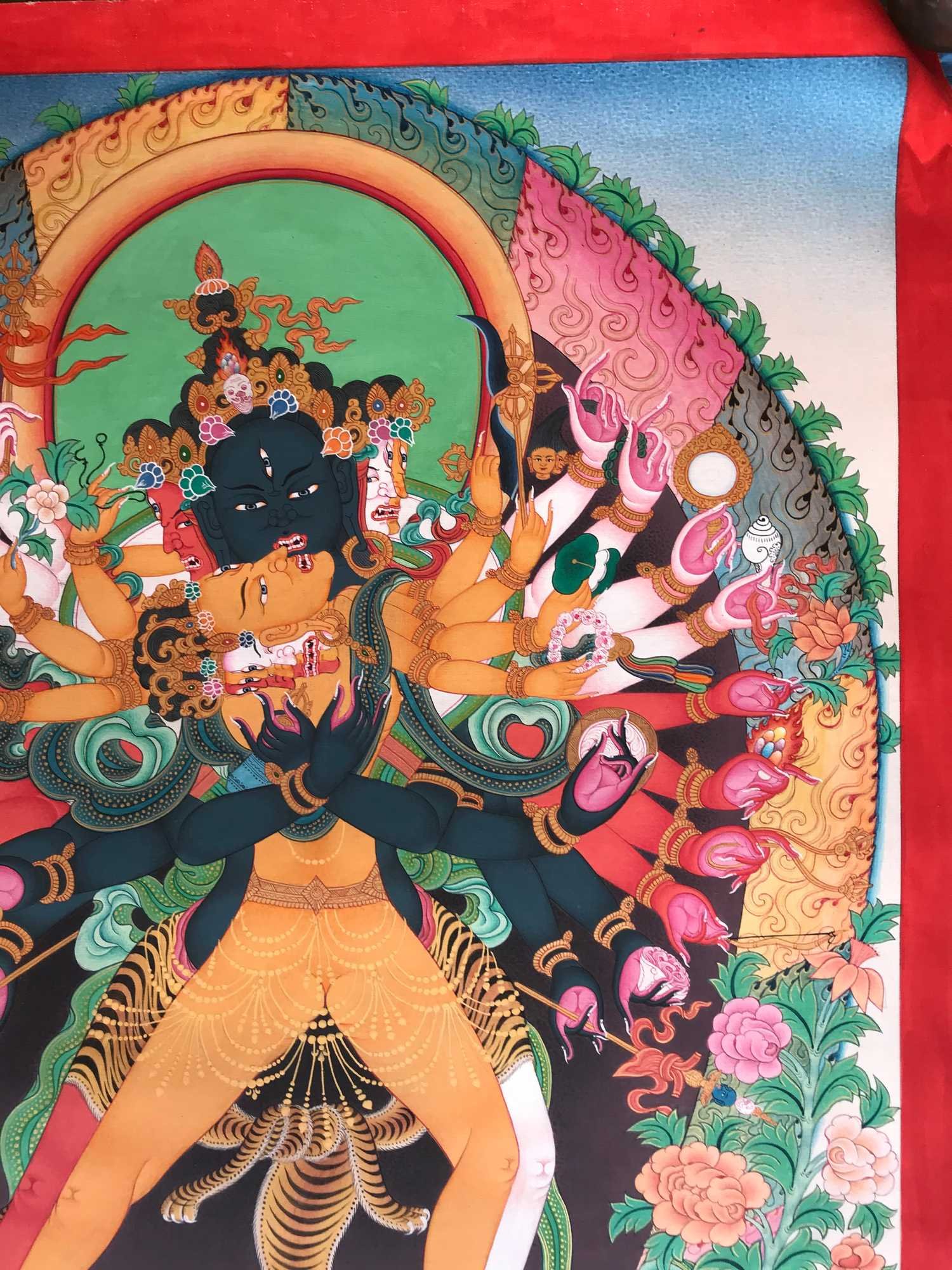
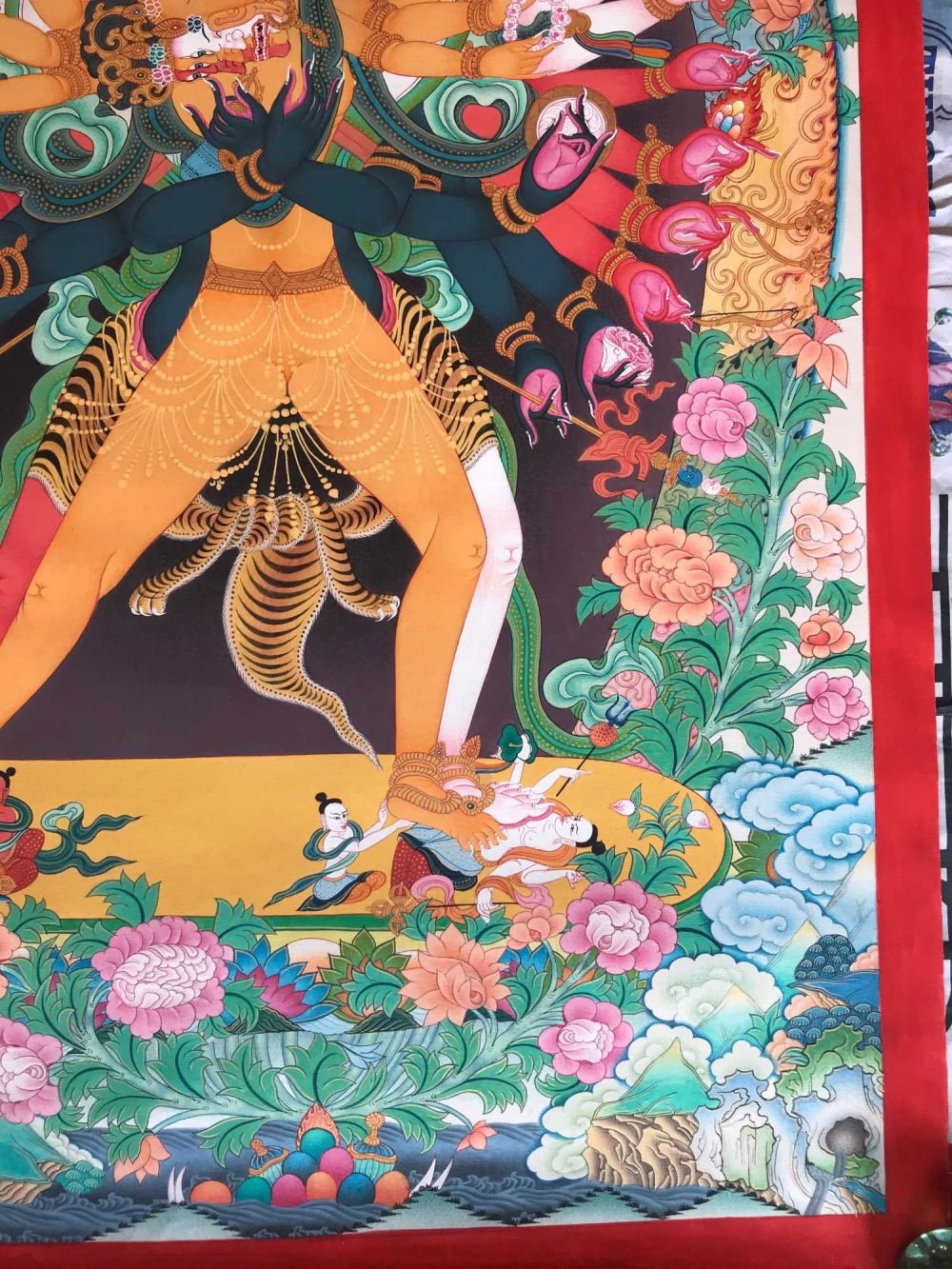
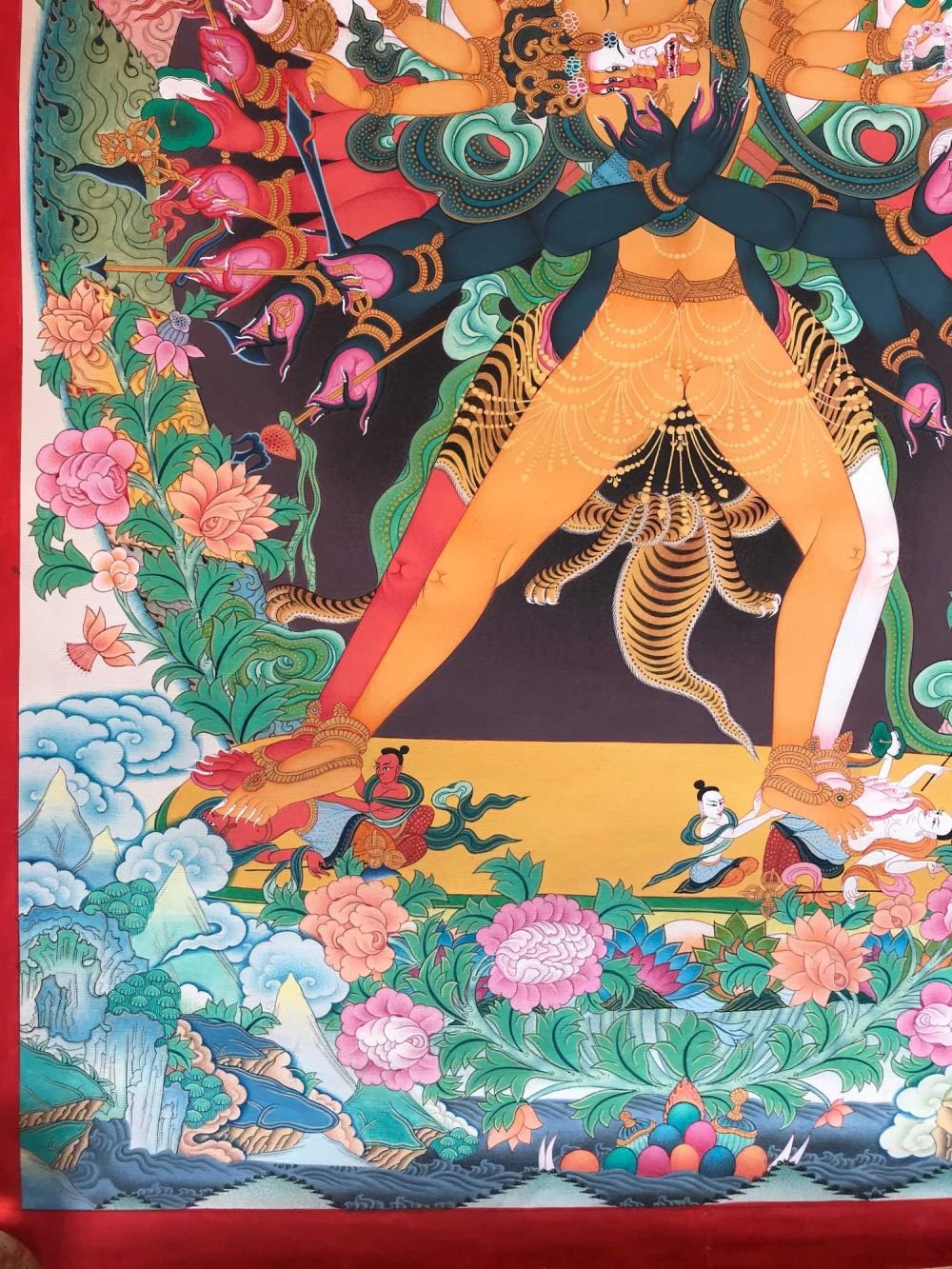
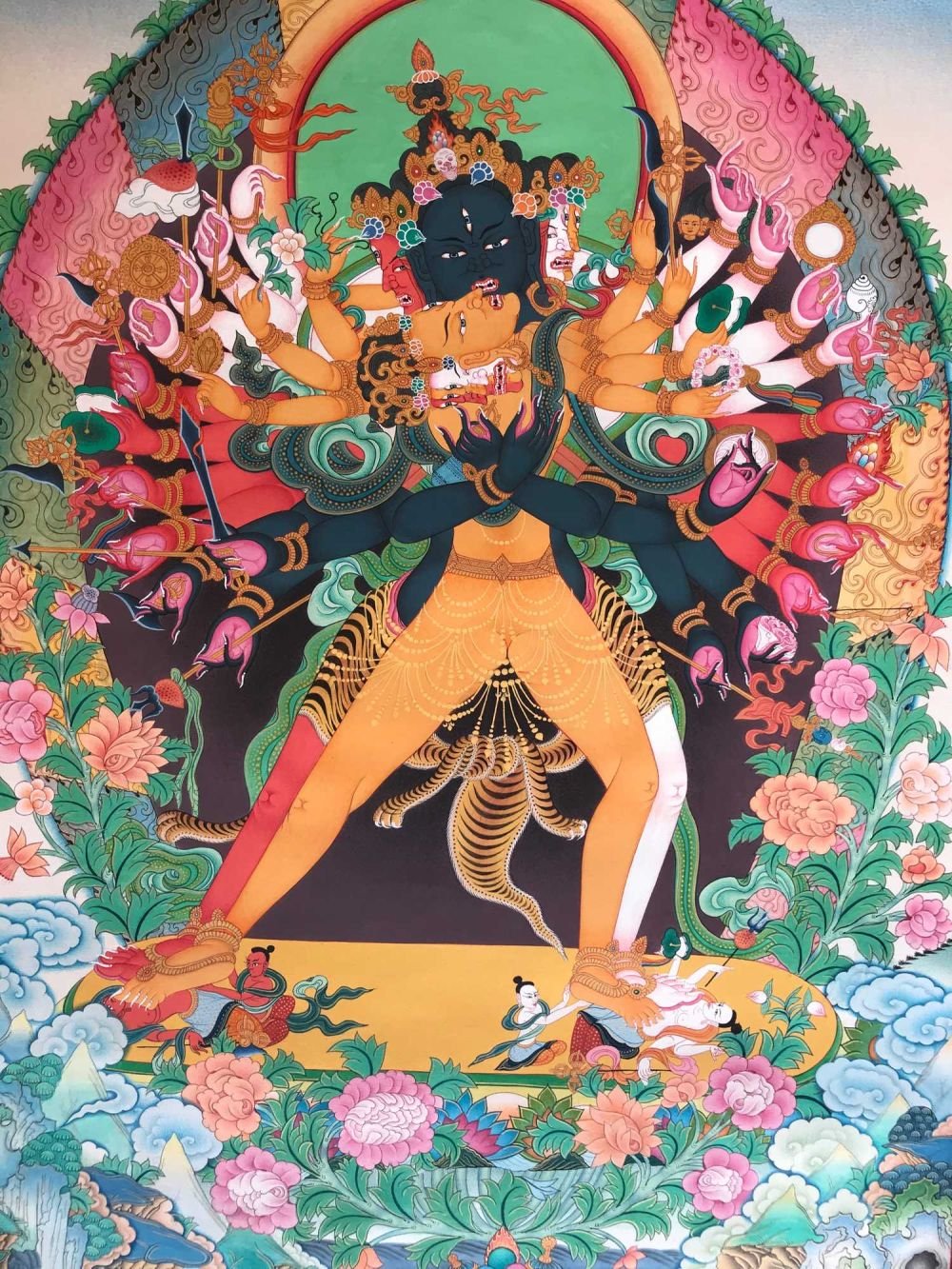
Tibetan Thangka Kalachakra with Consort, Shakti, Yab-Yum, with Real Gold , Wheel of Time, Symbol of Universal Cycles and Enlightenment
Dus Kyi Khorlo
Shilun
|
|
Product Specification |
|
| Code | HME17523 |
| Size |
Height 61cm (24") Width 43cm (17") |
Weight | 100 gm - 0.22 lbs |
| Material | Handmade Cotton Canvas |
| Availability | Available |
Order configuration (Optional)
Thangka Brocading
HIDE Select Option
Click Here to View All Option and Prices
Select
Select
Select
Select
Select
Select
Select
Select
Select
Select
Select
Select
Select
Select
Select

Select
Select
Select

Select
Select
Select

Select

Select

Select
Select
Select

Select
Select

Select

Select
Select
Select

Select

Select

Select
Select
Select
Brocade knob
HIDE Select Option
Click Here to View All Option and Prices

Select

Select

Select

Select

Select

Select

Select

Select
Thangka Blessing
HIDE Select Option
Click Here to View All Option and Prices

Select

Select
| Quantity | PCS |
US$ 210.00
$ 280.00 -25% off
Shipping Cost
|
| Price Adjustment [ Discount Ends in : 41 days ] |
||
Shipping Calculation
weight of 1 Pcs of the product is 0.5 kg and will cost USD $ 31.00
-
Item location: kathmandu, Nepal
Worldwide shipping - Dispatch
-
We normally dispatch the product in 2-5 business days. Else Buyer will be infromed personally about the dispatch Date.
- Payment
- Paypal | Credit - Debit Card | Bank Transfer | See More
- Return
- 7 days money back, buyer pays return shipping
Welcome to Handmade Handicraft
At Handmade Handicraft, we prioritize simplicity, reflected in our user-friendly website design. We have streamlined the process so everything you need is just a click away.
While our website does not support online shopping, we've incorporated a convenient shopping cart system to assist you in sending us your inquiries. Please note, we do not process payments on our site. All transactions will be handled via email, respecting the inquiries you submit.
Should you encounter any issues while submitting your inquiries, please contact us via mobile app, email, or follow the procedure outlined below. We've provided documentation to guide you through the selection process.
selecting Procedure
In every product you will find Order Now and Quick Inquiry buttons, they are the two process of sending us your enquiry.
If you have any questions or need assistance, please don't hesitate to reach out to us. We are here to help you with your inquiries and ensure a smooth experience.
Kalachakra
Kalachakra means the 'Wheel of Time' & offers tools to help you free yourself from cyclical existence [Skt. Samsara]. Samsara refers to patterns of behaviour such as habits & preconceived ideas concerning the nature of reality. Each of the tools held by the deity provides a specific solution. The sum of all of Kalachakra's attributes can lead you to pure consciousness beyond the normal conception of space & time. Read More
Iconography
The idea of Kalachakra revolves around the concept of time [Skt. Kala] and the cycles [Skt. Chakra's] of existence. Everything from the cycles of a clock, the cycles of habit, the cycles of the planets through to the cycles of human breathing. Everything is the world is governed by cycles of time & the clearer we understand cyclical patterns the more we can work with them & liberate navigate towards a more enlightened state.Kalachakra is atemporally conjoined with his consort yellow Kalachakri in an embrace called Yab-Yum. Kalachakra has four heads, 24 arms & 2 legs. A principle head is blue, with a blue upper body & four blue left & four right arms. His two principle arms embrace Kalachakri. Additionaly a left red head, four red left, four right arms & a red left leg; a white right facing head, four white right arms & a white right leg. Kalachakra is an emanation of blue Akshobhya [Skt.] [Eng. unshakable which is why Kalachakra is predominately blue. The two other original transcendent Buddha Families (Meditation [Skt. Dhyana] Buddhas) depicted are red Amitabha [Skt.] meaning bearer of love who can greed into love & white Vairochana [Skt.] meaning illuminator who can snuff out delusion into realised wisdom. The wisdom energies of ddhist ArtAmitabha, Akshobhya & Vairochana respectively transmute greed, hatred & delusion tuning the Wheel of Life. His crossed two principle blue arms are in Victory over the Three Realms gesture [Skt. Triolyavijaya Mudra], also called the Humkara Mudra with reference to the syllable 'Hum'. The three realms form the Trikaya Principle of Nirmanakaya, Sambhogakaya & Dharmakaya. The right hand holds a vajra topped bell [Skt. Ghanta] (barely visible) symbolising female wisdom & a diamond [Skt. Vajra] sceptre which symbolises method or compassion. He wears a special necklace of interlocking Diamond Sceptres [Skt. Vajramala] & a second made of skulls [Skt Kapalamala]. He wears a tiger skin dhoti representing his power over hatred. He stands & subdues two four armed demons. One of his left hands holds a blue wooden club [Skt. Danda] representing the crushing of the veils of ignorance. The top left red hand holds a hammer [Skt. Mudgara] representing the destruction of greed. The head of the hammer is bell-shaped symbolising the female wisdom quality, the vajra-shaped back part representing the male method quality & surmounted by a jewel representing conviction. The third red left hand holds an iron hook [elephant goad] with a vajra pommel [Skt. Vajrankush] which represents subjugating negative afflictions. The fourth red hand holds three unkindled firebrands [Skt. Agnidanda or Jvaladanda] often shown as three fire arrows [Skt. Agnibana] representing the power of subjugating the three original Kleshas being greed, hatred & delusion which form the centre of the Wheel of Life.
The top right white hand holds the Four Heads of Brahma [Skt. Brahmashiras] representing the severance of all conceptualisations & development of the four measureless states being loving kindness [Skt. Metta], sympathetic joy [Skt. Mudita], equanimity [Skt. Upekka] & lastly compassion [Skt. Karuna] which themselves know no bounds. The Four abodes are also known as the Temples of Brahma. The third white hand holds a sun disc [Skt Suryachakra] representing absolute truth with the third blue hand holding a moon disc representing awoken realisation of relative truth. His fourth right white hand holds the right turning conch shell [Skt. Dakshinavarta Sangha] representing sound & the seed [Skt. bija] syllables, Buddhism according to the Dharmas. Descriptions the other shown hand-held attributes are found in Robert Beer's book The Handbook of Tibetan Symbols. The triangular diamond rock formation in the foreground represents the Source of Reality [Skt. Dharmadaya] within which the deities manifest & the principle of Trikaya arises. This is generated from emptiness by the syllable E which in Indian language is a Triangular shaped letter D.
Commentary
Yab-Yum is a Tibetan word meaning father-mother which describes Kalachakra in sexual union with his female consort Kalachakri. Yab-yum is generally understood to represent the primordial union of wisdom & compassion. In Buddhism the masculine form is active, representing either skilful means or compassion [Skt. Upaya] that should be developed for enlightenment. The feminine form is passive representing wisdom [Skt. Prajna]. United, the figures symbolize the union necessary to overcome the veils of Maya, the false duality of object & subject. Kalachakra is also a tutelary meditation[Skt. Ishtadevata; Tib. Yidam] deity.
Shakti
: IntroductionShakti Yab-yum is a common symbol in Nepalese and Tibetan art. It represents the primordial union of wisdom and compassion, depicted as a male deity in union with his female consort via the similar concept of interpenetration or "coalescence," as illustrated by the concept of Indra's net. The male figure represents compassion and dexterity, while the female figure represents insight. The female is seated on the male's lap in yab-yum. A rare rendition of a similar figure, but reversed, with the male sitting on the female's lap, is known as yum-yab. Read More
Introduction to Thangka
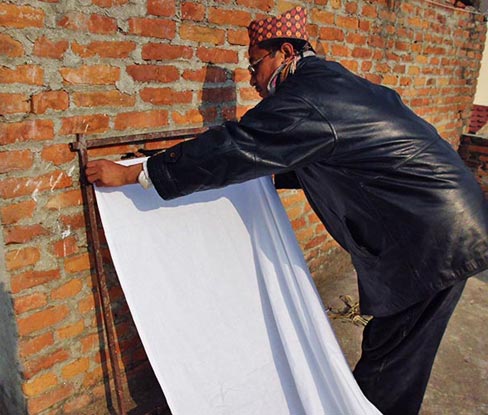
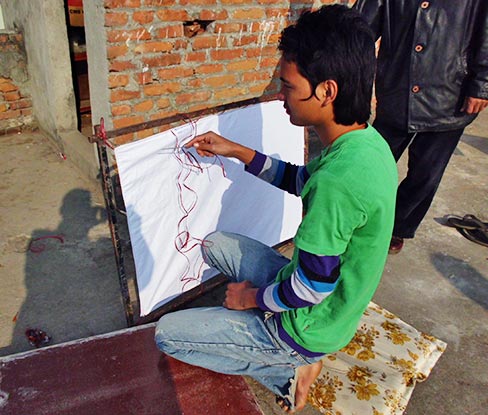
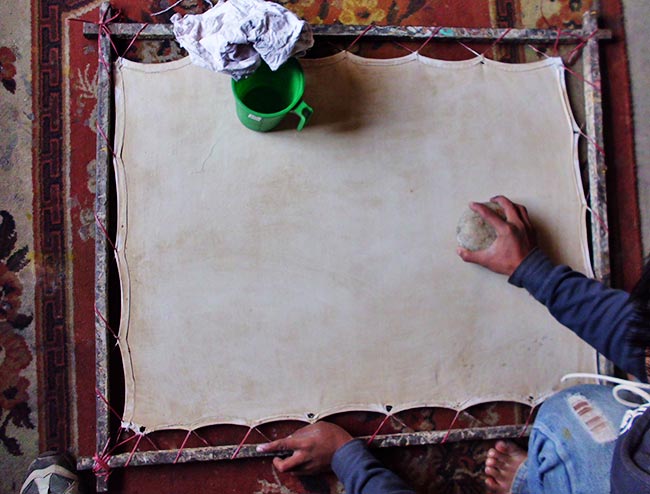
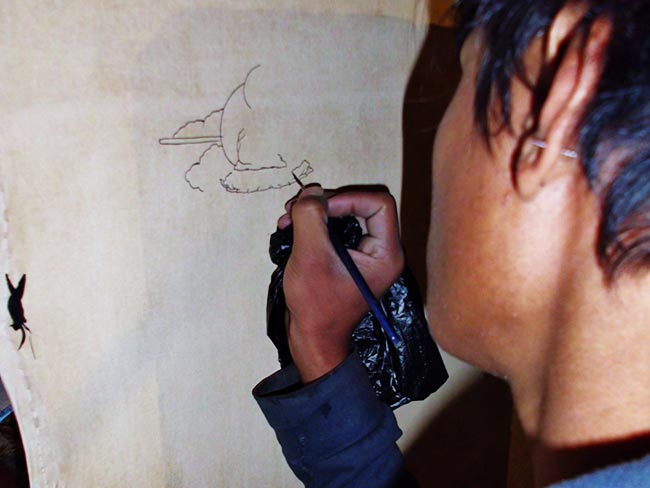
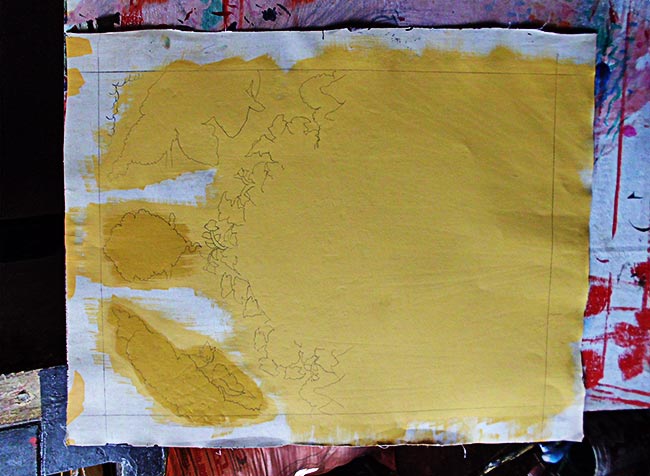
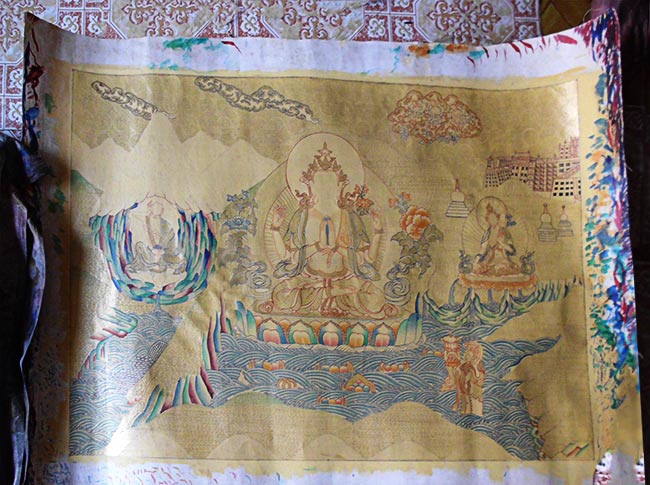
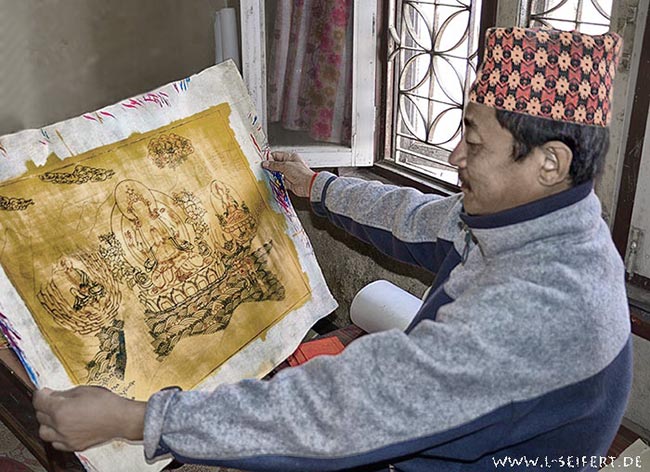
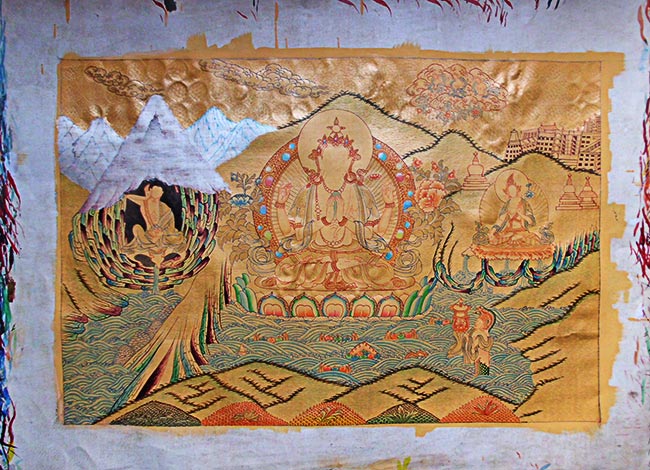
A thangka, also known as tangka, thanka, or tanka, is a vibrant and intricate Tibetan Buddhist painting that serves as a visual representation of spiritual teachings. Crafted with meticulous detail on cotton or silk appliqué, thangkas depict a wide range of subjects including Buddhist deities, sacred scenes, mandalas, and narrative stories. These sacred artworks are traditionally kept unframed and rolled up for storage, resembling ancient scrolls. To protect their delicate nature, thangkas are mounted on textile backings and often adorned with a silk cover on the front. Proper preservation in dry environments is crucial to maintain the integrity and longevity of the silk. Read More
Related Products

18 cm
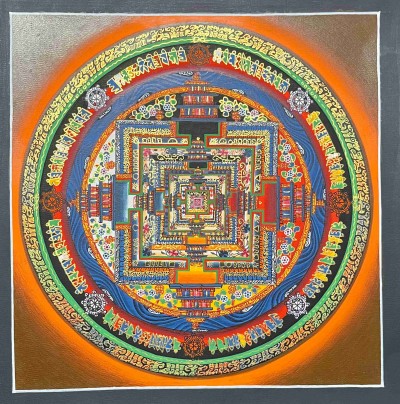
Buddhist Handmade Thangka Painting Of Kalachakra Mandala, Hand Painted
US$ 12.00
25% off
$ 15.00
$ 15.00

31 cm
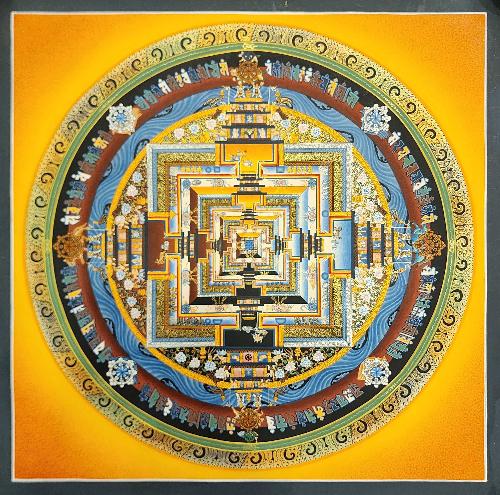
Kalachakra Mandala Thangka, Buddhist Traditional Painting, Tibetan Style, Real Gold, In Yellow Color Base
US$ 150.00
25% off
$ 200.00
$ 200.00

6 cm
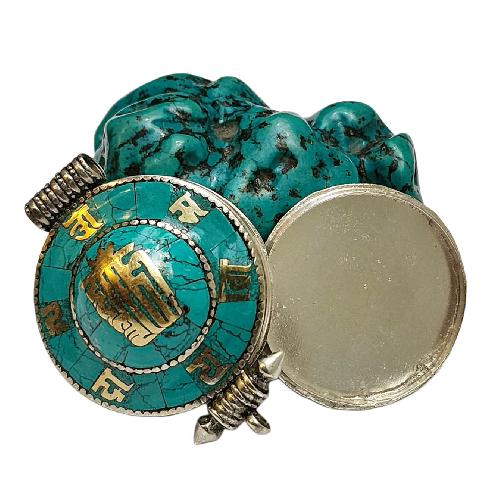
Ghau, Tibetan Box With OMPH Design And Kalachakra In Center, Stone Setting, Turquoise
US$ 6.38
25% off
$ 8.50
$ 8.50

70 cm
Buddhist Handmade Kalachakra Mandala, Sand Mandala, Wheel Of Time, Dalilama Thangka Hand Painted
US$ 130.00
25% off
$ 170.00
$ 170.00