

Loading Content..
Please wait...
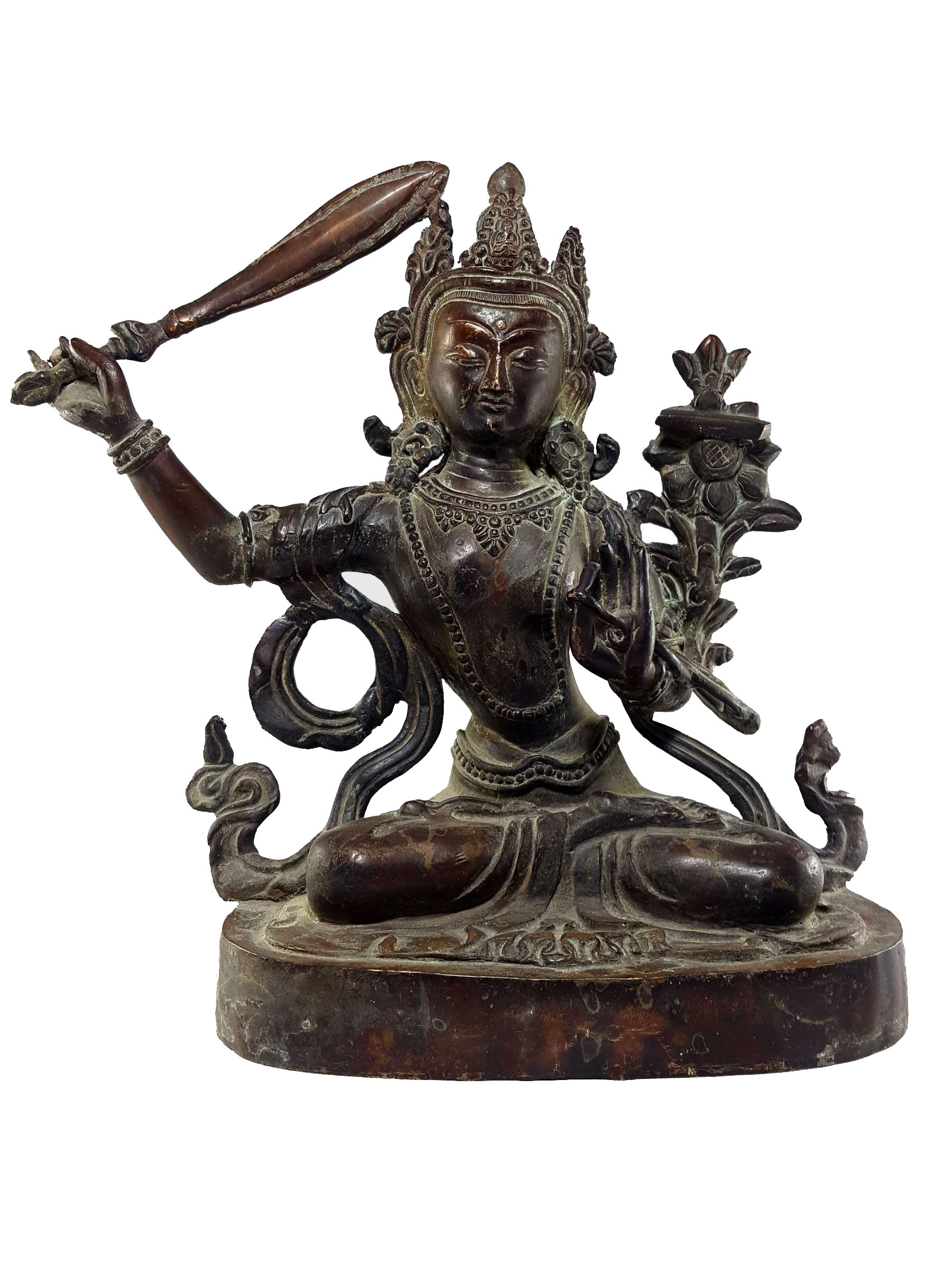


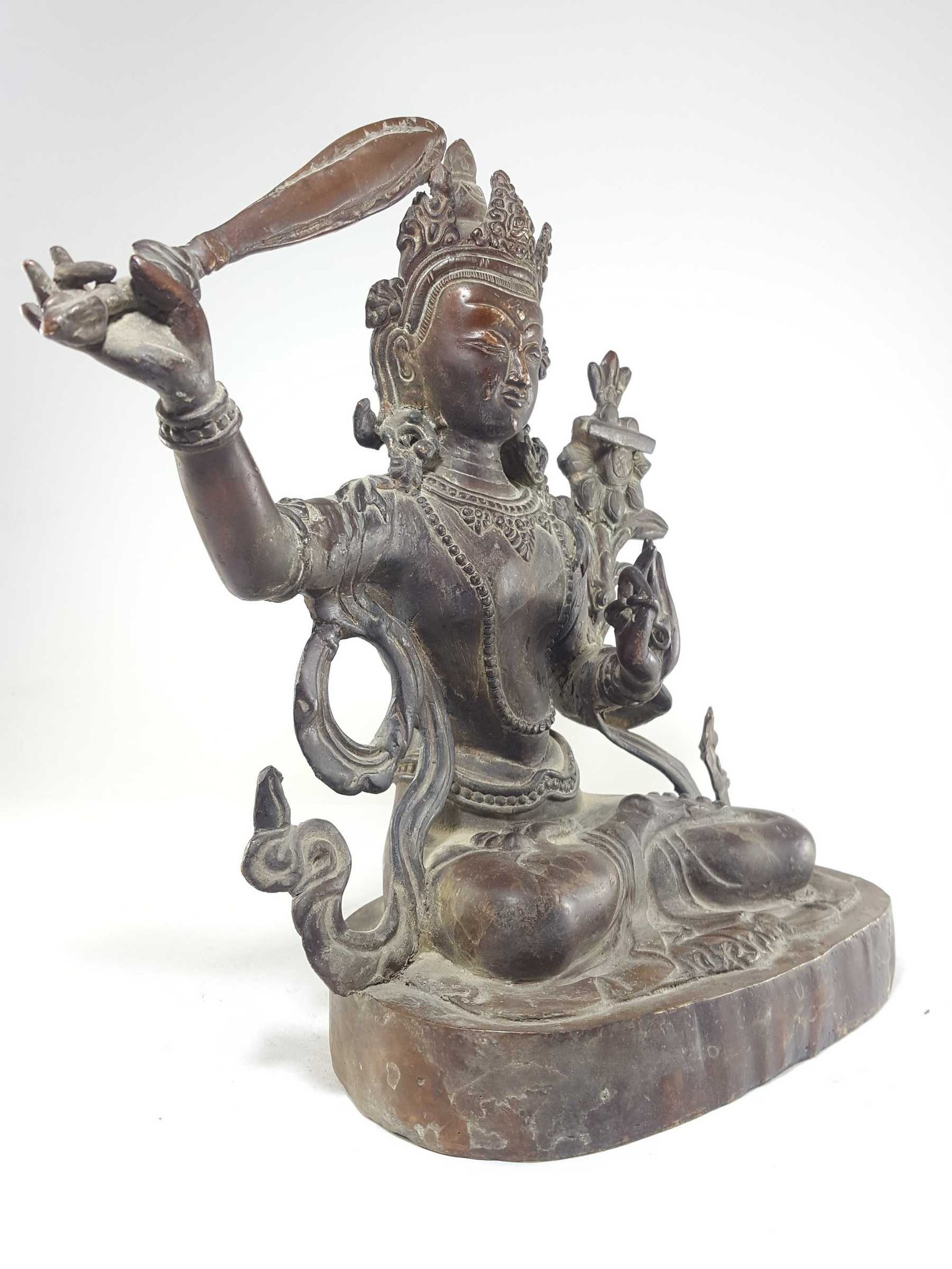
Manjushri Statue Natural Finishing 30 Year Old , Wisdom Buddha, cutting through ignorance with the sword of insight
Jampelyang
Wenshu Pusa
Monju Bosatsu
|
|
Product Specification |
|
| Code | HME15841 |
| Size |
Height 25cm (10") Width 26cm (10") Depth 12cm (5") |
Weight | 2.35 kg - 5.18 lbs |
| Material | Copper |
| Availability | Available |
| Quantity | PCS |
US$ 750.00
$ 1,000.00 -25% off
Shipping Cost
|
| Price Adjustment [ Discount Ends in : 41 days ] |
||
Shipping Calculation
weight of 1 Pcs of the product is 2.5 kg and will cost USD $ 53.00
-
Item location: kathmandu, Nepal
Worldwide shipping - Dispatch
-
We normally dispatch the product in 2-5 business days. Else Buyer will be infromed personally about the dispatch Date.
- Payment
- Paypal | Credit - Debit Card | Bank Transfer | See More
- Return
- 7 days money back, buyer pays return shipping
Welcome to Handmade Handicraft
At Handmade Handicraft, we prioritize simplicity, reflected in our user-friendly website design. We have streamlined the process so everything you need is just a click away.
While our website does not support online shopping, we've incorporated a convenient shopping cart system to assist you in sending us your inquiries. Please note, we do not process payments on our site. All transactions will be handled via email, respecting the inquiries you submit.
Should you encounter any issues while submitting your inquiries, please contact us via mobile app, email, or follow the procedure outlined below. We've provided documentation to guide you through the selection process.
selecting Procedure
In every product you will find Order Now and Quick Inquiry buttons, they are the two process of sending us your enquiry.
If you have any questions or need assistance, please don't hesitate to reach out to us. We are here to help you with your inquiries and ensure a smooth experience.
Manjushri
Manjushree is a Sanskrit word meaning 'gentle glory'. In Sanskrit, "shree" means 'glorious' or 'honorable'. His name signifies one who embodies enlightened wisdom. He confers mastery of the Dharma, wisdom, and eloquence and teaches the path of a bodhisattva in the Mahayana tradition. Read More
Commentary
Manjushree is the Bodhisattva who holds the flaming sword [Skt. Khadga] of enlightenment, by his left hand in a warning( Tarjani) hand gesture ( Mudra) in his left hand representing his realization of wisdom to cut through ignorance & wrong view. His right hand depicted in teaching (Jnana Mudra) holds the stem of a Blue Lotus (Utpala) flower upon which rests the Book (Pustaka) of Perfection of Transcendental Wisdom. The blue lotus is a symbol of the victory of the spirit over the senses and signifies the wisdom of knowledge. This represents the lotus that he obtained from the middle of the lake in the Kathmandu Valley out of which grew a lotus bearing a Blue Flame which represents wisdom. Manjushree sits upon a moon disc upon a lotus with an elongated stem arising from a lake. He wears a gold diadem fitted with precious jewels. He wears a silk scarf fastened at the waist and over this, a softly glowing green scarf decorated with golden motifs. His head is silhouetted against a nimbus. The lotus he is sitting on has an elongated stem and arises from a lake representing his recovery of the blue flame of transcendent wisdom and the teaching he originated. The white sash is the attire of the Vajrayana school of Buddhism.
According to legend, Manjushree founded the Nepalese civilization. In ancient times, way before Buddha Shakyamuni the Kathmandu Valley was a vast lake. The Buddha Vipashyin came to Nepal to meditate on the hill above the lake. Wishing to give the rough mountain people an object of worship, Vipashyin threw a lotus seed into the lake. When this lotus bloomed, a blue flame of wisdom light shone from the center of its thousand petals. This light was called the Swayambhunath Dharmadhatu, the Self-Sprung Infinite Field of Light, and the flame of the enlightened mind of the primal Buddha, Vajradhara burned at its center. The light of Vajradhara also emanated in the colors of the rainbow and in each of the five colors appeared one of the Five Buddhas - Vairochana, Akshobhya, Ratnasambhava, Amitabha, and Amoghasiddhi. Then Manjushri went to Nagarkot Peak on the edge of the lake, and after having pondered in Samadhi how best the lake may be drained, with his keen-edged sword of wisdom he cut three Gorges. After the lake had been drained and the Valley bottom made suitable for cultivation Manjushree founded the city of Patan which was originally called Manjupattan. He taught the people many things. Manjushree manifests himself in the form of Yamantaka, known also as Vajrabhairava in order to overcome the lord of Death, Yama.
The Book (Pustaka) represents Transcendent Wisdom which came to be embodied by the Dyani {Pancha} Buddha Families. The book symbolically contains Buddhist teaching that had been lost to mankind & which was revealed to Manjushree. The book is commonly mistaken for the Prajna Paramita which was written by many hands between 100 & 200 CE realizing the Boddhisattva Principle. The book of Manjushree alludes to Wisdom and the emanation of the Five Transcendent Buddha Families. These are Vairochana, Akshobhya, Ratnasambhava, Amitabha & Amoghasiddhi. Wisdom Energy is a power that can extinguish the Five Negative afflictions. Each family heads wisdom and energy to overcome these Five hindrances to enlightenment which are greed, hatred, delusion, jealousy & pride.
About Sacred Serenity Collection
This is a beautiful old Buddhist statue that carries a deep sense of spirituality and craftsmanship. These statues were made around 15 to 20 years ago and are crafted from pure copper. If the statue has gold, it has a thick layer of gold plating, unlike modern statues where using a lot of gold is expensive.
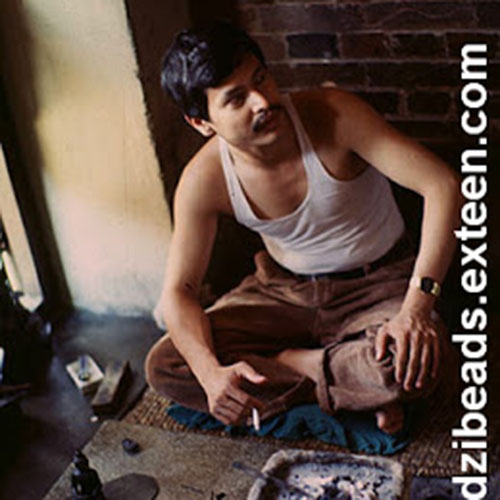
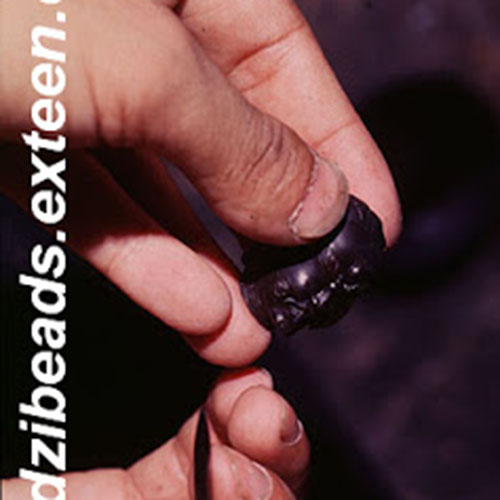
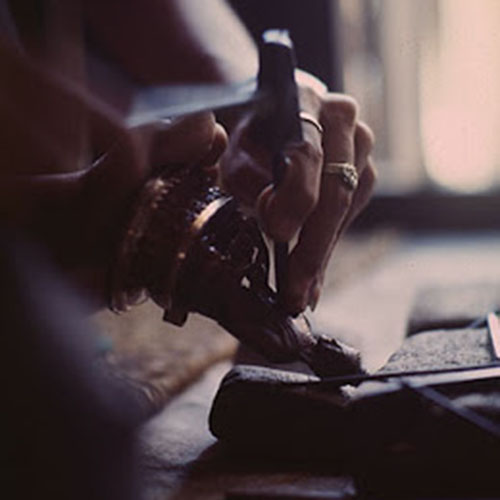
Skilled artisans, who were well-versed in religious teachings, made these statues. They followed traditional guidelines and sacred texts to create each statue with precise expressions and postures. The artisans believed they were creating representations of gods rather than just ordinary figures. This unique perspective is reflected in the statues themselves. Read More
About Chocolate Oxidized
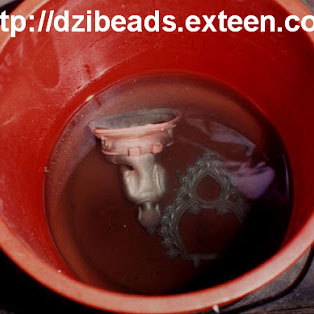
This Manjushri has been meticulously treated with a chocolate color antique patina. The intention behind this patina is to replicate the appearance of a copper statue that has gracefully aged over a century. Unlike a simple coat of paint, this patina is not applied superficially and is designed to endure. It undergoes an artificial oxidation process that adds depth and character, while also serving as a protective layer against natural oxidation.
By imitating the natural aging process, the chocolate color antique patina lends an air of authenticity and vintage charm to the Manjushri. This carefully crafted finish ensures that the patina remains intact for an extended period, offering longevity and resistance to wear. The result is a unique piece that captures the essence of a time-worn copper statue, evoking a sense of history and artistic heritage.
Lost-Wax System
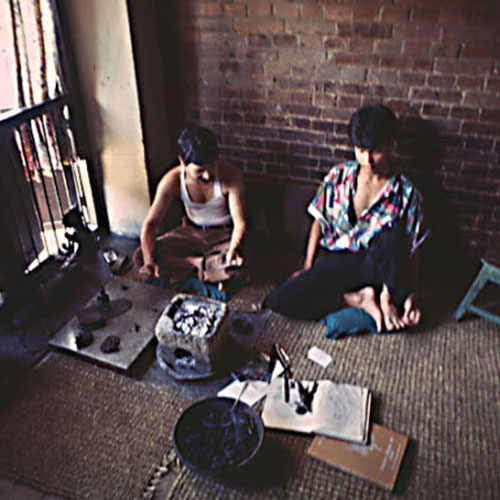
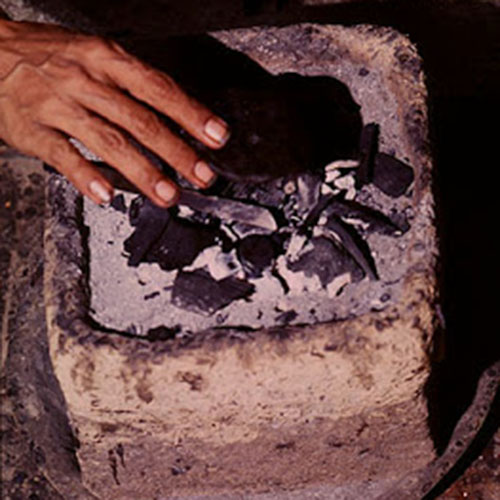
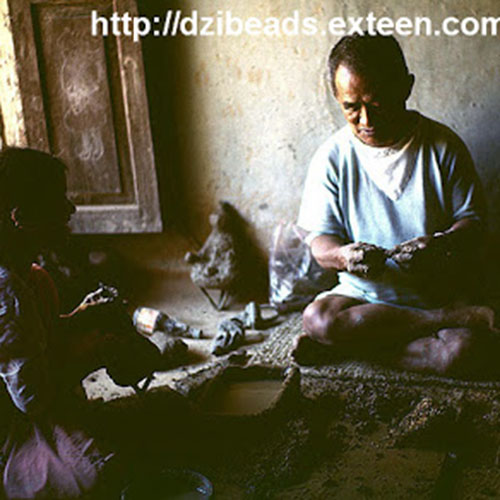
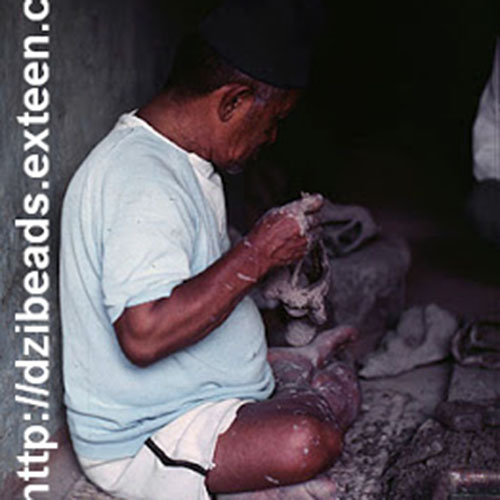
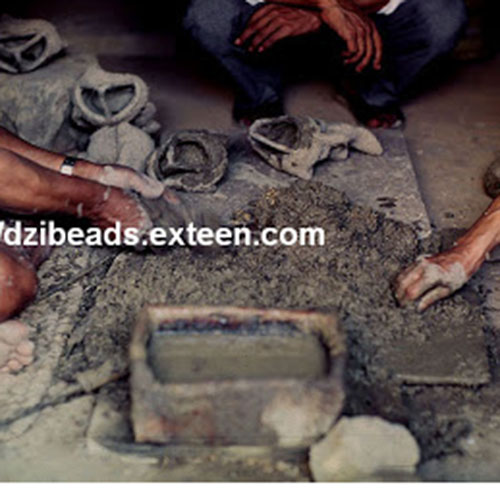
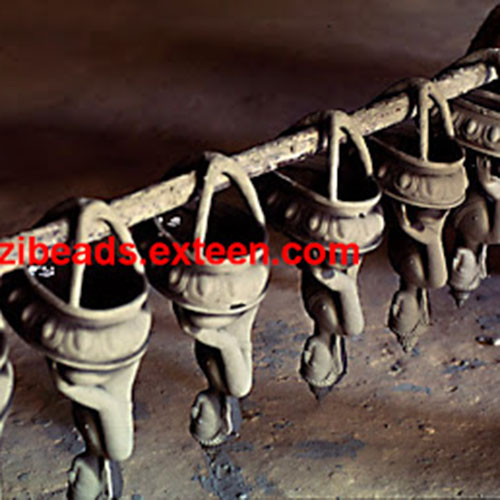
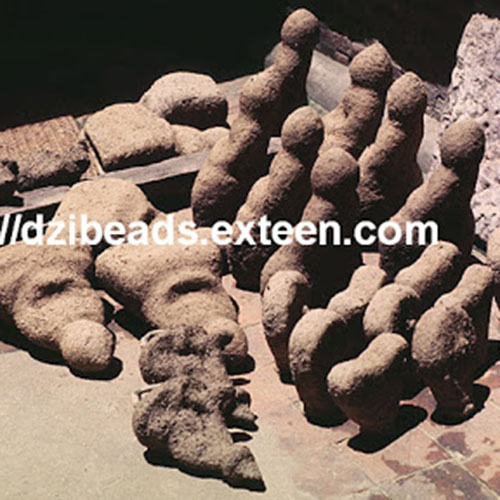
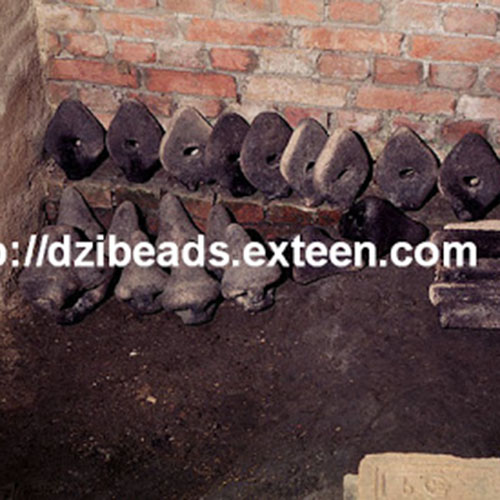
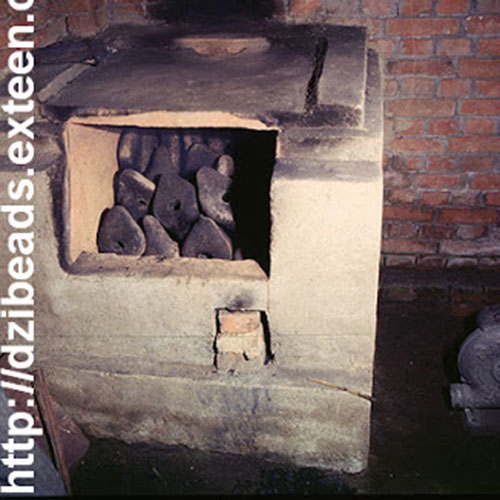
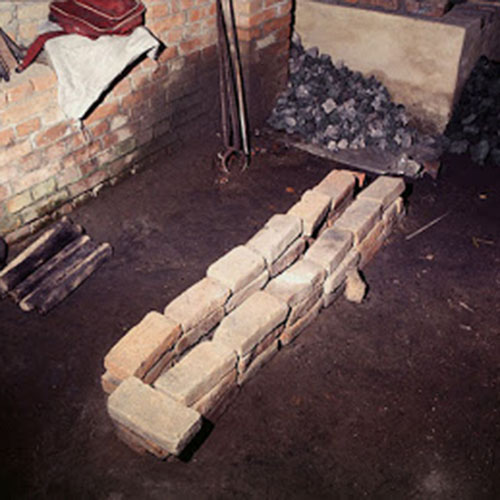
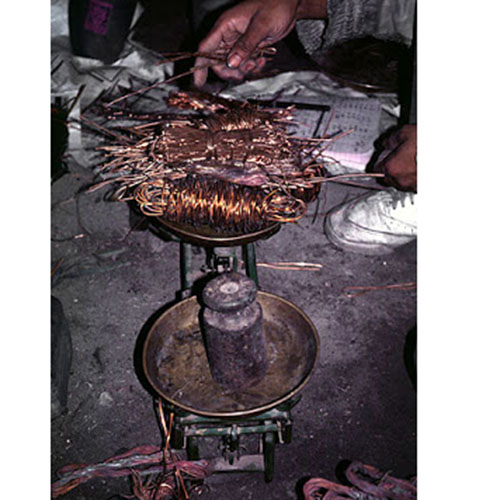
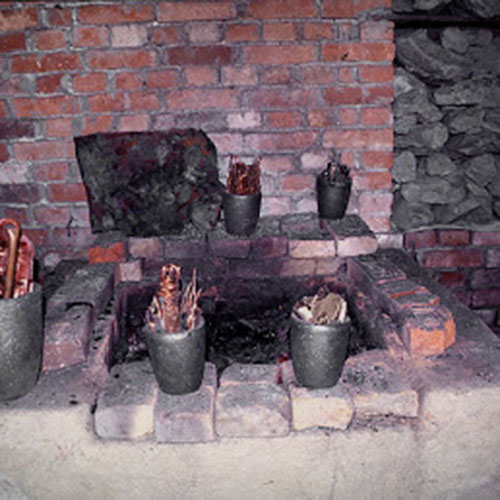
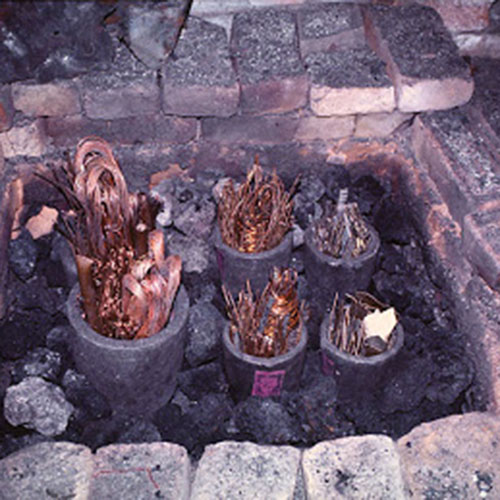
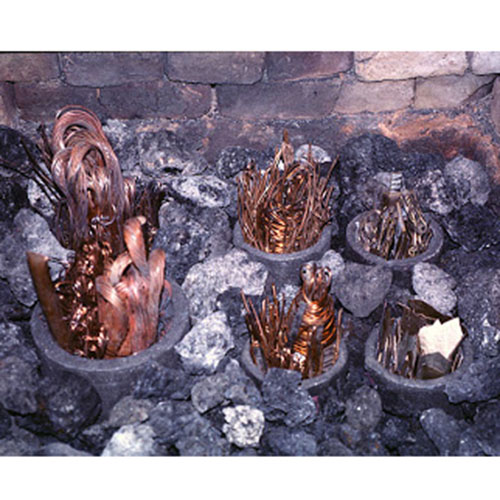
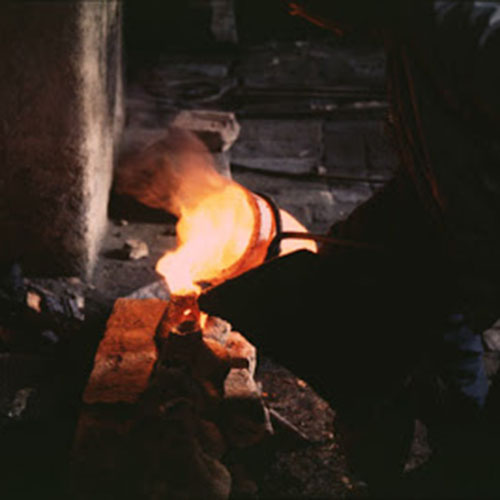
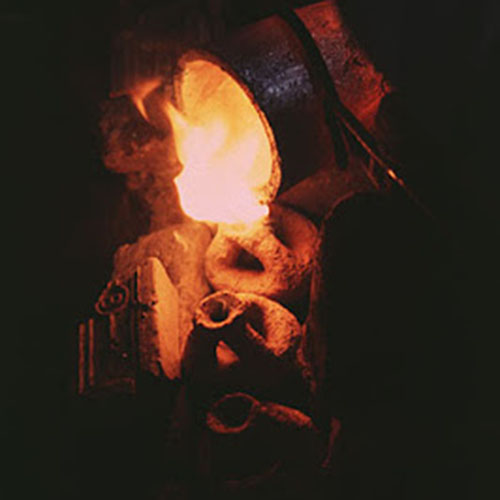
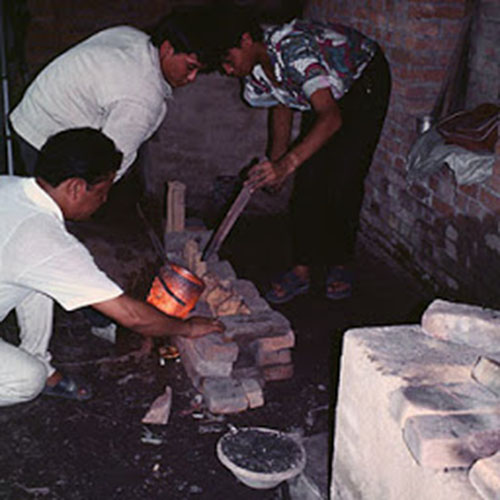
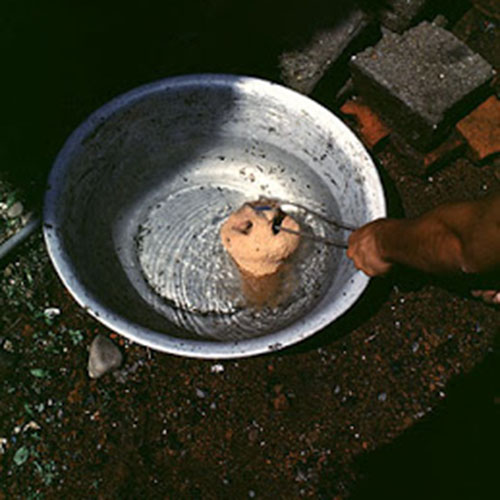
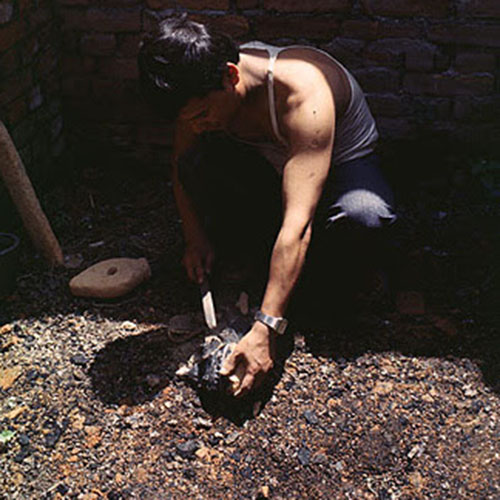
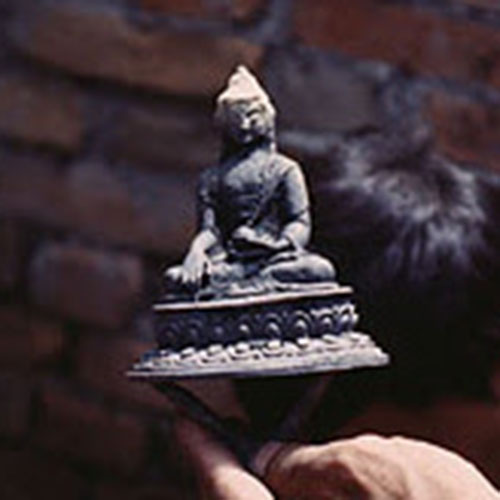
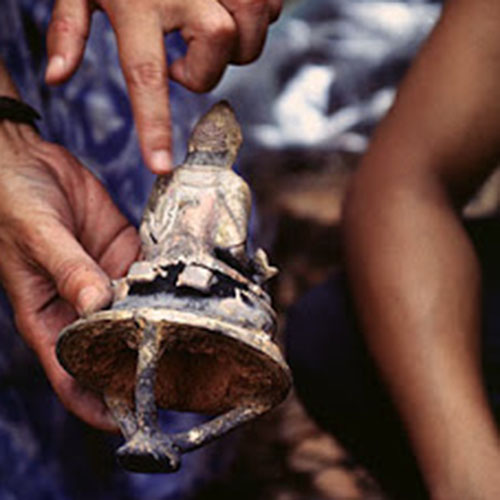
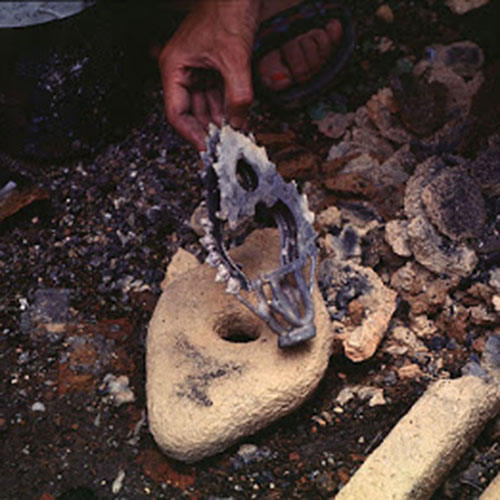
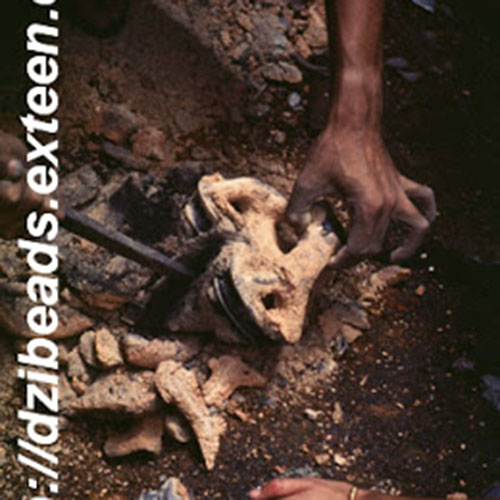
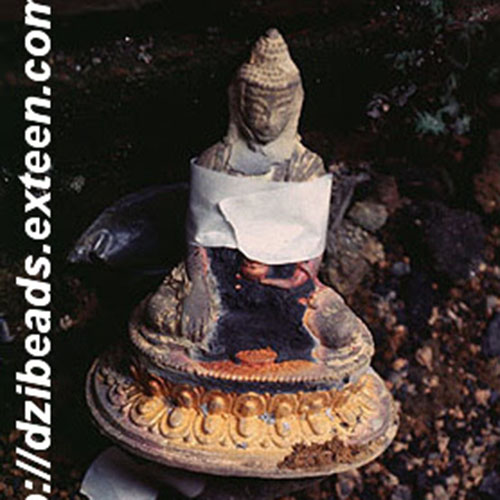
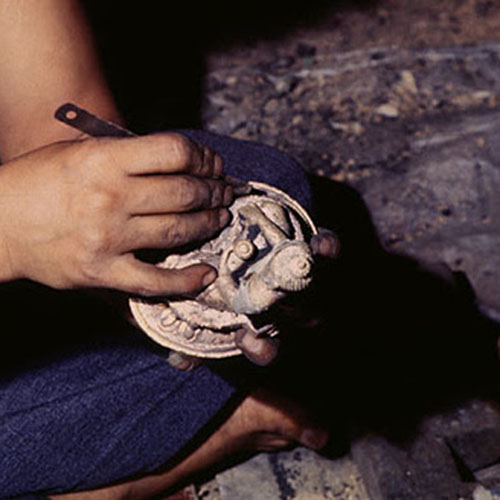
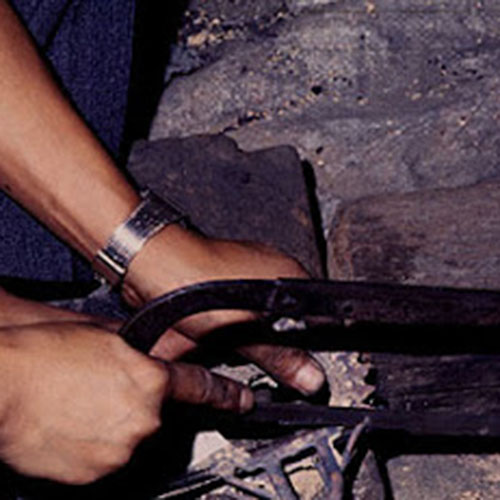
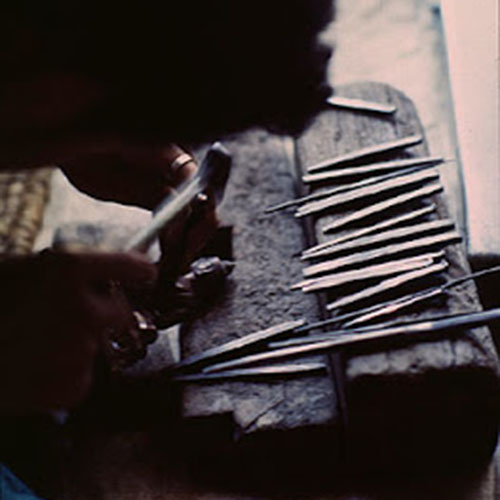
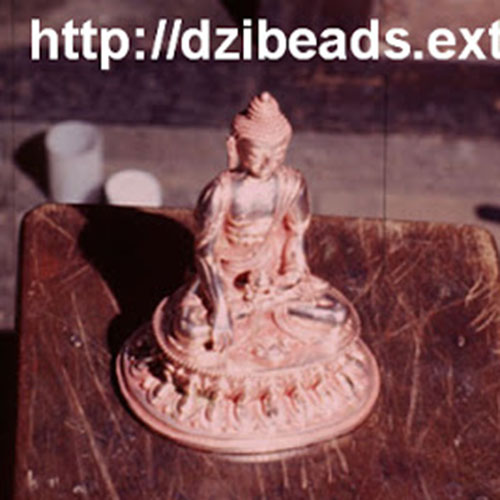
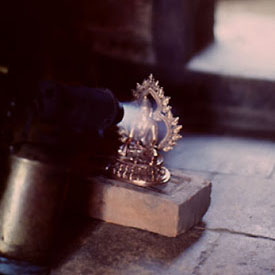
This Manjushri is made by the process of the Lost-Wax system. The lost-wax process, also known as investment casting, is a time-honored technique used to create metal sculptures. It involves several steps that have been practiced for thousands of years. Skilled artisans begin by sculpting a detailed wax model, capturing every intricate detail of the desired sculpture. The wax model is then coated with a ceramic shell, formed by multiple layers of ceramic material. Once the shell has cured, the wax is melted and drained out, leaving behind a cavity. Molten metal is poured into the cavity, creating a precise replica of the original wax model. After the metal has cooled and solidified, the ceramic shell is carefully removed, revealing the final metal sculpture. Read More
Related Products

22 cm
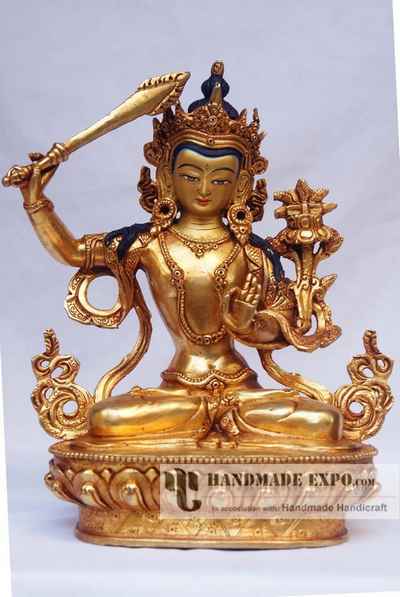
Manjushri
US$ 180.00
25% off
$ 240.00
$ 240.00

76 cm
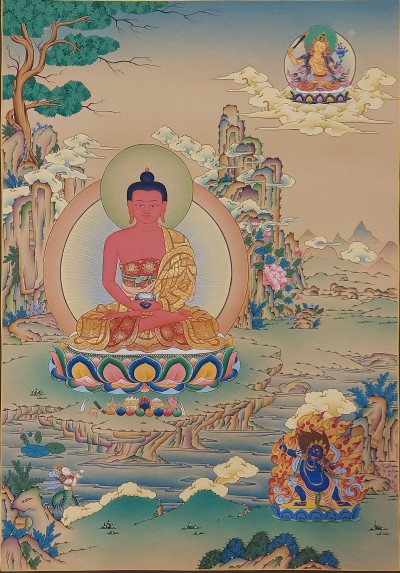
Buddhist Karma Gadri Art, Handmade Thangka Of Amitabha Buddha, Hand Painted, Supported By Manjushri And Vajrapani
US$ 750.00
25% off
$ 1,000.00
$ 1,000.00

10 cm
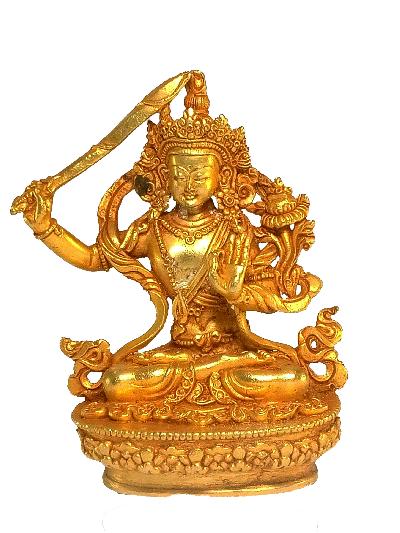
Nepali Small Statue Of Manjushri, Full Gold Plated
US$ 38.00
25% off
$ 50.00
$ 50.00

86 cm
Buddhist Handmade Thangka Of Manjushri, Real Gold, Hand Painted, Real Gold
US$ 750.00
25% off
$ 1,000.00
$ 1,000.00