

Loading Content..
Please wait...
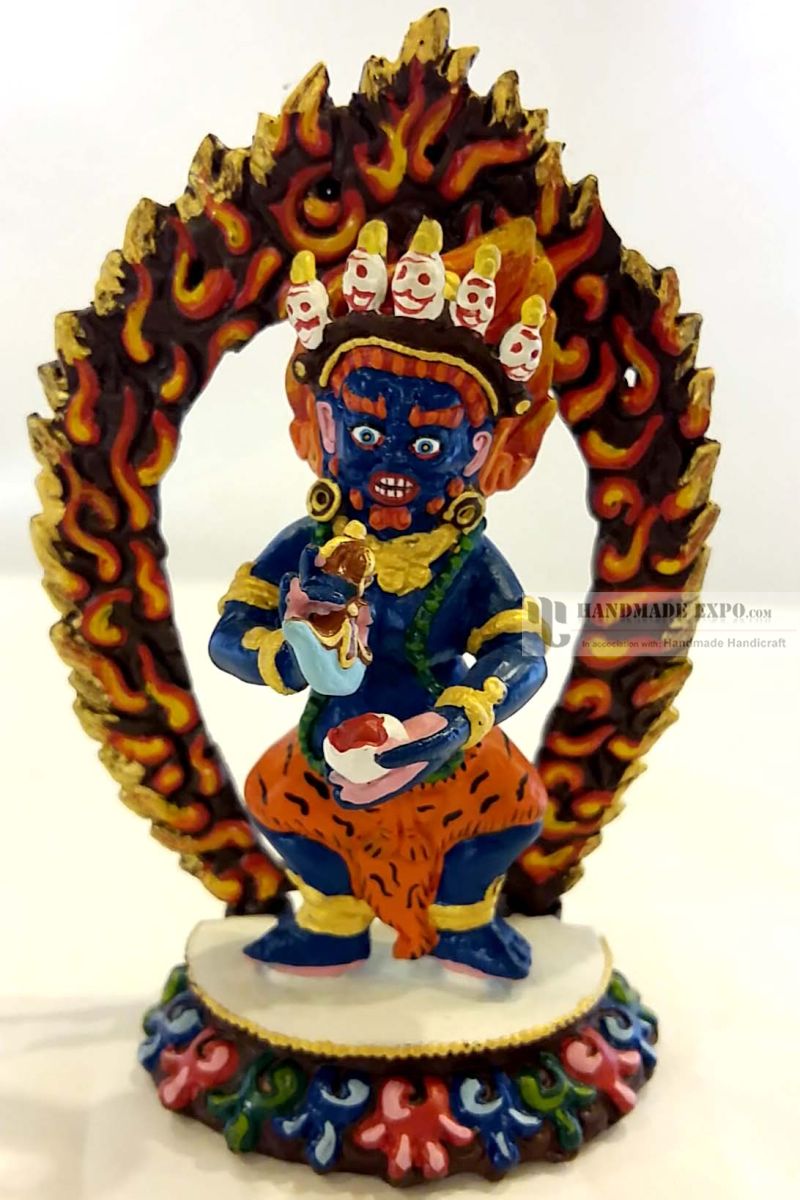
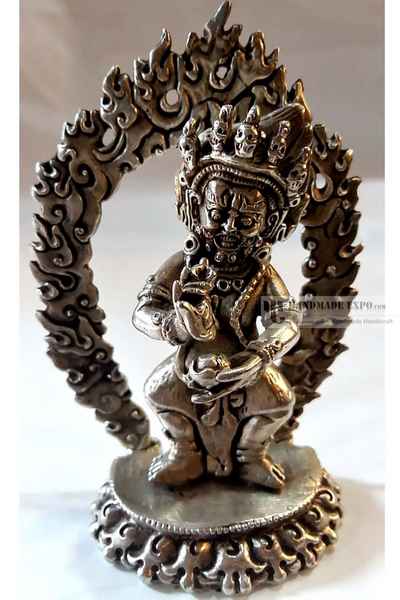
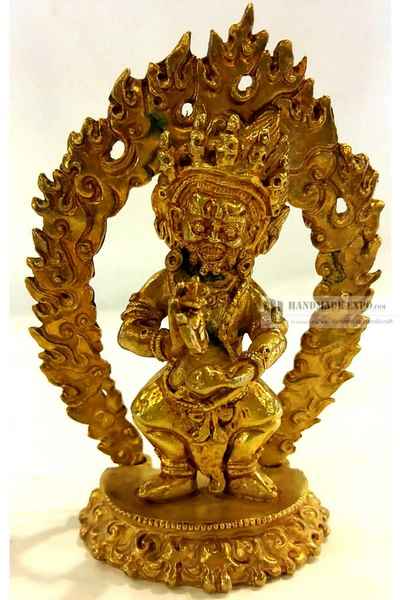
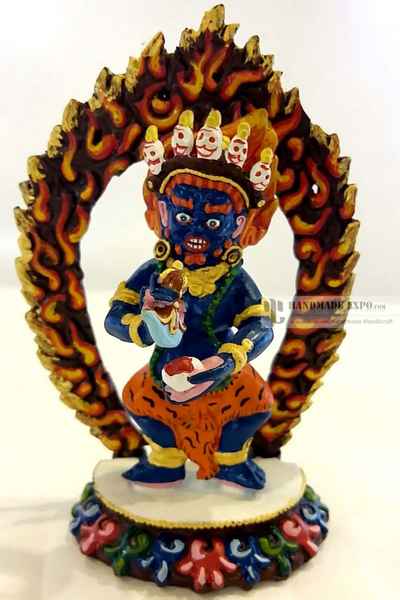
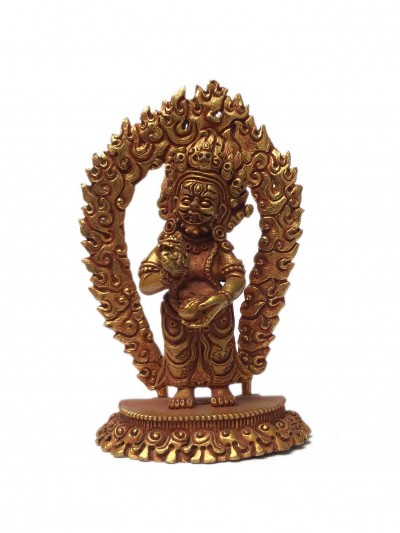
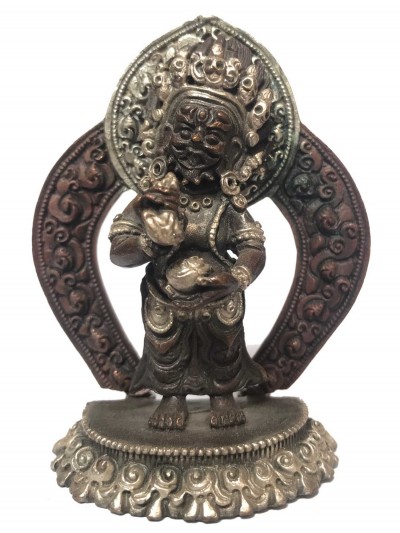
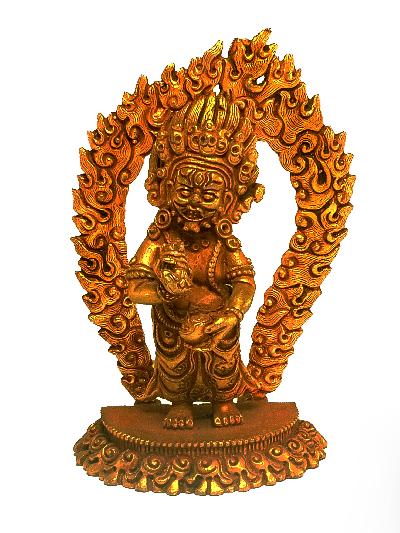
Mahakala Panjaranatha Two Arms Statue In Traditional Color , The Lord of the Tent, fierce protector of sacred spaces and teachings
Gur gyi mgon po
Jin Jia Da Hei Tian
Kongo Daikokuten
|
|
Product Specification |
|
| Code | HME11594 |
| Size |
Height 9cm (4") Width 6cm (2") Depth 5cm (2") |
Weight | 500 gm - 1.1 lbs |
| Material | Copper |
| Availability | Available |
Order configuration (Optional)
Filling & Blessing
HIDE Select Option
Click Here to View All Option and Prices

Select

Select

Select

Select
Statue Finishing
HIDE Select Option
Click Here to View All Option and Prices

Select

Select

Select

Select

Select

Select

Select

Select

Select

Select

Select

Select

Select

Select

Select

Select

Select

Select

Select

Select

Select

Select

Select

Select

Select

Select

Select

Select

Select

Select

Select

Select

Select

Select

Select

Select

Select

Select

Select

Select
| Quantity | PCS |
US$ 45.00
$ 60.00 -25% off
Shipping Cost
|
| Price Adjustment [ Discount Ends in : 41 days ] |
||
Shipping Calculation
weight of 1 Pcs of the product is 0.5 kg and will cost USD $ 31.00
-
Item location: kathmandu, Nepal
Worldwide shipping - Dispatch
-
We normally dispatch the product in 2-5 business days. Else Buyer will be infromed personally about the dispatch Date.
- Payment
- Paypal | Credit - Debit Card | Bank Transfer | See More
- Return
- 7 days money back, buyer pays return shipping
Variations of Same Product
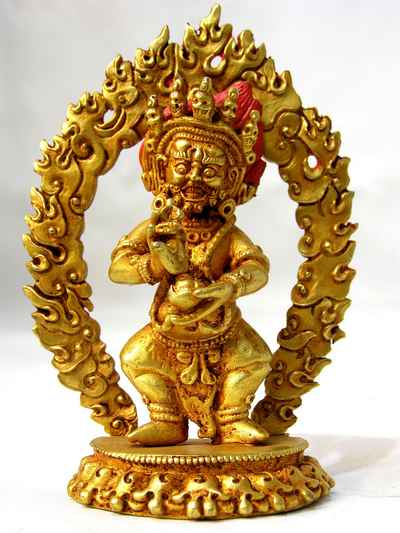
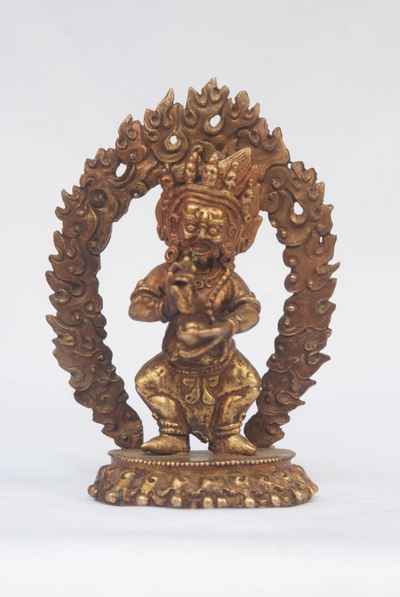
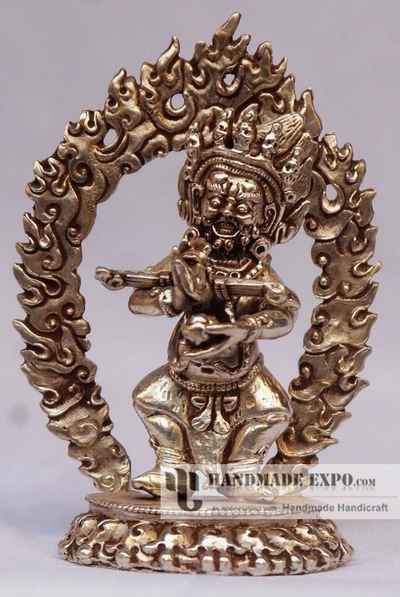
Welcome to Handmade Handicraft
At Handmade Handicraft, we prioritize simplicity, reflected in our user-friendly website design. We have streamlined the process so everything you need is just a click away.
While our website does not support online shopping, we've incorporated a convenient shopping cart system to assist you in sending us your inquiries. Please note, we do not process payments on our site. All transactions will be handled via email, respecting the inquiries you submit.
Should you encounter any issues while submitting your inquiries, please contact us via mobile app, email, or follow the procedure outlined below. We've provided documentation to guide you through the selection process.
selecting Procedure
In every product you will find Order Now and Quick Inquiry buttons, they are the two process of sending us your enquiry.
If you have any questions or need assistance, please don't hesitate to reach out to us. We are here to help you with your inquiries and ensure a smooth experience.
Mahakala Panjaranatha
Mahakala Panjaranatha is a significant wrathful deity in Vajrayana Buddhism, particularly in the Tibetan Buddhist tradition. He is a two-armed manifestation of Mahakala, depicted in a standing form. As a fierce and powerful protector, he embodies the wrathful aspect of compassion, helping practitioners overcome obstacles and liberate themselves from suffering. Read More
Iconography:
Physical Form: Mahakala Panjaranatha is depicted with a dark-blue or black complexion, symbolizing his transcendence beyond worldly concerns and his all-encompassing nature.
Two Arms: Unlike many other wrathful deities who have multiple arms, Mahakala Panjaranatha has only two arms. His two-arm form is unique and distinguishes him from other Mahakala manifestations.
Right Arm: His right arm is raised in a threatening gesture, with the index finger pointing upwards. This mudra symbolizes the cutting of ignorance and the dispelling of obstacles. It demonstrates his ability to protect practitioners and remove hindrances on the path to enlightenment.
Left Arm: In his left arm, Mahakala Panjaranatha holds a long staff or bar (sometimes referred to as a club or vajra staff). This represents his power to clear the path and remove obstructions, paving the way for spiritual progress.
Ornaments: He wears bone ornaments, including a garland of severed heads. These ornaments symbolize the transformation of the five negative emotions (ignorance, attachment, aversion, pride, and jealousy) into wisdom.
Tiger Skin Loincloth: Mahakala Panjaranatha is often depicted wearing a tiger skin loincloth, signifying his triumph over ignorance and the wild, untamed aspects of the mind.
Surrounded by Flames: He stands on a lotus pedestal amidst the flames of pristine awareness. The flames represent the transformative power of wisdom and the burning away of impurities.
Meaning and Practice:
Mahakala Panjaranatha's wrathful appearance is not meant to invoke fear but to symbolize the ferocity with which he protects and purifies the Dharma. Practitioners engage in visualizations, rituals, and mantra recitations to connect with his fierce energy and seek his protection and assistance in overcoming obstacles.
The practice of Mahakala Panjaranatha is particularly emphasized during challenging times or when facing inner and outer hindrances. By meditating on his form and reciting his mantra, practitioners aim to transform negative emotions and obstacles into wisdom and compassion.
As with any Vajrayana Buddhist practice, approaching Mahakala Panjaranatha requires guidance from qualified teachers and a sincere commitment to the practice. The understanding of the deity's symbolism and significance is essential for practitioners to engage in the practice effectively and with the right intention.
Physical Form: Mahakala Panjaranatha is depicted with a dark-blue or black complexion, symbolizing his transcendence beyond worldly concerns and his all-encompassing nature.
Two Arms: Unlike many other wrathful deities who have multiple arms, Mahakala Panjaranatha has only two arms. His two-arm form is unique and distinguishes him from other Mahakala manifestations.
Right Arm: His right arm is raised in a threatening gesture, with the index finger pointing upwards. This mudra symbolizes the cutting of ignorance and the dispelling of obstacles. It demonstrates his ability to protect practitioners and remove hindrances on the path to enlightenment.
Left Arm: In his left arm, Mahakala Panjaranatha holds a long staff or bar (sometimes referred to as a club or vajra staff). This represents his power to clear the path and remove obstructions, paving the way for spiritual progress.
Ornaments: He wears bone ornaments, including a garland of severed heads. These ornaments symbolize the transformation of the five negative emotions (ignorance, attachment, aversion, pride, and jealousy) into wisdom.
Tiger Skin Loincloth: Mahakala Panjaranatha is often depicted wearing a tiger skin loincloth, signifying his triumph over ignorance and the wild, untamed aspects of the mind.
Surrounded by Flames: He stands on a lotus pedestal amidst the flames of pristine awareness. The flames represent the transformative power of wisdom and the burning away of impurities.
Meaning and Practice:
Mahakala Panjaranatha's wrathful appearance is not meant to invoke fear but to symbolize the ferocity with which he protects and purifies the Dharma. Practitioners engage in visualizations, rituals, and mantra recitations to connect with his fierce energy and seek his protection and assistance in overcoming obstacles.
The practice of Mahakala Panjaranatha is particularly emphasized during challenging times or when facing inner and outer hindrances. By meditating on his form and reciting his mantra, practitioners aim to transform negative emotions and obstacles into wisdom and compassion.
As with any Vajrayana Buddhist practice, approaching Mahakala Panjaranatha requires guidance from qualified teachers and a sincere commitment to the practice. The understanding of the deity's symbolism and significance is essential for practitioners to engage in the practice effectively and with the right intention.
About Color Finishing
The Mahakala Panjaranatha is adorned with traditional colors, creating a captivating aesthetic through a combination of gold and various hues. This painting technique follows a time-honored process that aims to faithfully represent the Mahakala Panjaranatha in accordance with traditional color descriptions. In the context of Buddhist statues, this approach holds great significance. Each statue has its own primary color, and it is crucial to depict the statue in its authentic shade. Read More
Ceramic Molding System
The Mahakala Panjaranatha has been crafted using the Ceramic mold casting process, a modern approach that provides an alternative to traditional methods such as the lost-wax system or rubber molding. Also referred to as ceramic molding, this technique involves the creation of a ceramic mold to cast the statue. The process begins by making a precise and detailed wax model of the desired sculpture. The wax model is then coated with layers of ceramic material, creating a sturdy mold. Once the mold is complete, it is fired in a kiln, causing the wax to melt and escape, leaving behind a cavity that perfectly replicates the original sculpture. Molten metal is then poured into the mold, allowing it to fill the cavity and take on the desired form. Once cooled and solidified, the ceramic mold is carefully broken away, revealing the final metal statue. Read More
Related Products

36 cm
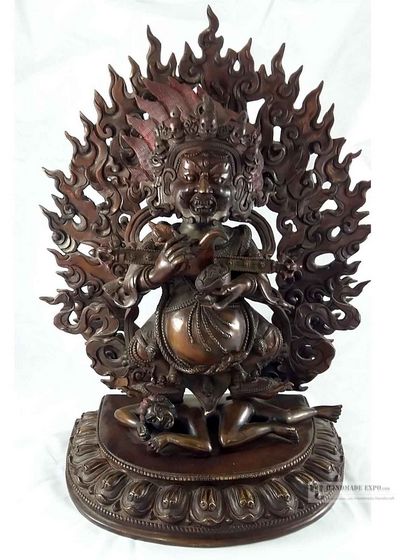
Statue Of Safu Mahakala Panjaranatha- Oxidized
US$ 600.00
25% off
$ 800.00
$ 800.00

7 cm
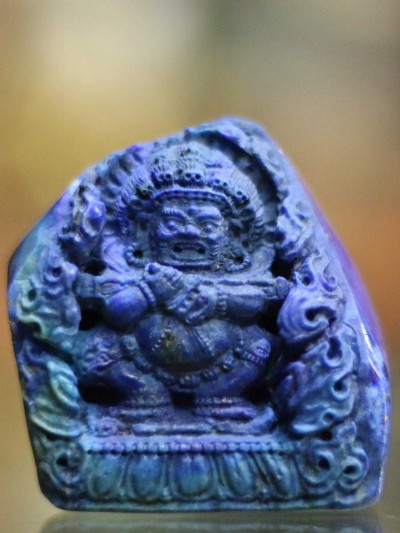
Lapis Lazuli Mahakala Panjaranatha hand Carved
US$ 150.00
25% off
$ 200.00
$ 200.00

60 cm
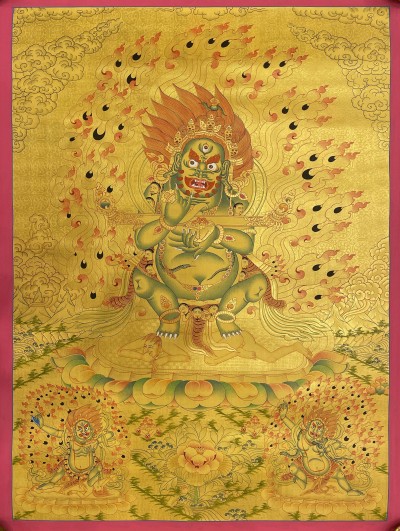
Buddhist Hand Painted Thangka Of Mahakala Panjaranatha, Real Gold, Lamas Art
US$ 270.00
25% off
$ 361.00
$ 361.00

69 cm
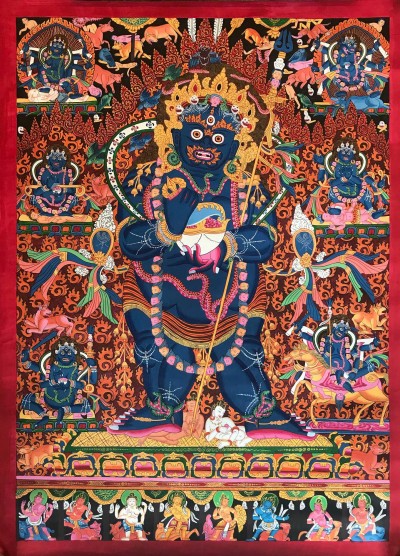
Tibetan Thangka Of Mahakala Panjaranatha In Newari Paubha
US$ 210.00
25% off
$ 280.00
$ 280.00