


Loading Content..
Please wait...
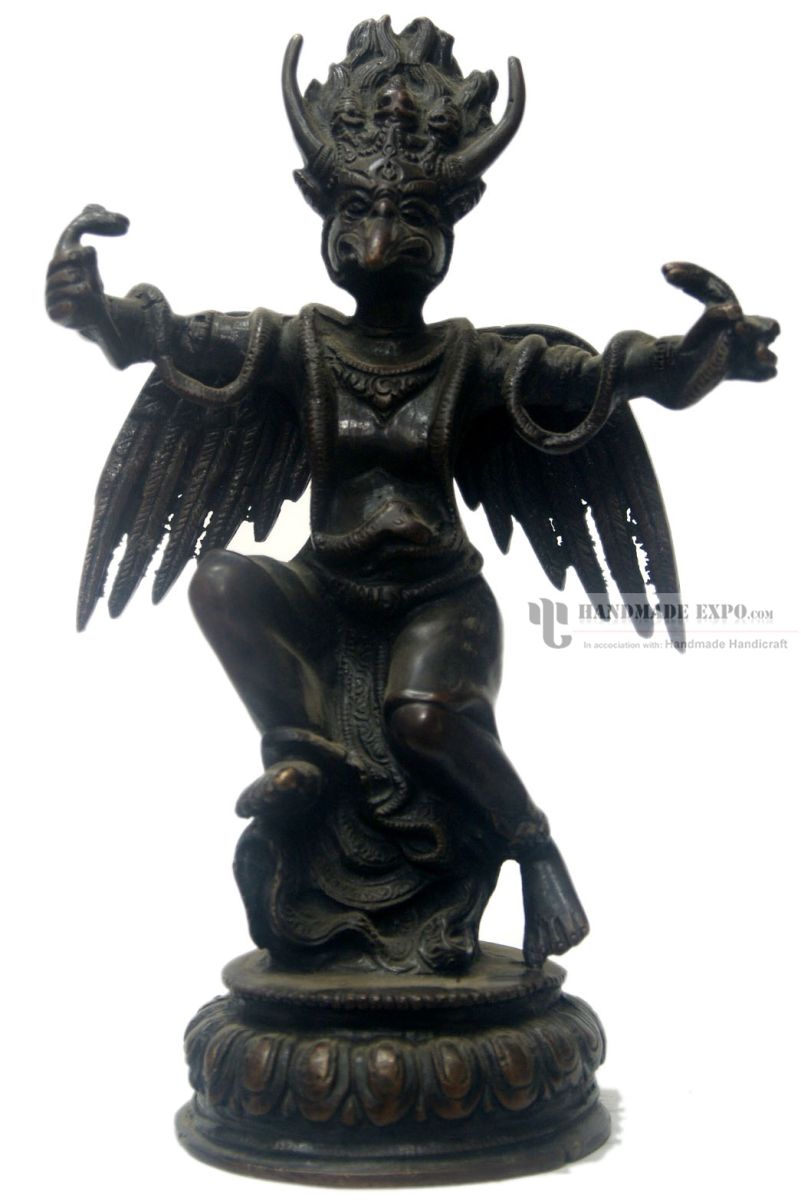
Garuda Antique Finishing , Divine Eagle, Protector and Enemy of Evil Forces
Khyung
Geluotuo
Karura
|
|
Product Specification |
|
| Code | HME11367 |
| Size |
Height 21cm (8") |
Weight | 2 kg - 4.41 lbs |
| Material | Brass |
| Availability | Available |
| Quantity | PCS |
US$ 60.00
$ 70.00 -15% off
Shipping Cost
|
| Price Adjustment Status: Active |
||
Shipping Calculation
weight of 1 Pcs of the product is 2 kg and will cost USD $ 47.00
-
Item location: kathmandu, Nepal
Worldwide shipping - Dispatch
-
We normally dispatch the product in 2-5 business days. Else Buyer will be infromed personally about the dispatch Date.
- Payment
- Paypal | Credit - Debit Card | Bank Transfer | See More
- Return
- 7 days money back, buyer pays return shipping
Welcome to Handmade Handicraft
At Handmade Handicraft, we prioritize simplicity, reflected in our user-friendly website design. We have streamlined the process so everything you need is just a click away.
While our website does not support online shopping, we've incorporated a convenient shopping cart system to assist you in sending us your inquiries. Please note, we do not process payments on our site. All transactions will be handled via email, respecting the inquiries you submit.
Should you encounter any issues while submitting your inquiries, please contact us via mobile app, email, or follow the procedure outlined below. We've provided documentation to guide you through the selection process.
selecting Procedure
In every product you will find Order Now and Quick Inquiry buttons, they are the two process of sending us your enquiry.
If you have any questions or need assistance, please don't hesitate to reach out to us. We are here to help you with your inquiries and ensure a smooth experience.
Garuda
The Garuda is a giant mythical bird or bird-like creature in Hindu and Buddhist mythology.
Garuda is the name for the constellation Aquila and the Brahminy kite is considered to be the contemporary representation of Garuda. In Buddhist mythology, the Garuda are enormous predatory birds with intelligence and social organization. Another name for the Garuda is supara meaning "well-winged, having good wings". Like the naga, they combine the characteristics of animals and divine beings and may be considered among the lowest devas. Read More
Iconography
There were also the four garuda-kings : Great-Power-Virtue Garuda-King, Great-Body Garuda-King, Great-Fulfillment Garuda-King, and Free-At-Will Garuda-King, each accompanied by hundreds of thousands of attendants.
The Garudas have kings and cities, and at least some of them have the magical power of changing into human form when they wish to have dealings with people. On some occasions Garuda kings have had romances with human women in this form. Their dwellings are in groves of the simbalī, or silk-cotton tree.
The Garuda are enemies to the nāga, a race of intelligent serpent- or dragon-like beings, whom they hunt. The Garudas at one time caught the nāgas by seizing them by their heads; but the nāgas learned that by swallowing large stones, they could make themselves too heavy to be carried by the Garudas, wearing them out and killing them from exhaustion. This secret was divulged to one of the Garudas by the ascetic Karambiya, who taught him how to seize a nāga by the tail and force him to vomit up his stone.
The exact size of the is uncertain, but its wings are said to have a span of many miles. This may be a poetic exaggeration, but it is also said that when a Garuda's wings flap, they create hurricane-like winds that darken the sky and blow down houses. A human being is so small compared to a Garuda that a man can hide in the plumage of one without being noticed. They are also capable of tearing up entire banyan trees from their roots and carrying them off.
Garudas are the great golden-winged Peng birds. They also have the ability to grow large or small, and to appear and disappear at will. Their wingspan is 330 yojanas (one yojana being 40 miles long). With one flap of its wings, a Peng bird dries up the waters of the sea so that it can gobble up all the exposed dragons. With another flap of its wings, it can level the mountains by moving them into the ocean.
Dark chocolate Oxidized
The Garuda features a stunning full dark chocolate color oxidation finish, exuding an air of elegance and sophistication. This exquisite oxidation process involves treating the surface of the Garuda to create a rich, deep brown color reminiscent of decadent chocolate. Through careful application and controlled oxidation, the statue achieves a uniform and lustrous dark chocolate hue. This captivating finish enhances the intricate details and textures of the Garuda, adding depth and dimension to its overall appearance. Read More
Process: Sand Casting
This Garuda has been created using the sand casting system, also known as sand molding casting. This widely employed manufacturing process utilizes a sand mold to produce metal products and components in various sizes and shapes. Sand casting holds significant popularity in the industry, accounting for approximately 60% of all metal castings. The sand casting process involves six primary steps. First, a pattern or replica of the desired sculpture, in this case, Garuda, is created using a material like wood or metal. The pattern is then placed in a flask, which is a box-like structure divided into two halves. The next step involves packing the flask tightly with specially formulated molding sand, creating a mold cavity that matches the shape of the pattern. The pattern is subsequently removed, leaving behind a negative impression of the sculpture within the sand mold. Read More
Related Products

30 cm
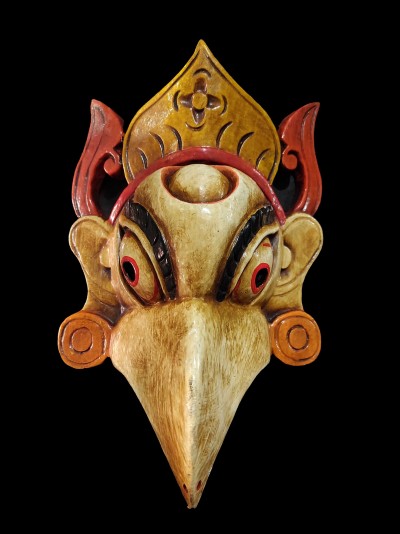
Garuda Mask, Handmade Wooden Mask Of Garuda, Painted White, Poplar Wood
US$ 11.00
15% off
$ 12.00
$ 12.00

18 cm
Garuda On Pillar, Buddhist Statue, Full Gold Plated
US$ 120.00
15% off
$ 138.00
$ 138.00

31 cm
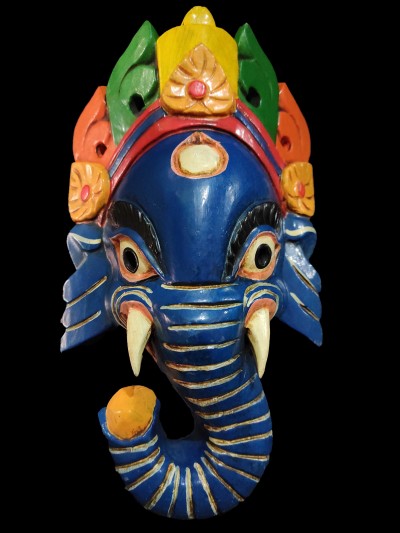
Ganesh Mask, Handmade Wooden Mask Of Ganesh, Painted Blue, Poplar Wood
US$ 11.00
15% off
$ 12.00
$ 12.00

17 cm
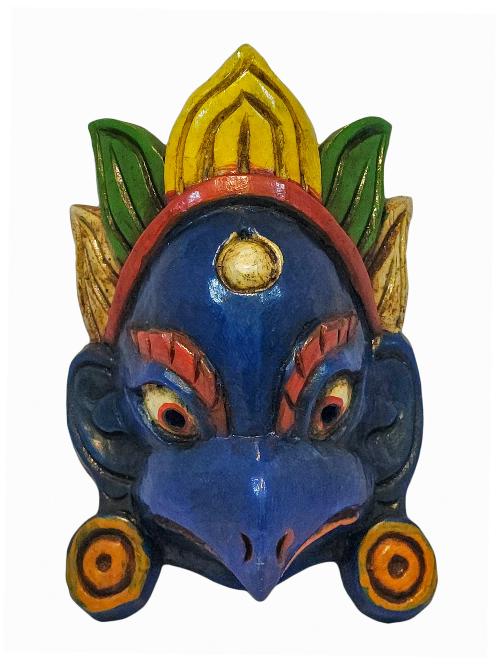
Garuda, Handmade Wooden Mask, Wall Hanging, Painted, Poplar Wood
US$ 6.55
15% off
$ 7.70
$ 7.70